Saturday
My goal for the day was to go through the tourist trail that I had researched the night before. It was quite a lengthy trail with 40 suggested sites spread across the city. I’ll do my best to take you along with me on the trip! At times it was a bit hard to find the signs for each stop, so there are a few missing.
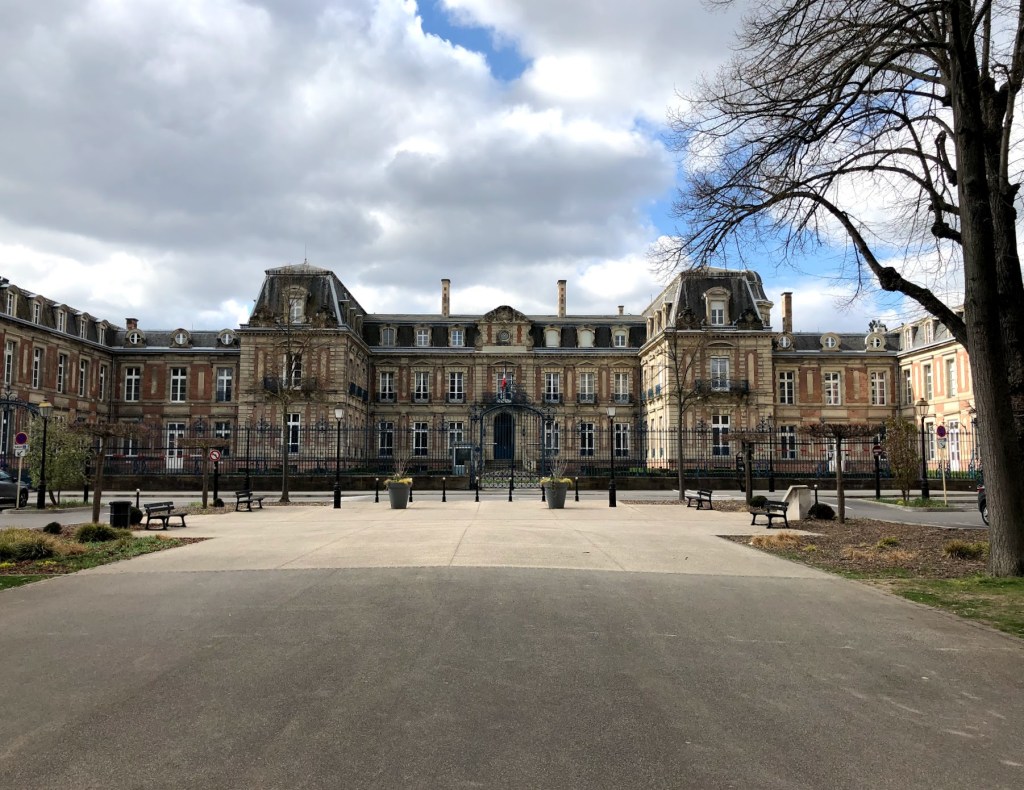
Construction started for the building in 1862. The former Hôtel de Ville was on this site. It survived a fire in 1938, was bombed by Germans in 1940, and was damaged by the final sieges of 1944-45.
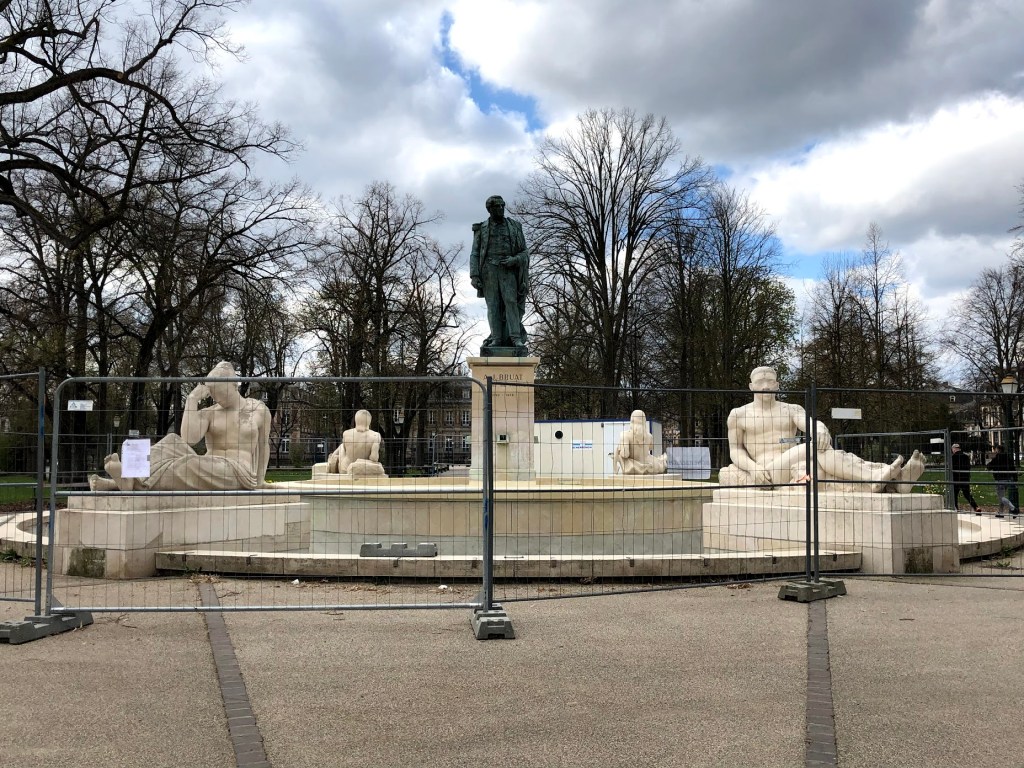
“This fountain, built in tribute to Admiral Armand-Joseph Bruat (1796-1855) who was born in Colmar, is the work of Auguste Bartholdi and was inaugurated in 1864. It was the first in Colmar to have a system to stream water. The fountain represented the allegories of the four continents. It was destroyed by the Nazis in 1940. In 1958, the bronze statue was restored and placed on a new fountain built by sculptor Choain and architect Porte. The original sandstone heads are kept at the Bartholdi Museum. Albert Schweitzer (1875-1965) said in his writings that the head of the African was what inspired him to be a doctor in the African bush.” – Colmar Tourist Office
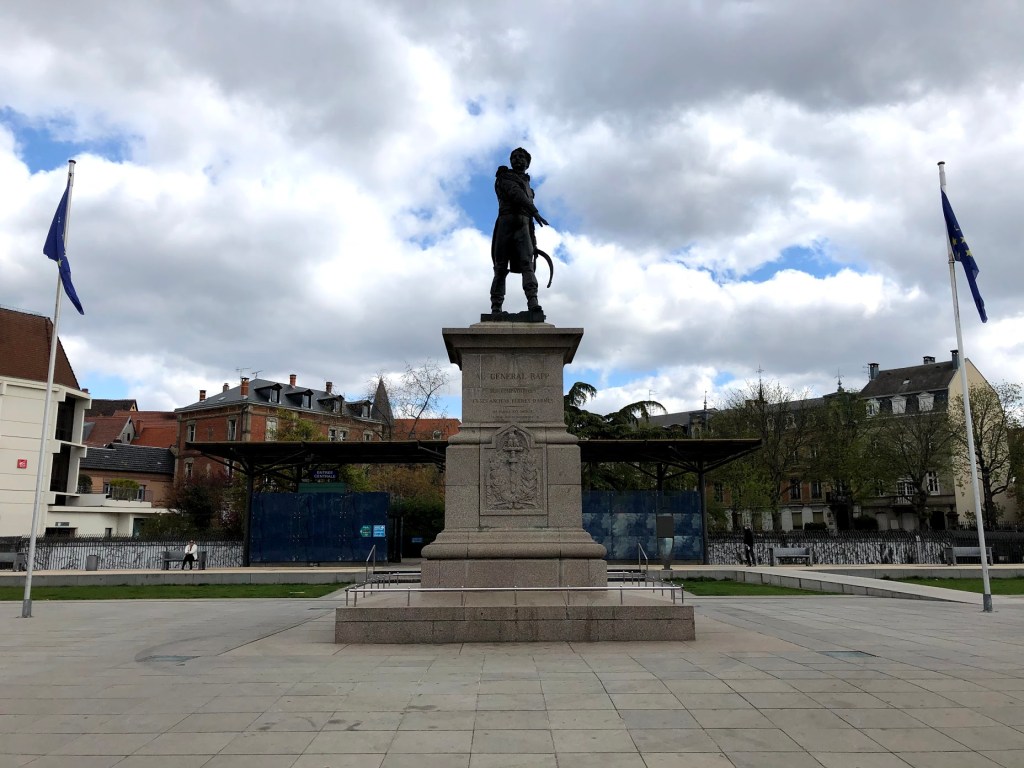
The monument was brought to Colmar in 1856, the home of its creator, Bartholdi. It celebrates General Rapp who was a hero in Napoleon’s armies. He assisted in the Russian campaign. Even after the Emperor’s fall, he remained fiercely loyal. His heart is interred in the St. Matthieu’s church where he was a parishioner.
Before I started the trail, I stopped at a little boulangerie to pick up breakfast and snacks. I got some croissants and some pain au chocolat. The bakery was absolutely stuffed full of desserts for Easter. I wanted to get some pictures, but the number of people inside was limited to three and there was a queue outside so I didn’t want to take up the time.
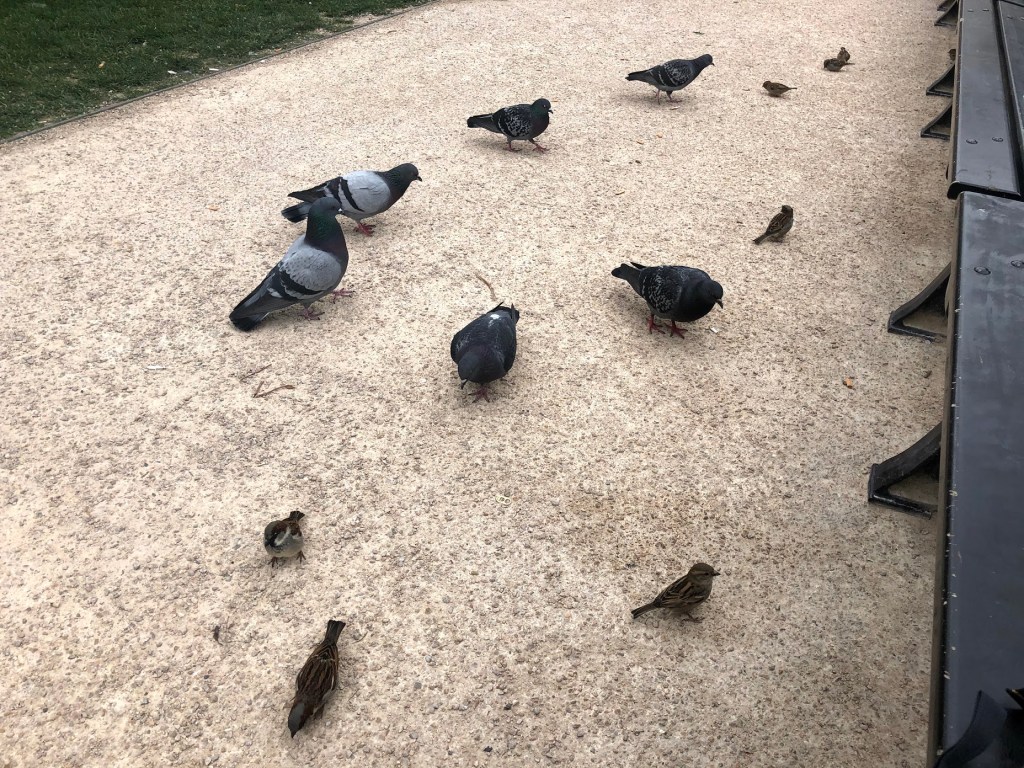
Finally, it was time to officially start the trail.
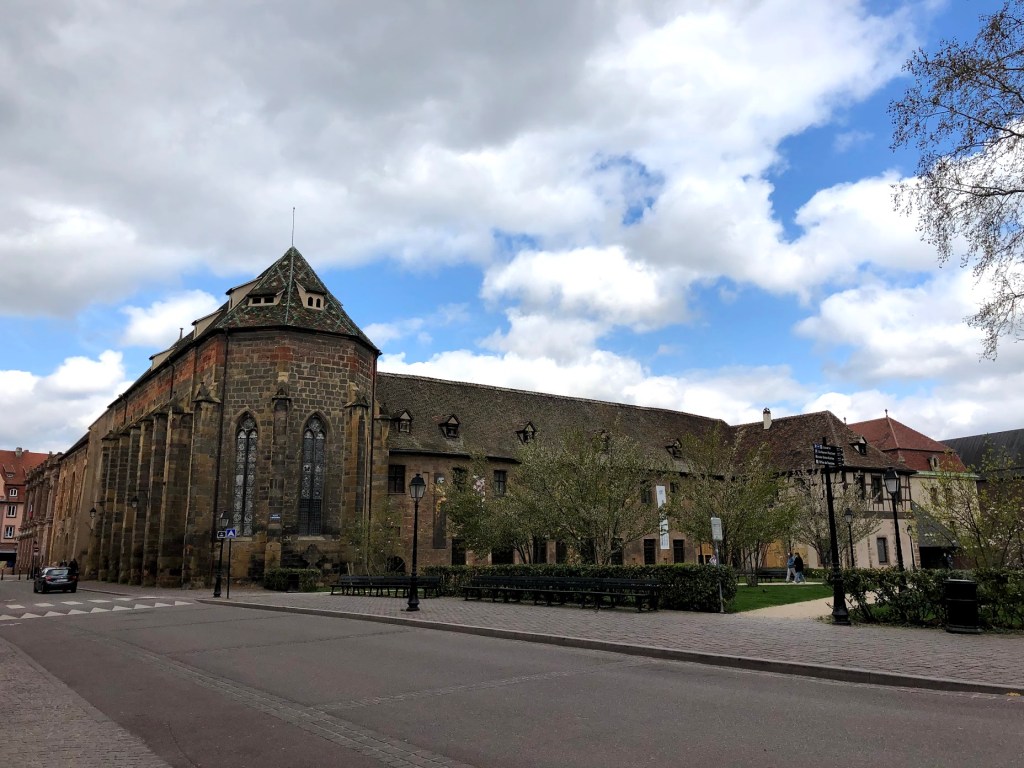
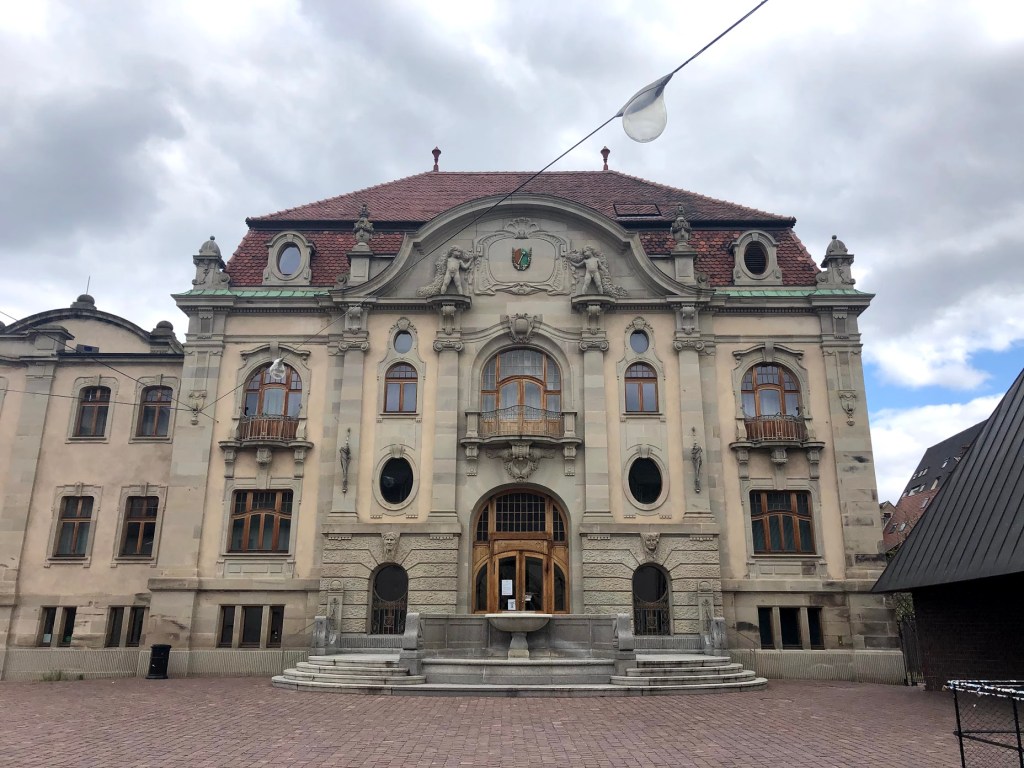
“The Unterlinden Museum (French: Musée Unterlinden) is located in Colmar, in the Alsace region of France. The museum, housed in a 13th-century Dominican religious sisters’ convent and a 1906 former public baths building, is home to the Isenheim Altarpiece by the German Renaissance painter Matthias Grünewald and features a large collection of local and international artworks and manufactured artifacts from prehistorical to contemporary times. It is a Musée de France. With roughly 200,000 visitors per year, the museum is the most visited in Alsace.”
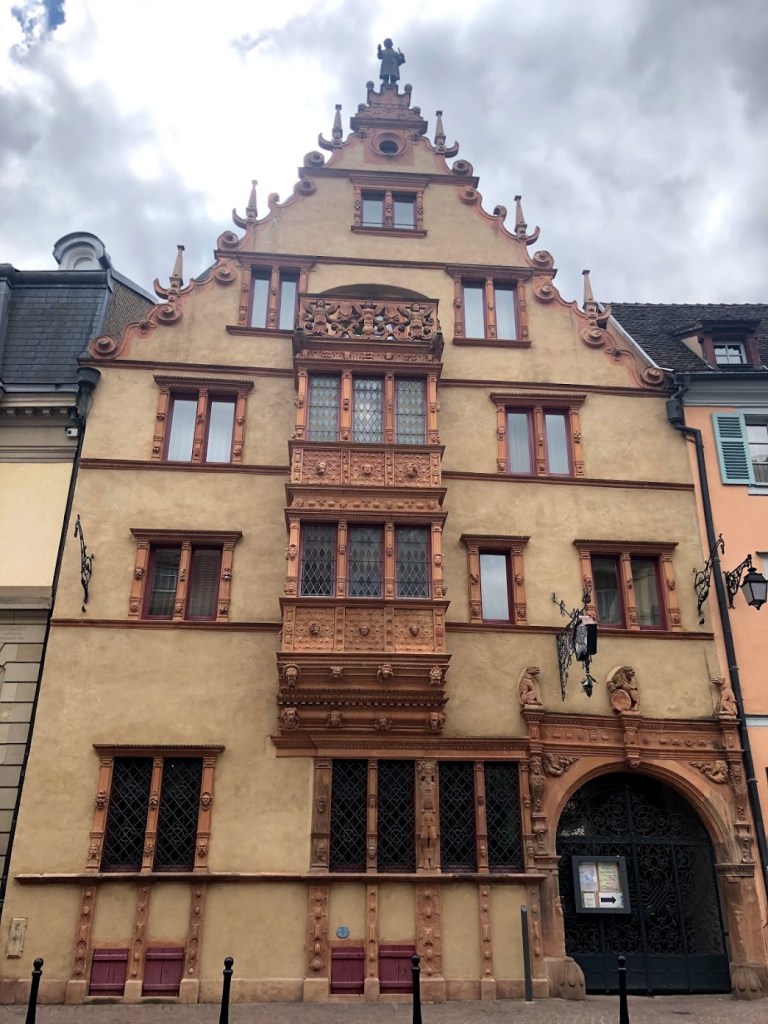
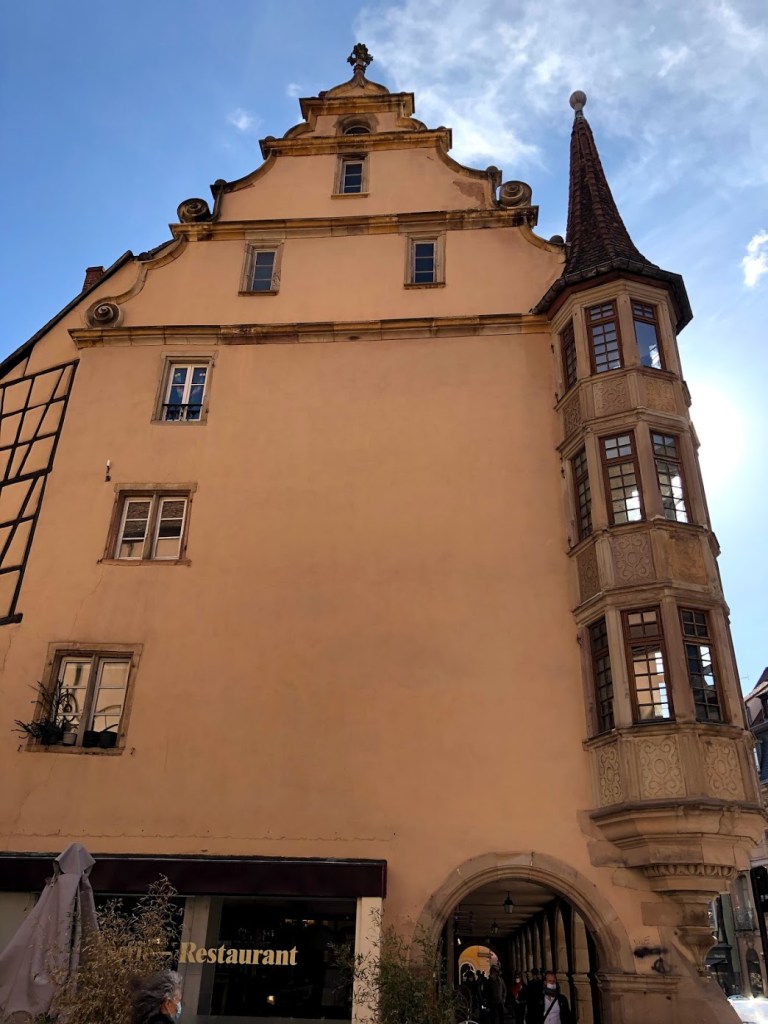
“Built in 1609 for the shopkeeper Anton Burger, the house of heads is attributed to the architect Albert Schmidt, who also made the former protestant presbytery and the house of the St. John’s Knights. The house of heads, a fine building dating from the German renaissance, owes its name to the 106 heads or grotesque masks that decorate a rich façade on which stands also a three-storey bay window. The gable of the building is decorated with volutes and the statue of a cooper, sculpted in 1902 by Auguste Bartholdi, who responded to an order of the wines Exchange that had moved into the building in 1898. The house of heads has been restored in 2012.” – Colmar Tourism Office
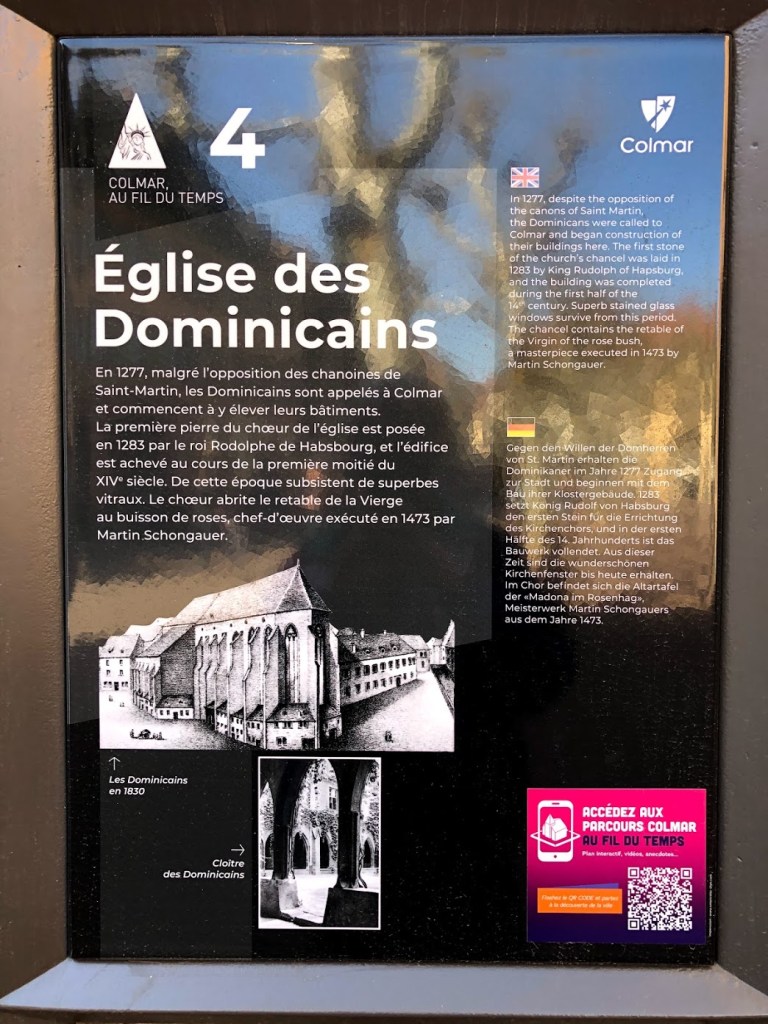
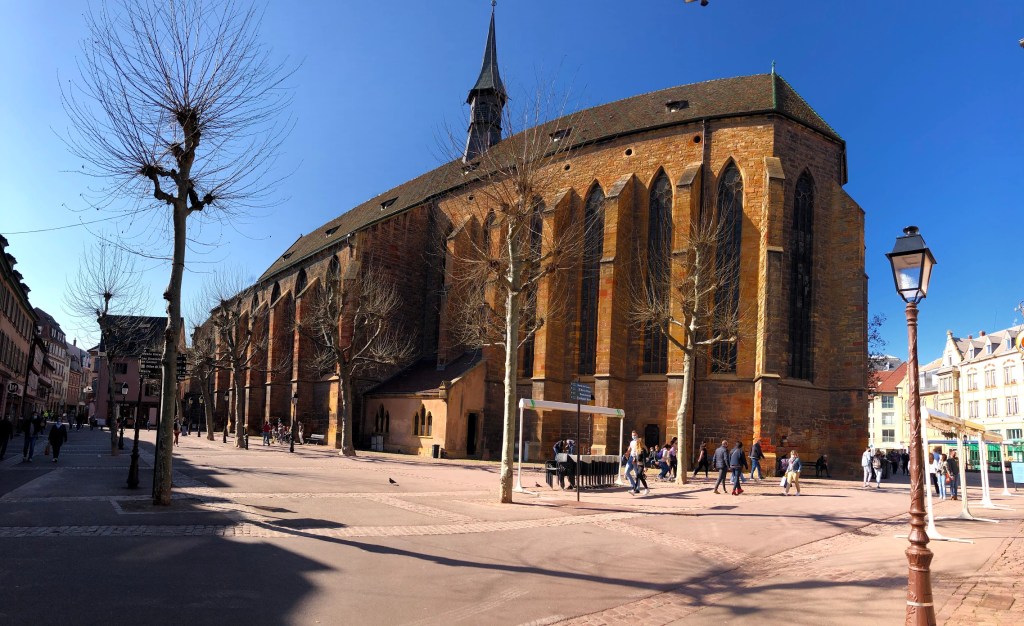
“Started in 1283, the construction of the Dominican church mainly dates back to the first half of the 14th century. It is an important example of the mendicant orders architecture, even if the Dominicans arrived in 1278 were temporarily driven out of the city in 1330. In 1458, the roof and the cloister were damaged by a fire. After that, reconstruction works have been necessary. In 1720, thanks to the installation of a baroque decorating, the church was less austere than before. The Dominican church was during the most part of the 19th century used to non-religious ends, before becoming again a place of worship in 1898. The church has been restored in the early 80 and 90.Around 1475, Martin Schongauers studio created the Altarpiece of the Dominicans which is today exposed in the Unterlinden museum. Since 1973 the Dominican Church owns the masterpiece of Martin Schongauer, Madonna of the Rose Bush, which was exposed in the Saint Martin collegiate church.”
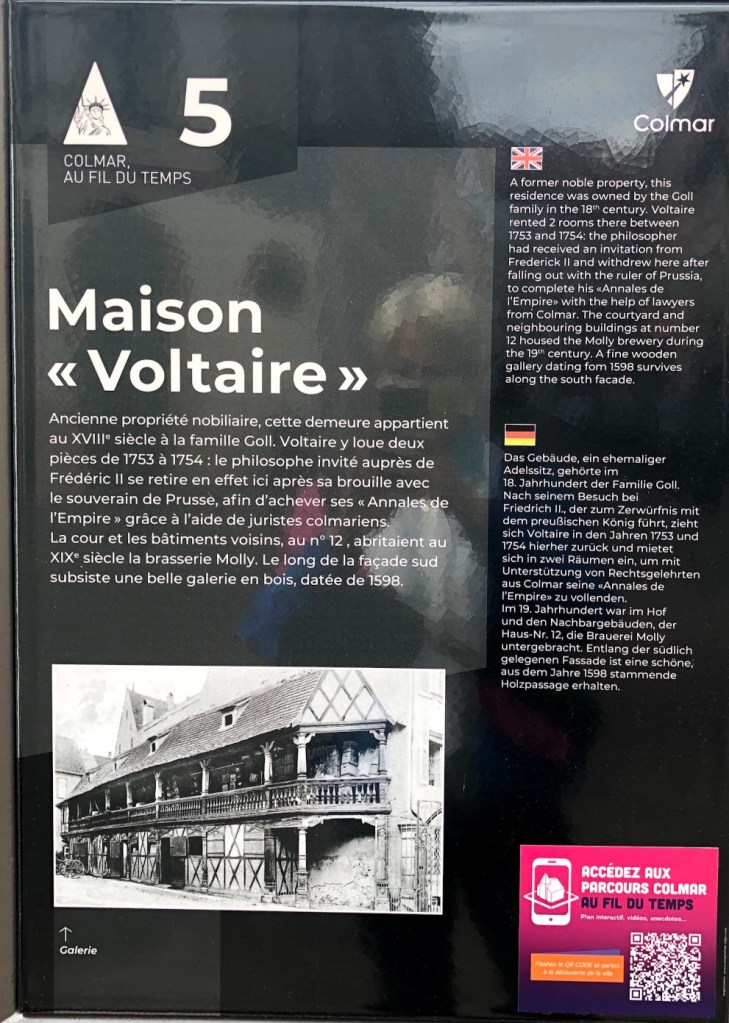
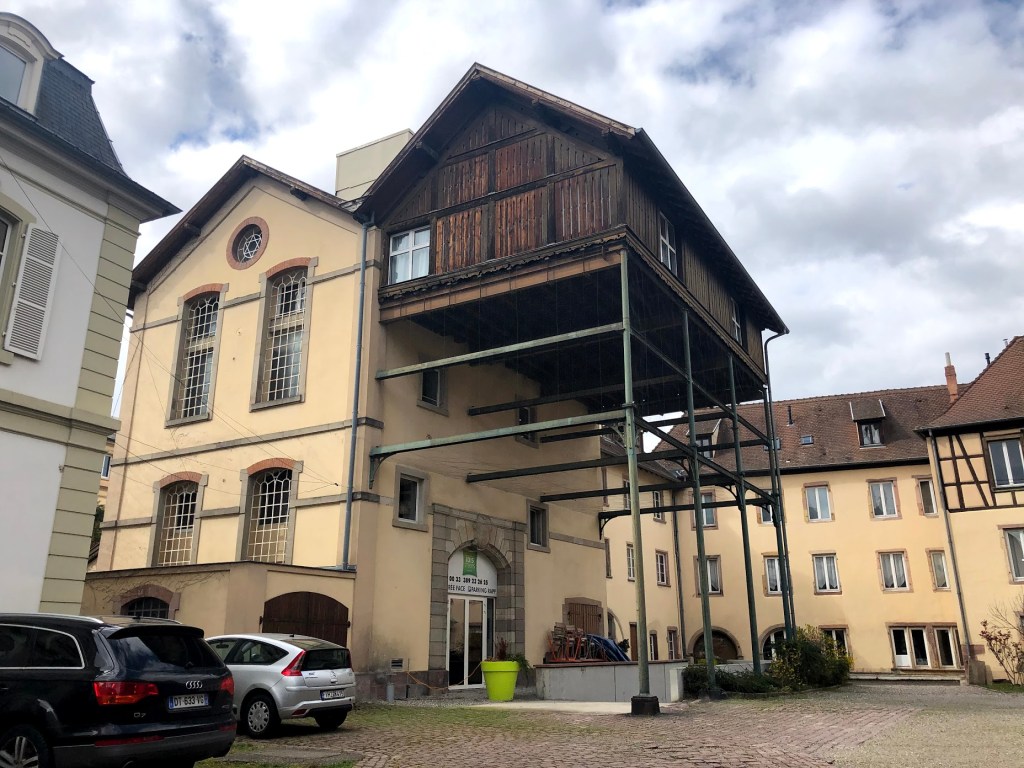
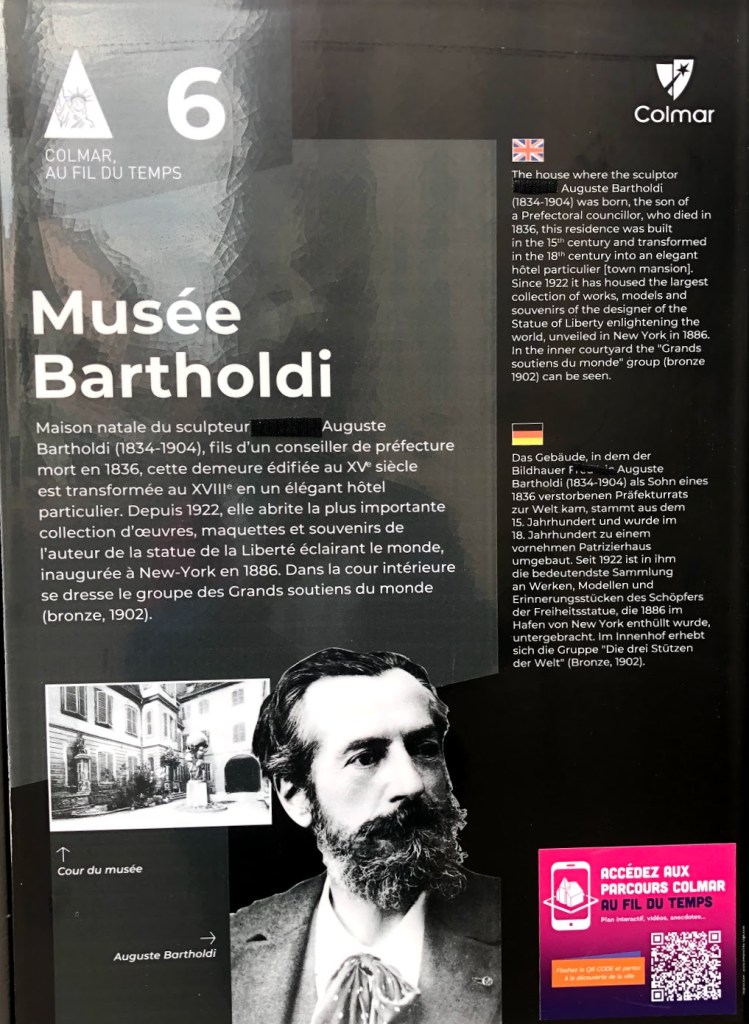
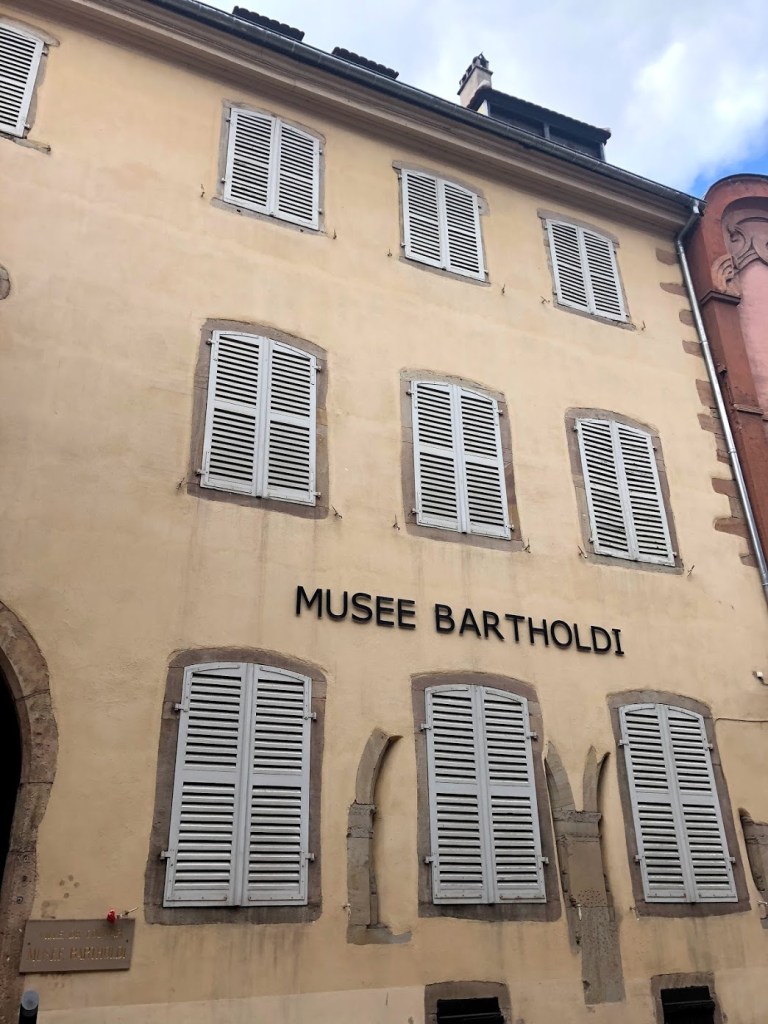
“Located since 1922 in the house where the sculptor Auguste Bartholdi was born (Colmar 1834 – Paris 1904), the Bartholdi museum is entirely dedicated to presenting the artist’s work. Family furniture, personal souvenirs, models, drawings, paintings, engravings and photographs are presented on three floors.”
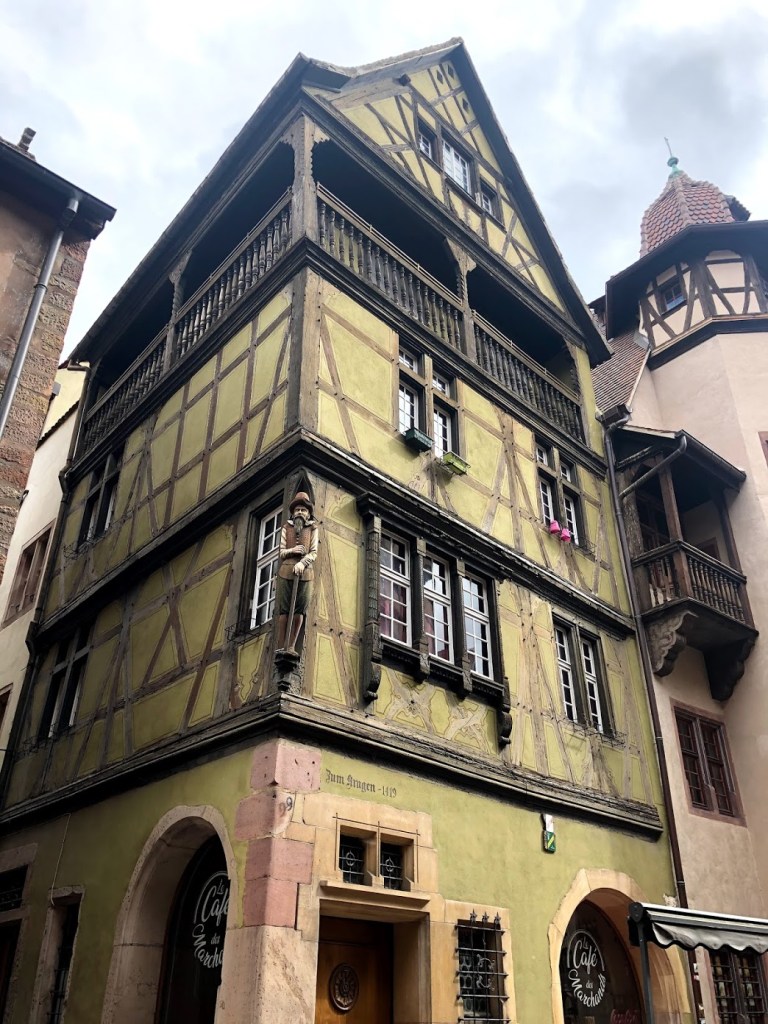
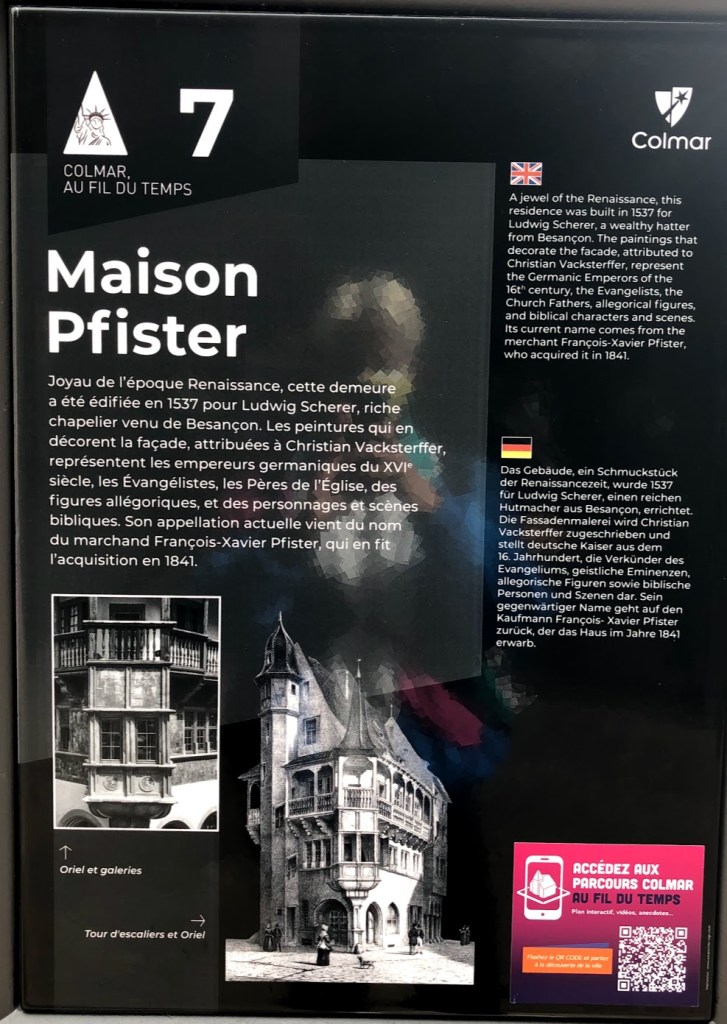
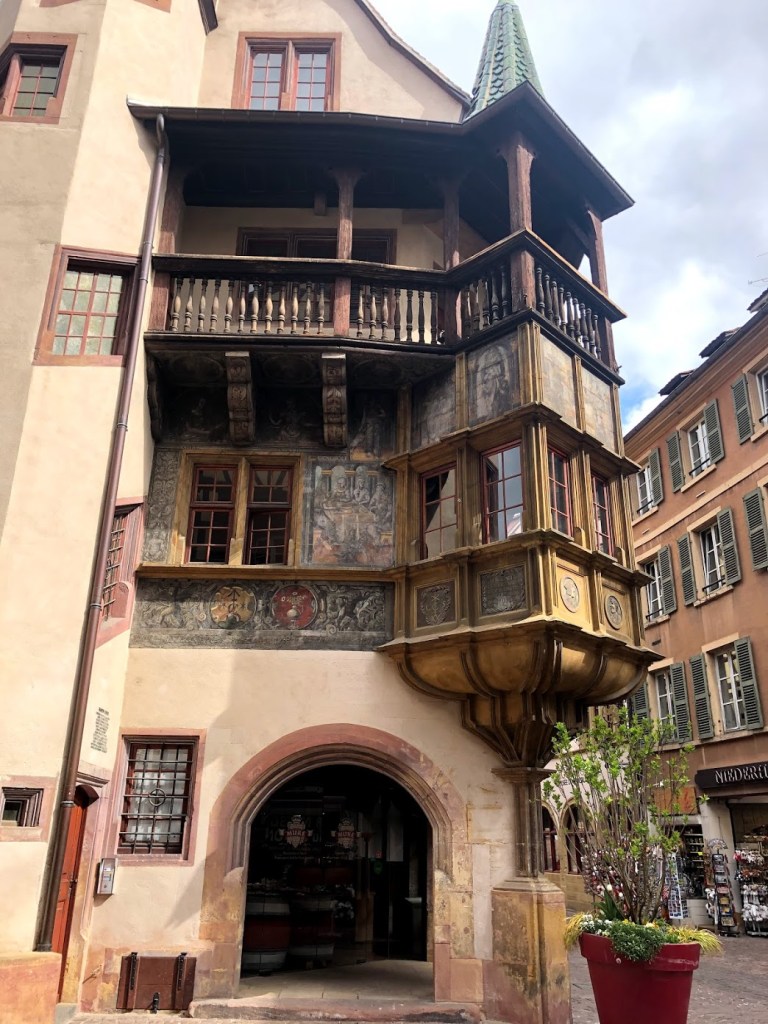
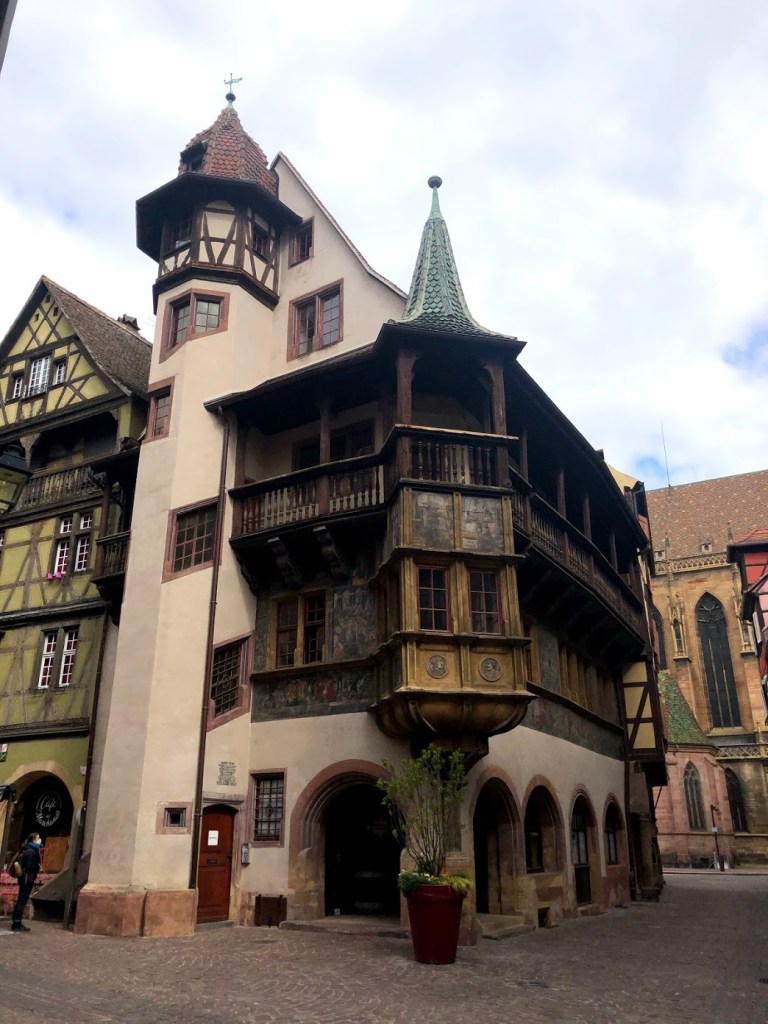
“The Pfister house was built in 1537 for the hatter Ludwig Scherer, who made his fortune with money trading in the Val de Liepvre. Despite its medieval features, the house is the first example of architectural renaissance in Colmar. With its two-storey corner oriel, its wood gallery, its octagonal turret and its mural paintings which represent biblical and secular scenes, the Pfister house became one of the symbols of the old Colmar. It owns its name to the family who restored it and lived there from 1841 to 1892.” – Colmar Tourist Office
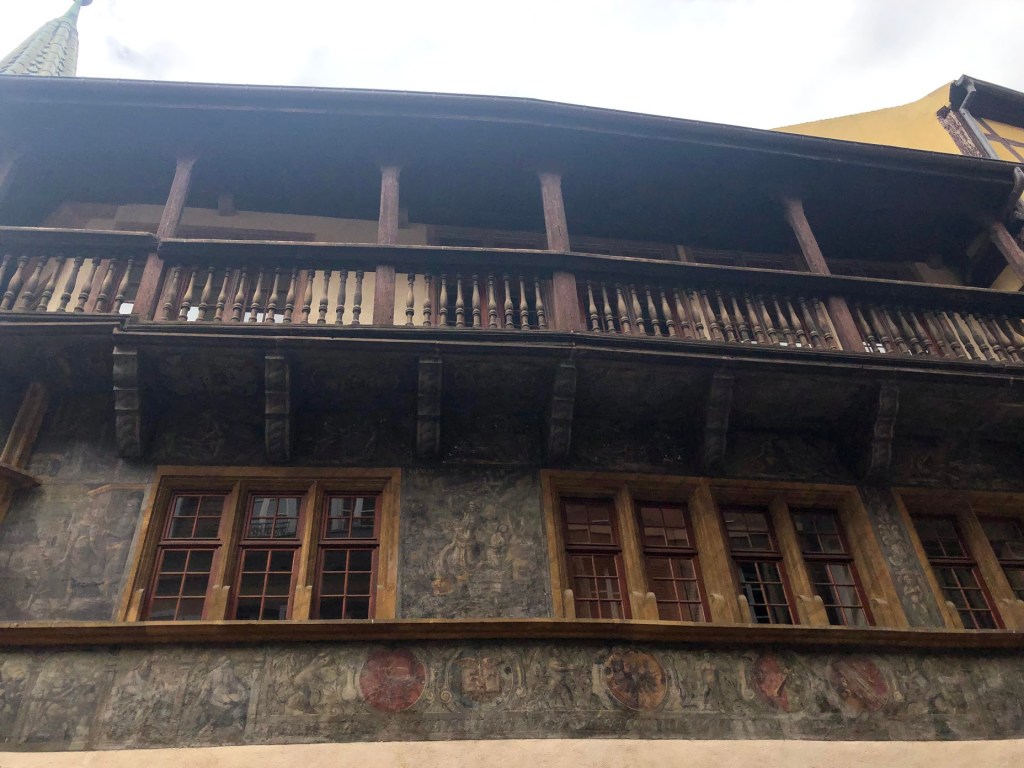
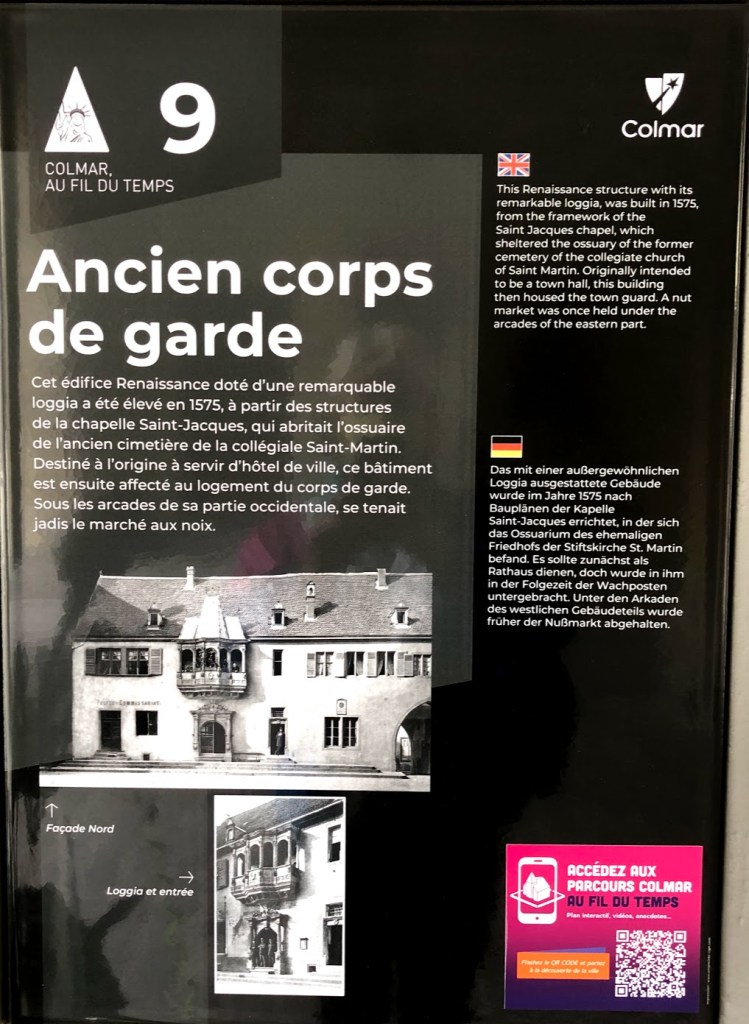
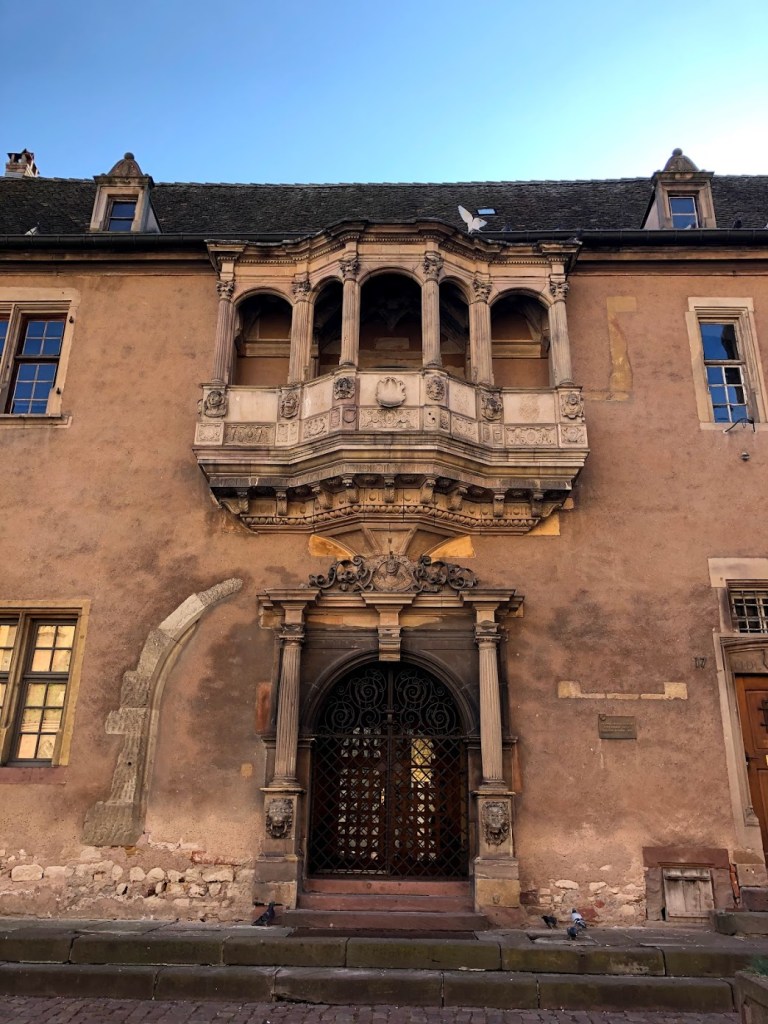
“Built on the former chapel Saint-Jacques (first mentioned in 1286) which served a time as town hall, the building has been converted in 1575 for secular purposes. Above a vaulted ossuary, the building had on the first floor a barrack room and rooms upstairs. The logia, built from 1577 to 1582, and its prolific decorative repertoire are with the portal a jewel of the Renaissance architecture in the Upper Rhine.
The building was also used for commercial ends. A nuts market and an oilseed market took place there and it was also a place of justice. The logia was then used as a grandstand by the magistrates at the announcement of the convictions. From 1860 onwards, the building was used as military housing offices and then as a police station.”
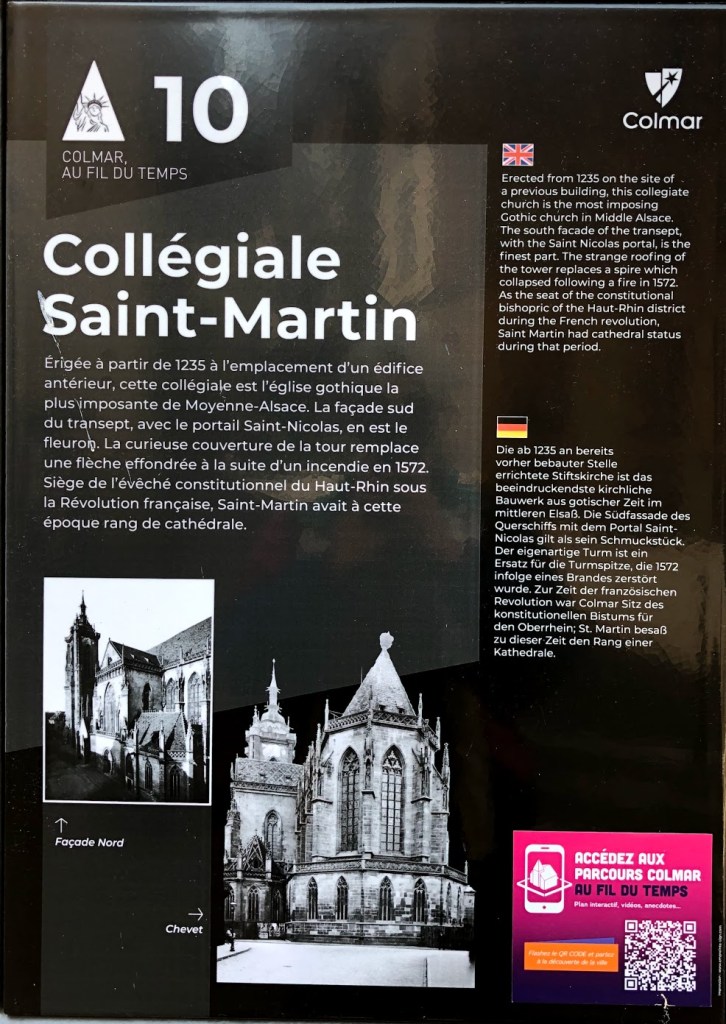
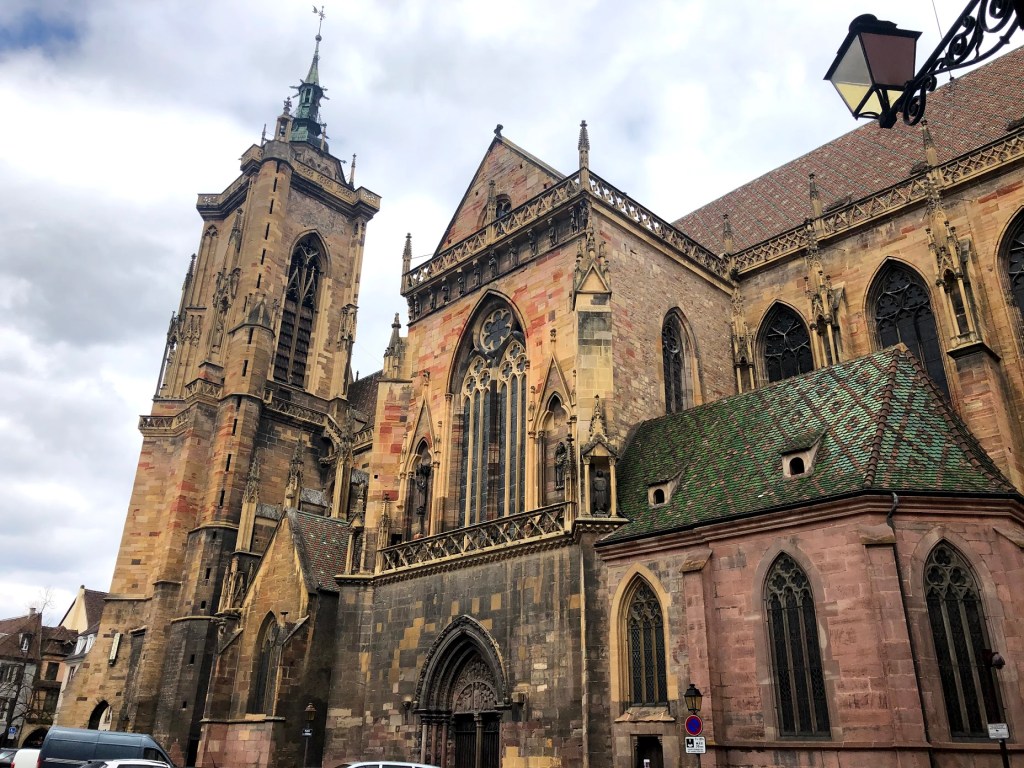
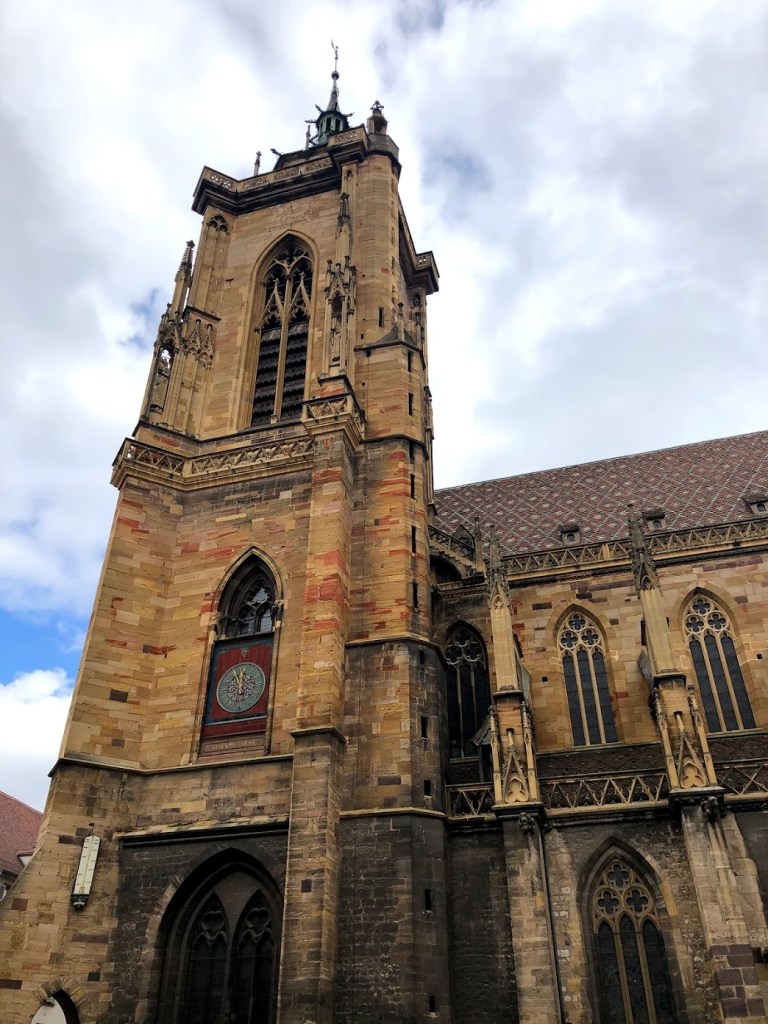
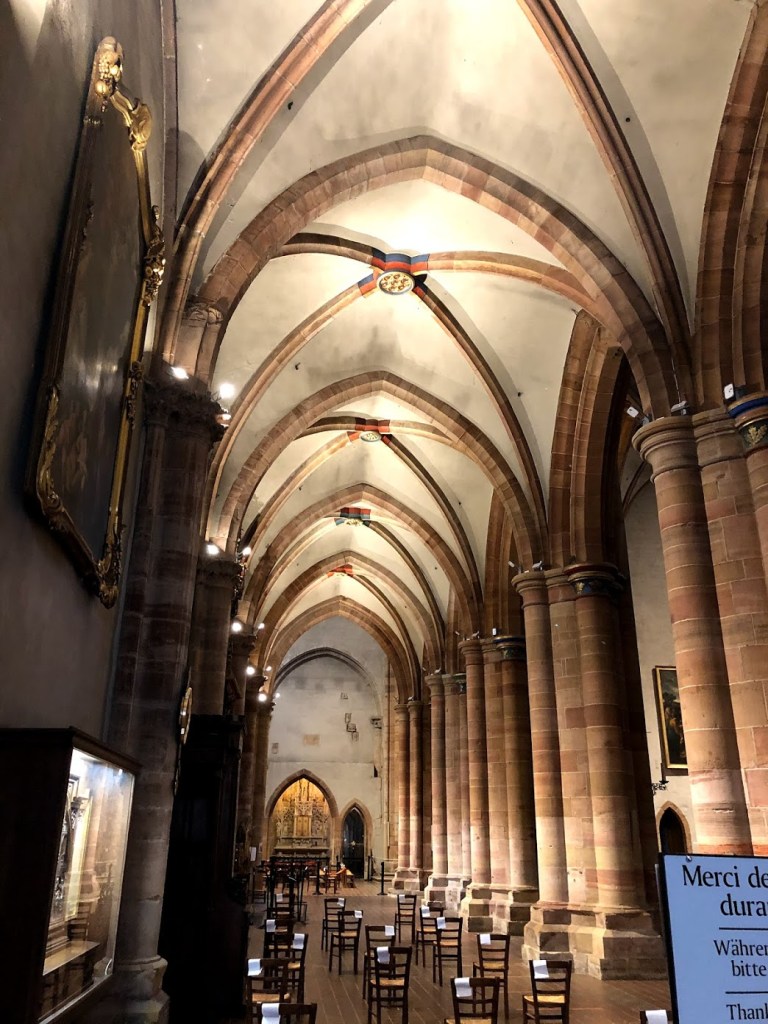
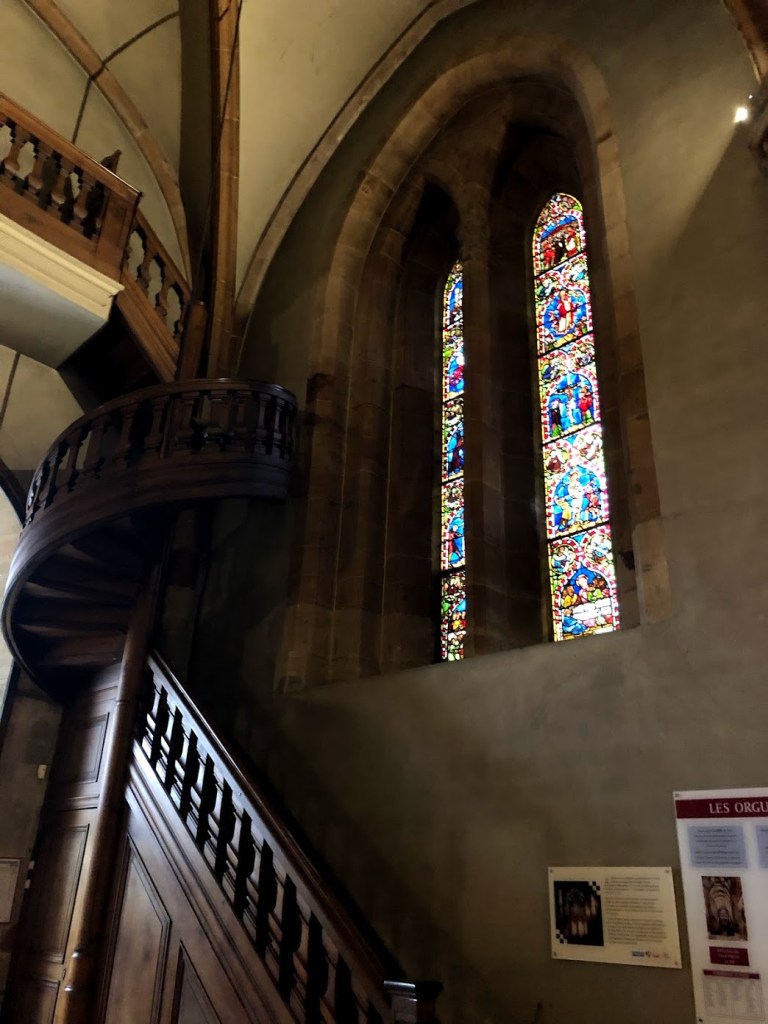
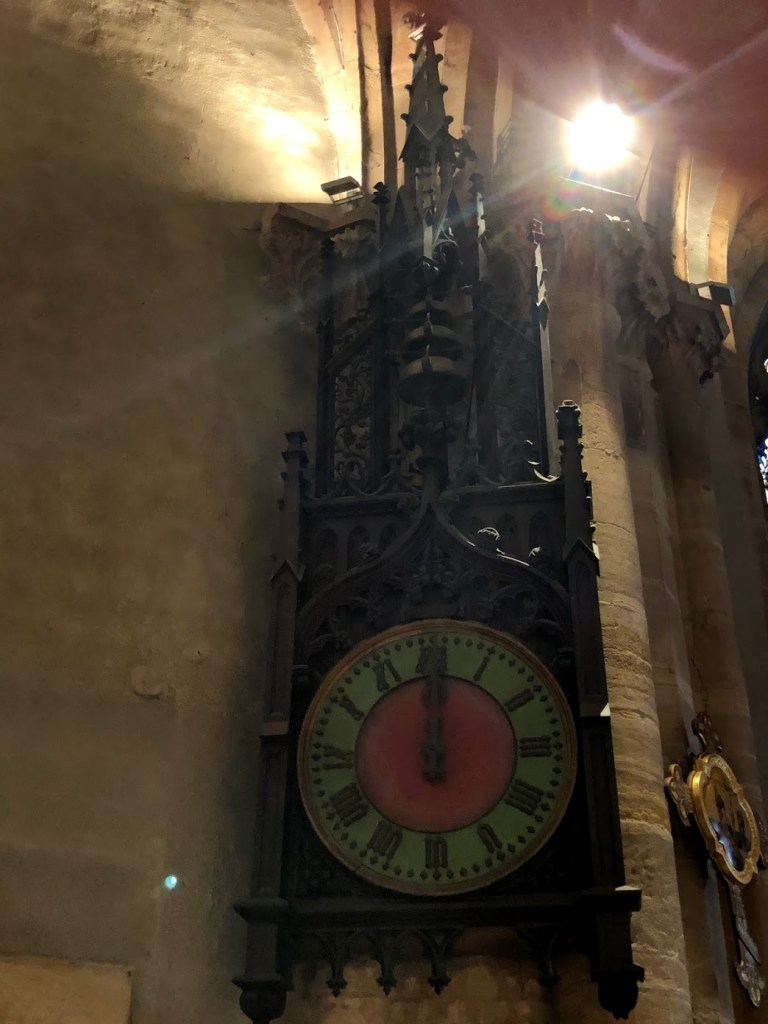
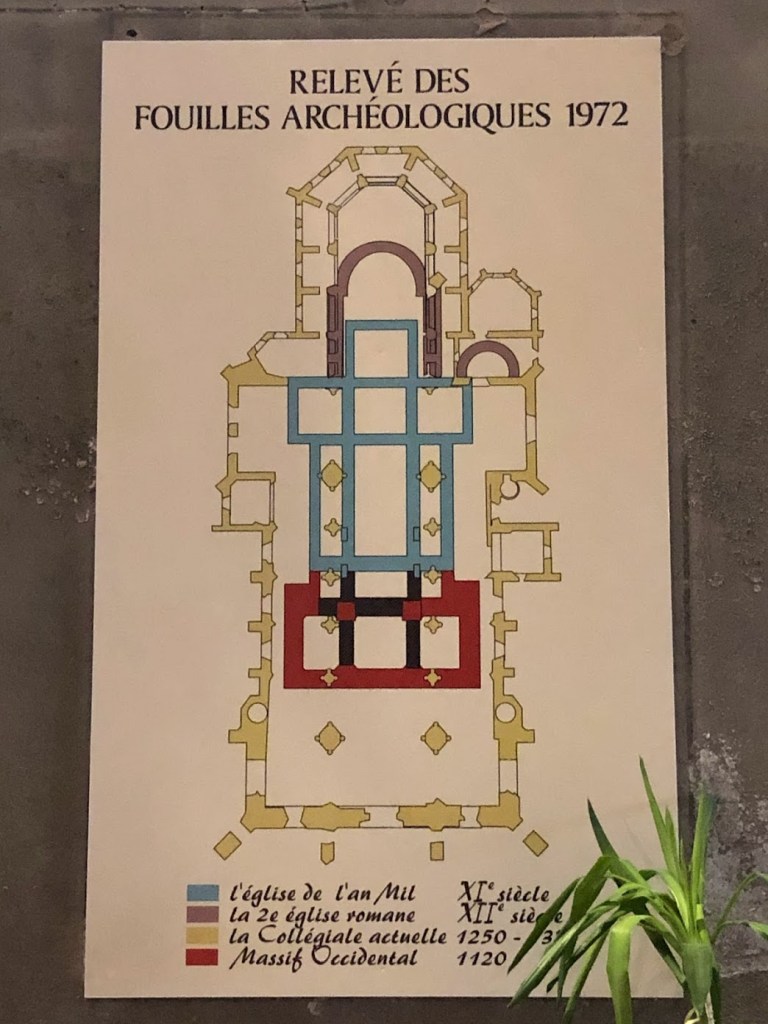
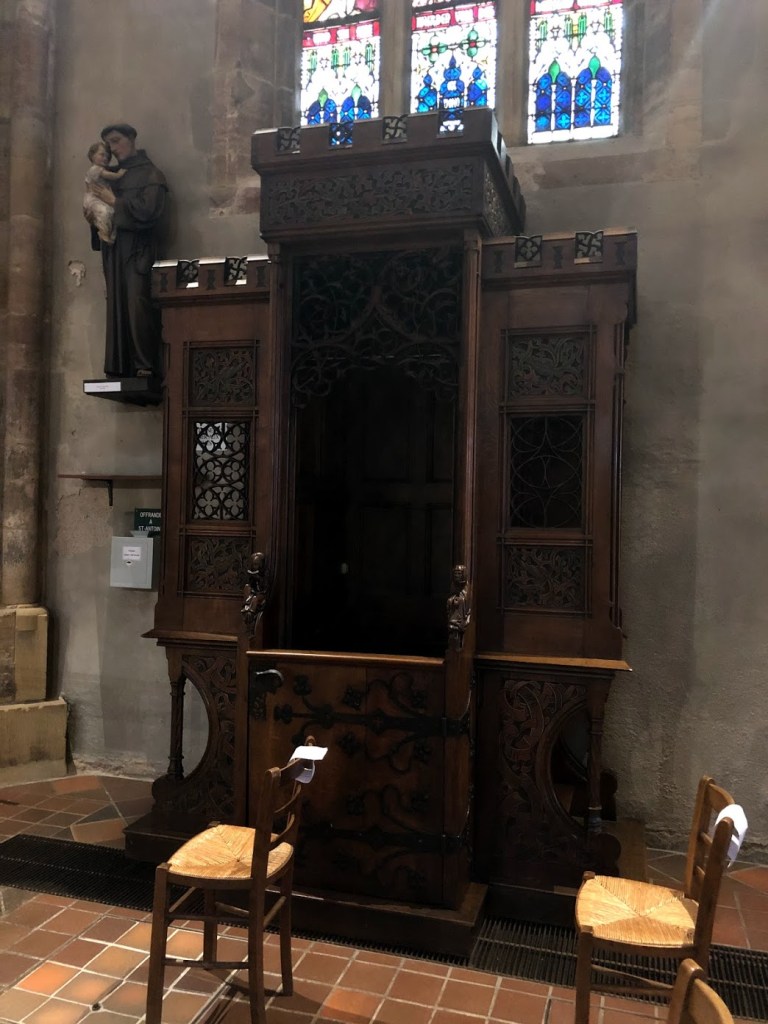
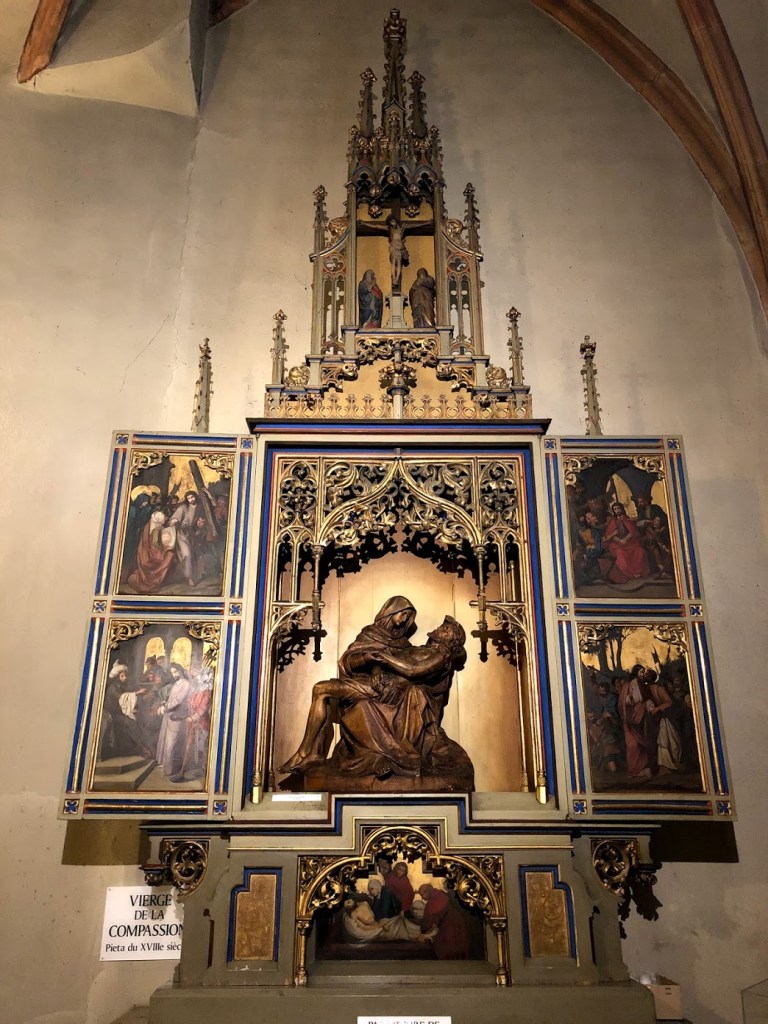
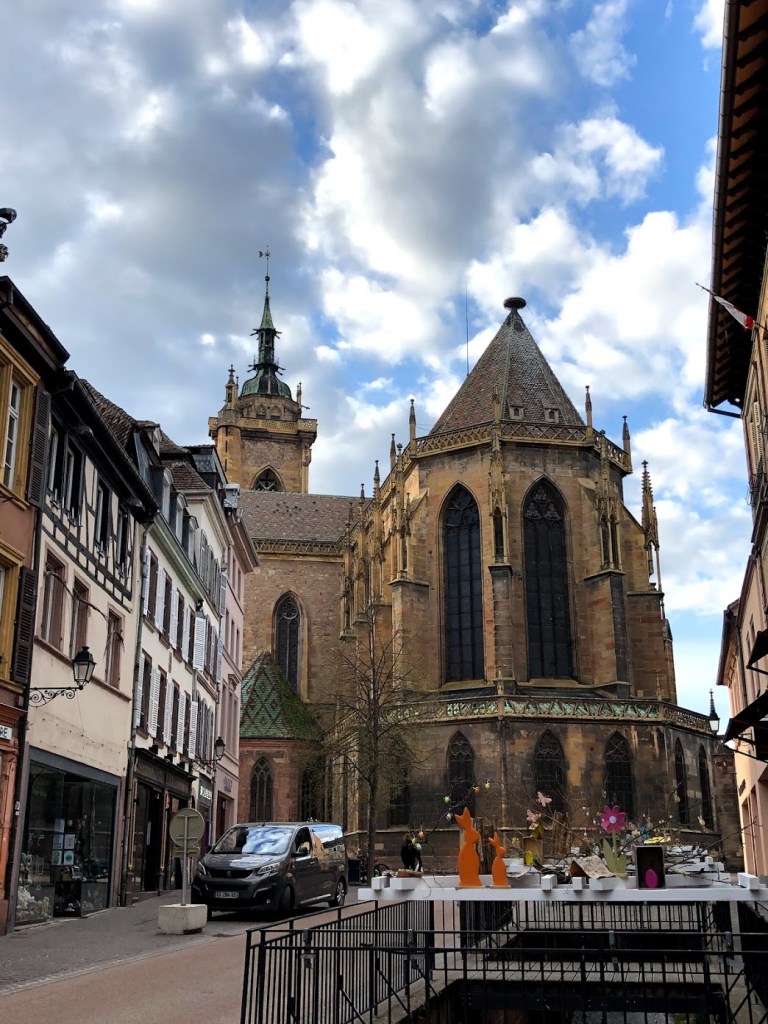
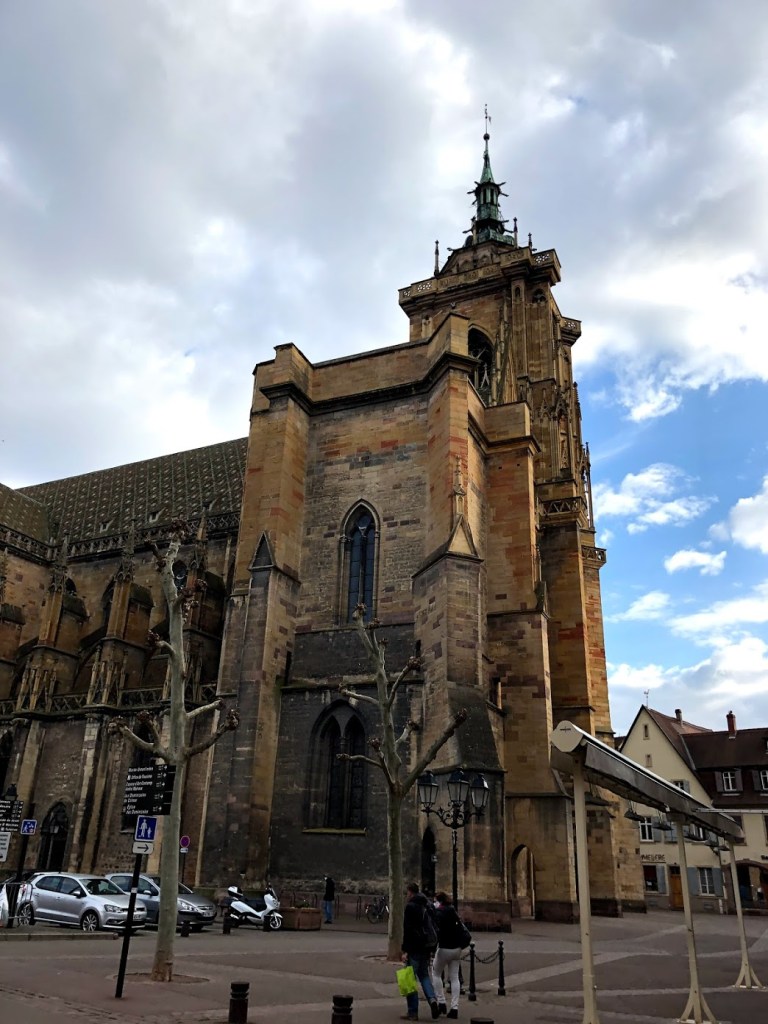
“Built between 1235 and 1365 the Saint Martin’s collegiate church is an important example of Gothic architecture in Alsace. Because of a fire in the south tower in 1572 the framework and all the roofs were destroyed. The tower was replaced three years later by the original lantern bulb (a construction on the top of the dome which has the form of a lantern) which gives the Church its characteristic silhouette. The church has been restored several times. In 1982 during the most recent restoration, foundations of a church from the year 1000 and traces of extensions from the 11th and the 12th centuries were found. The inhabitants of Colmar consider for a long time the Saint Martin’s collegiate church as their cathedral (in German “Münster”). But in fact it was really a cathedral only about ten years, from Civil Constitution of the Clergy (1790) to the Concordat of 1801. The two constitutional bishops who followed one another were not able to assert themselves and to organize a diocese, because it was in the two thirds still devoted to Rome.”
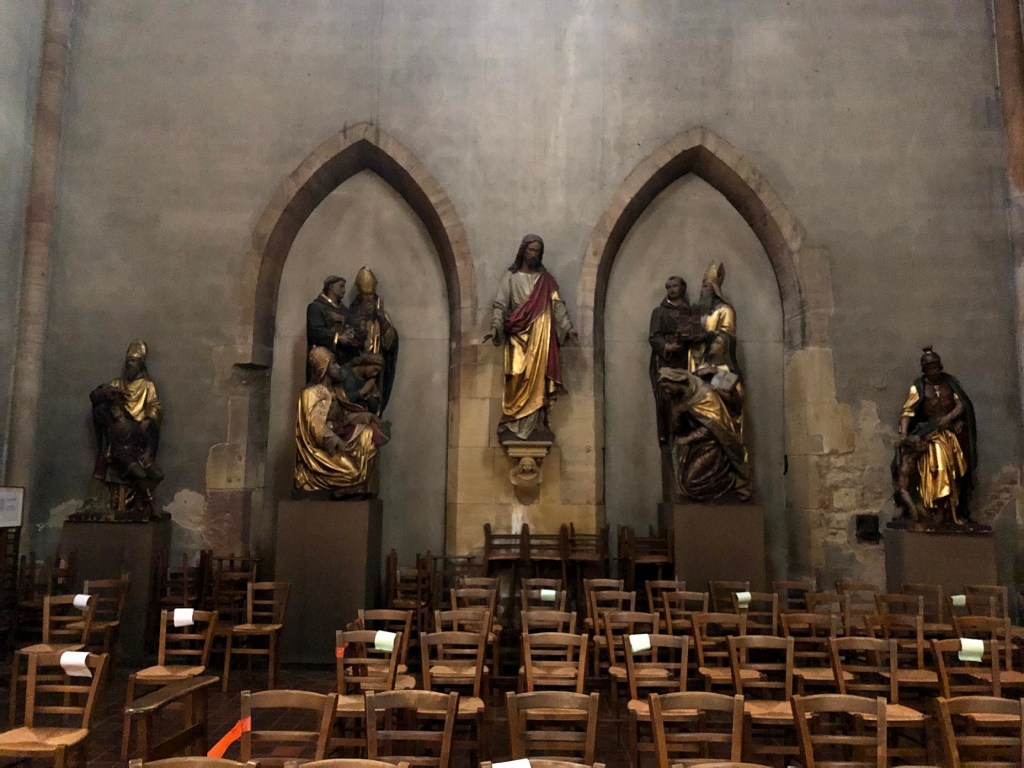
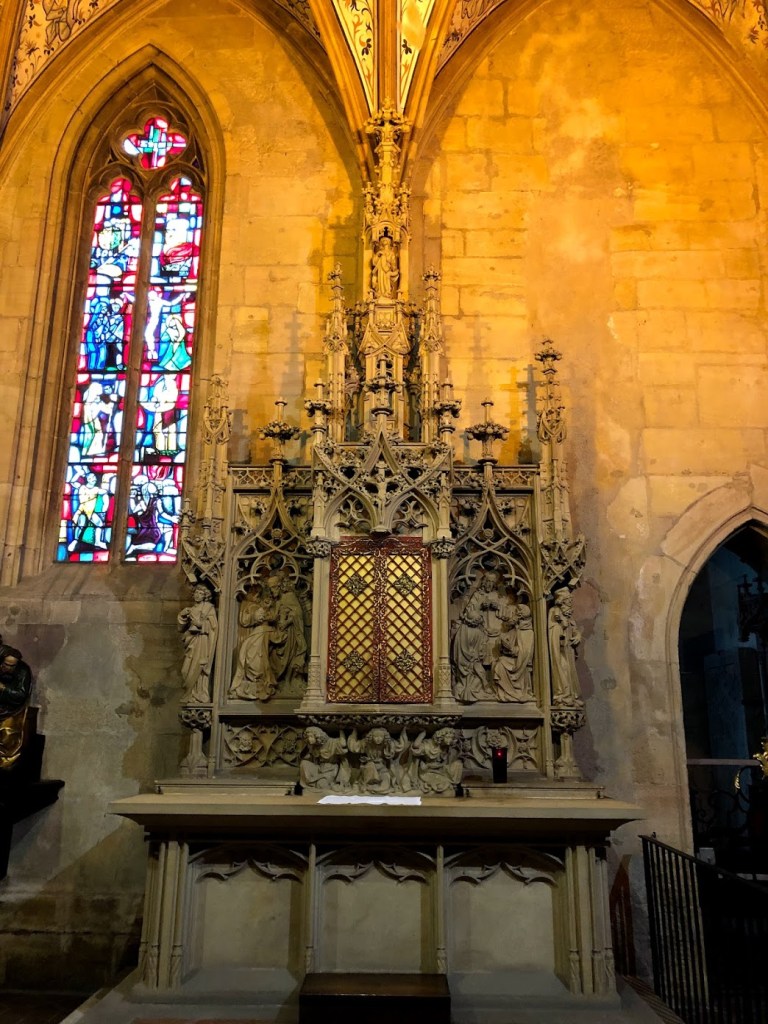
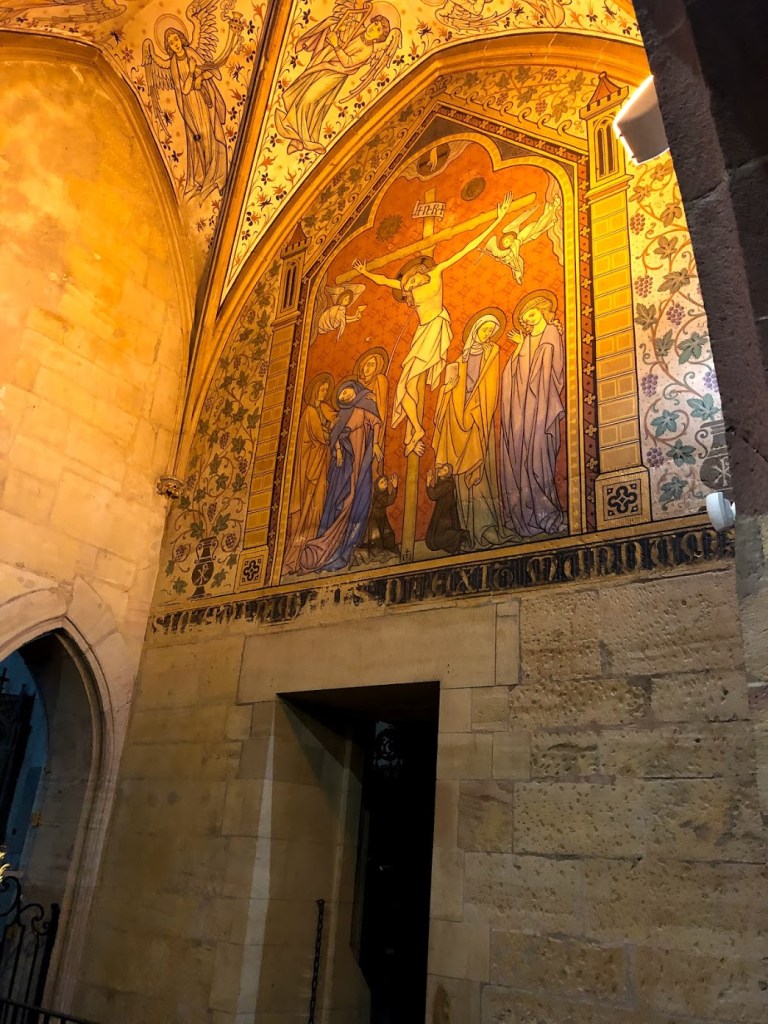
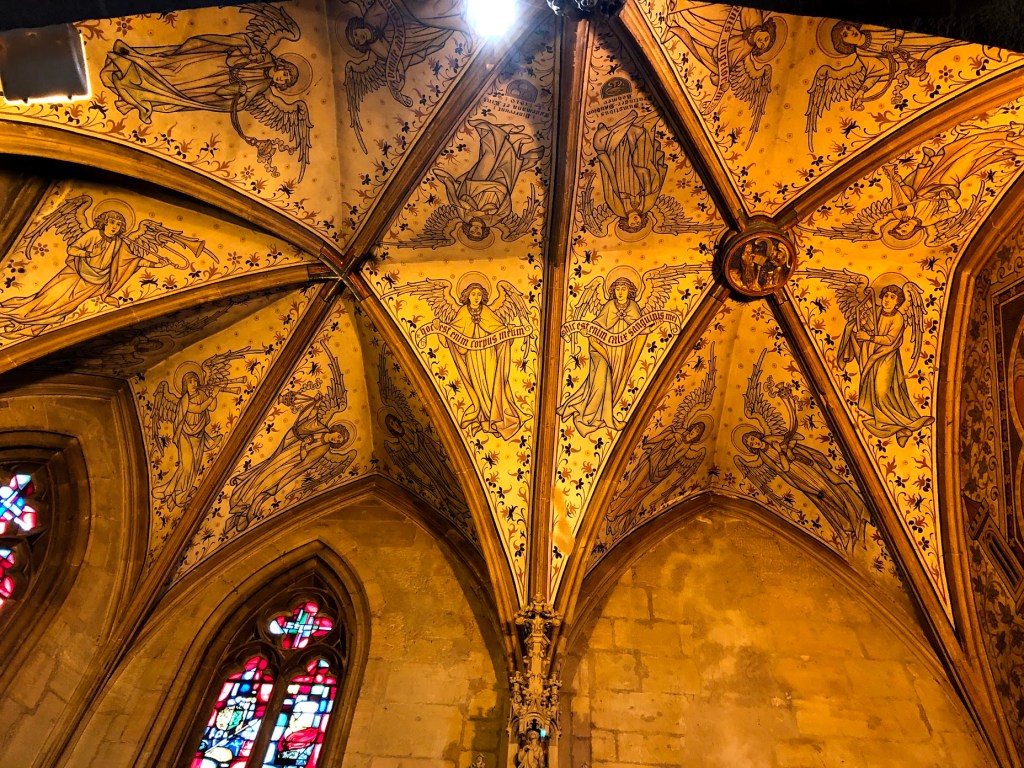
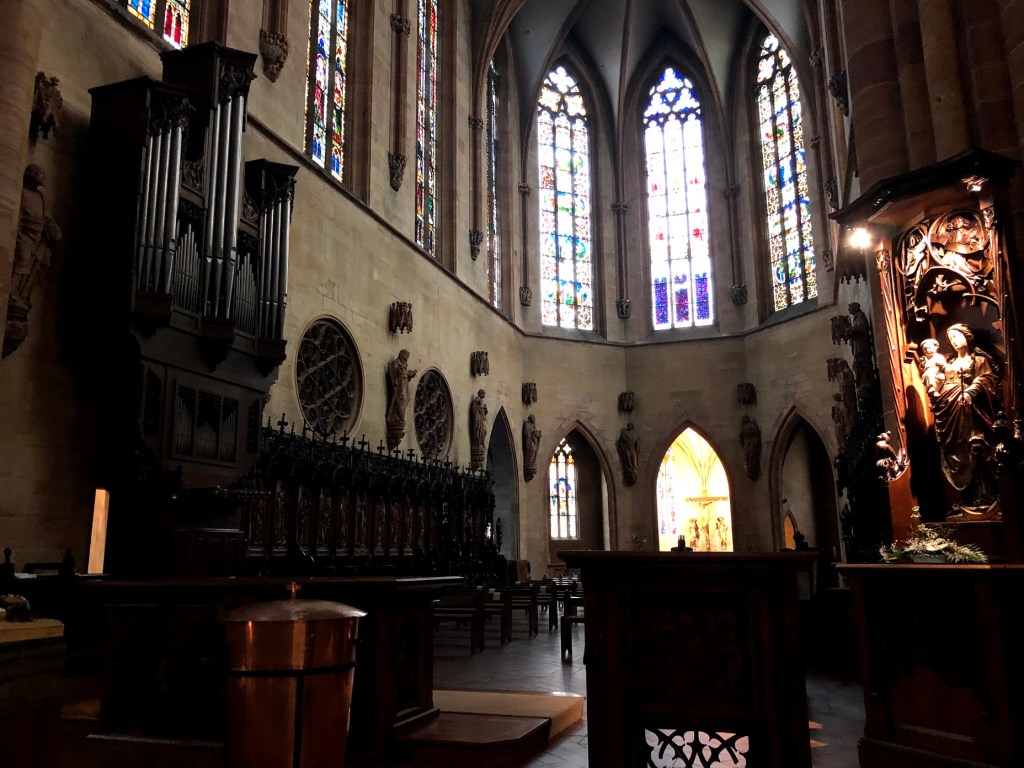
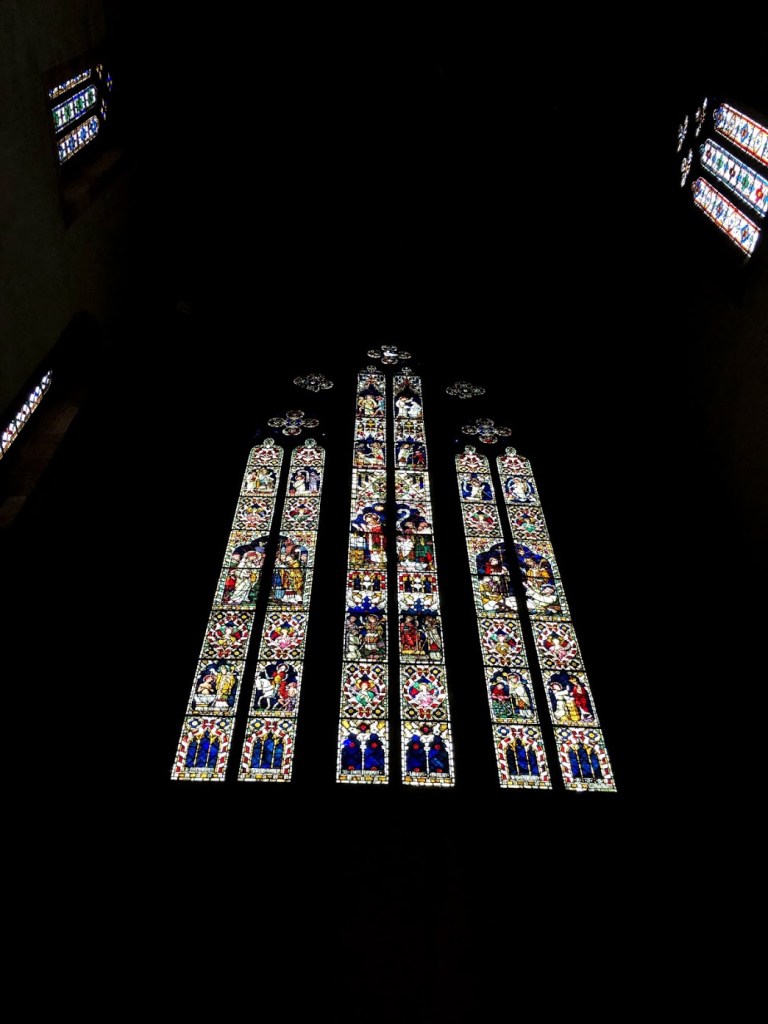
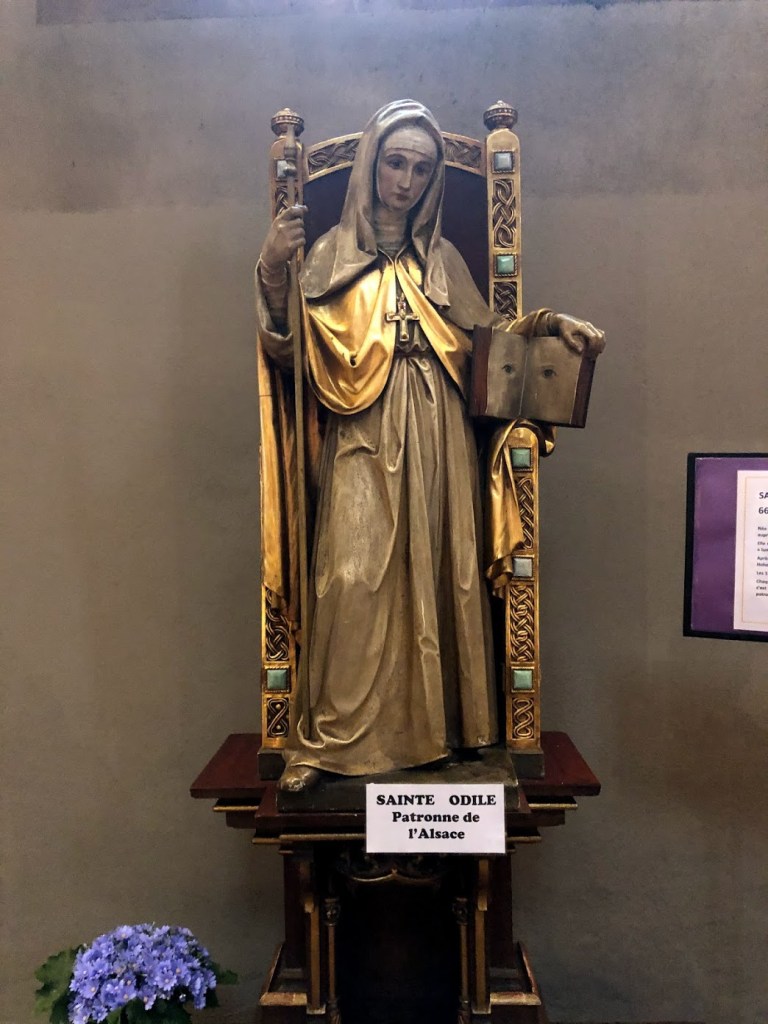
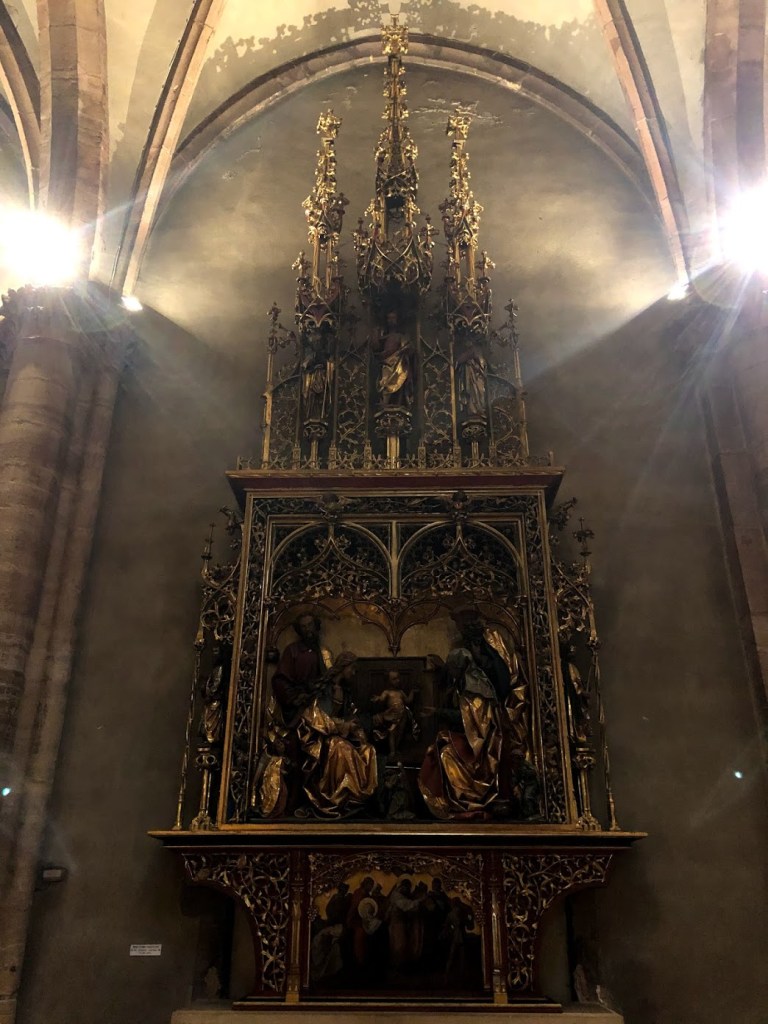
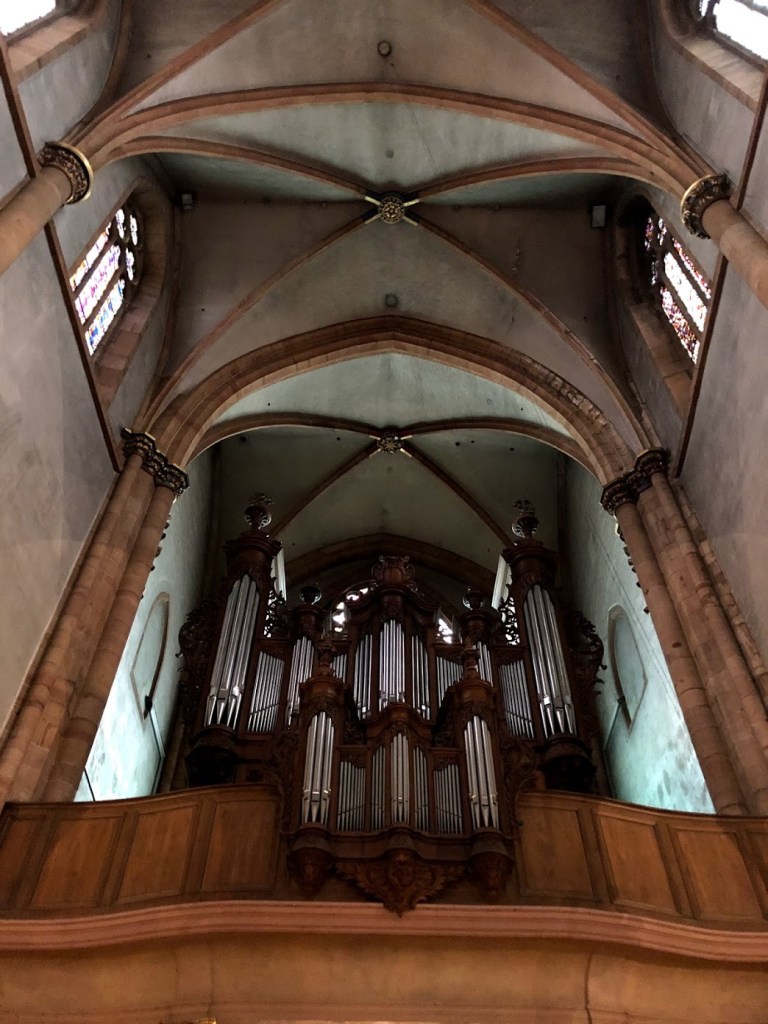
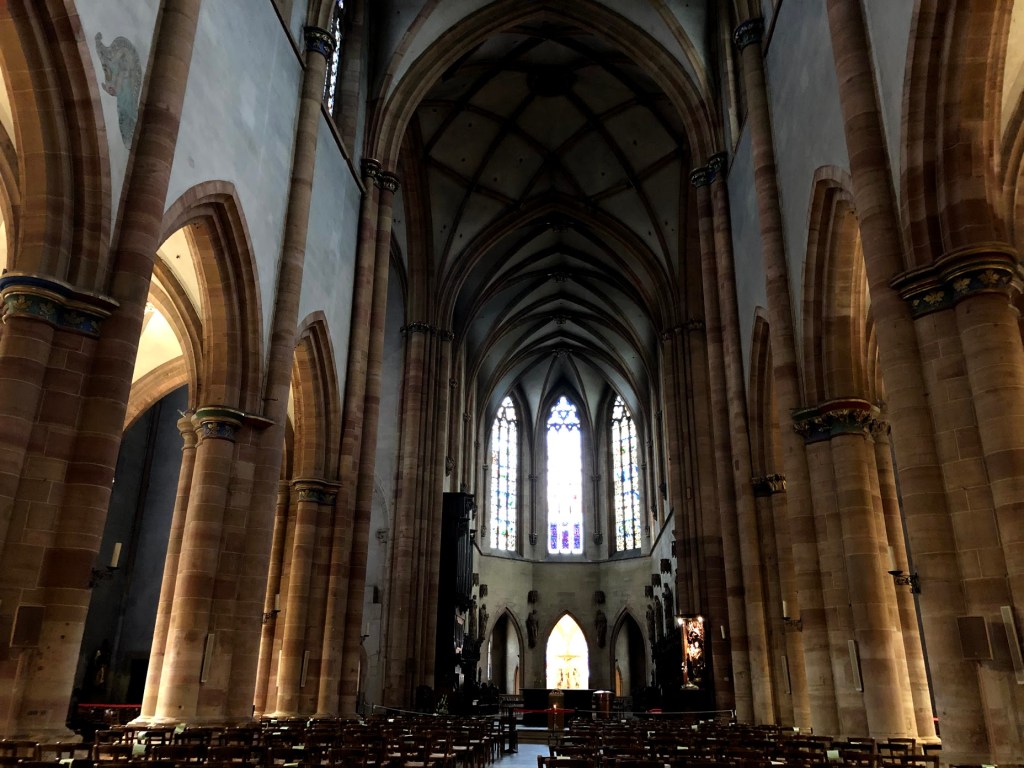
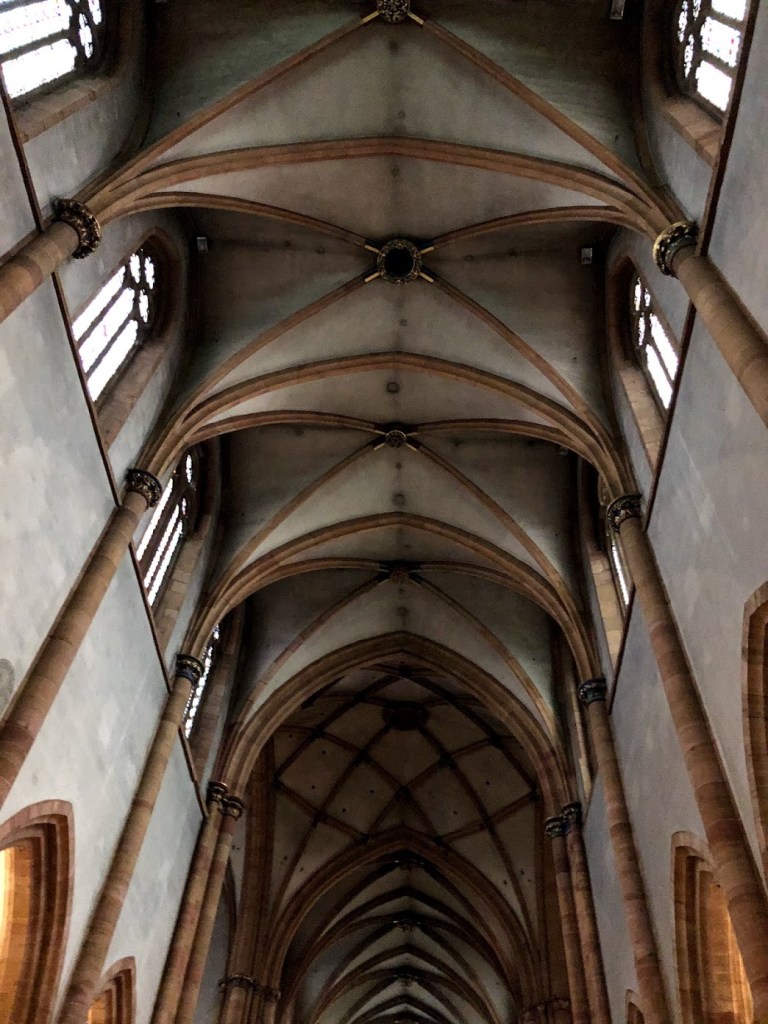
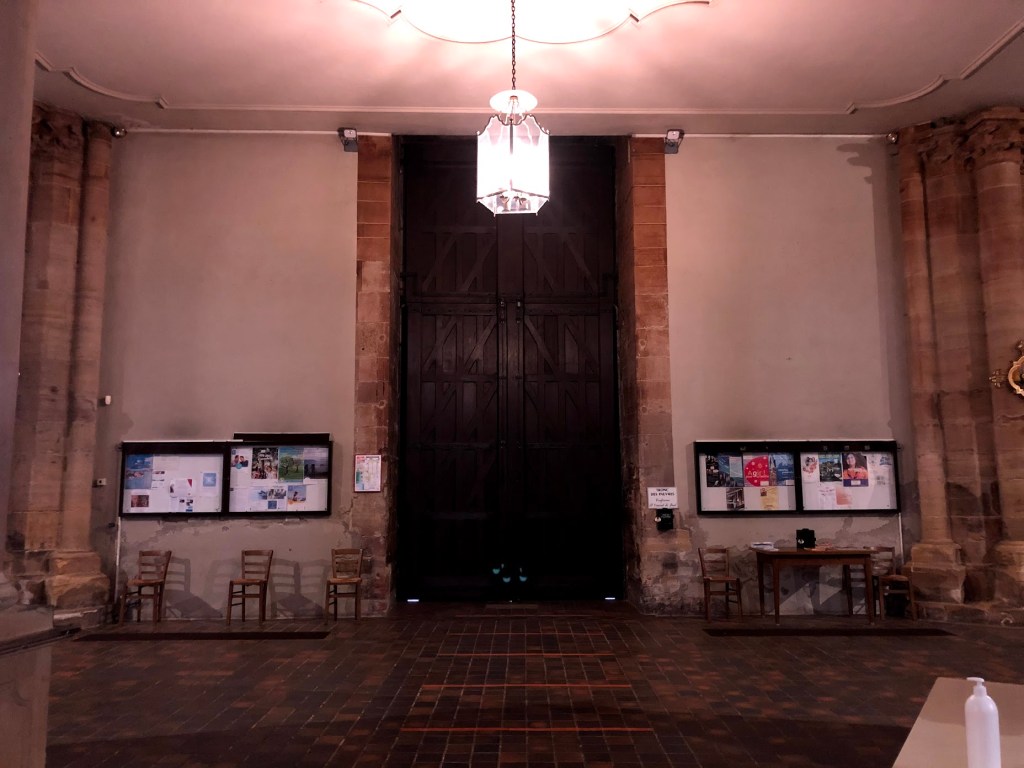
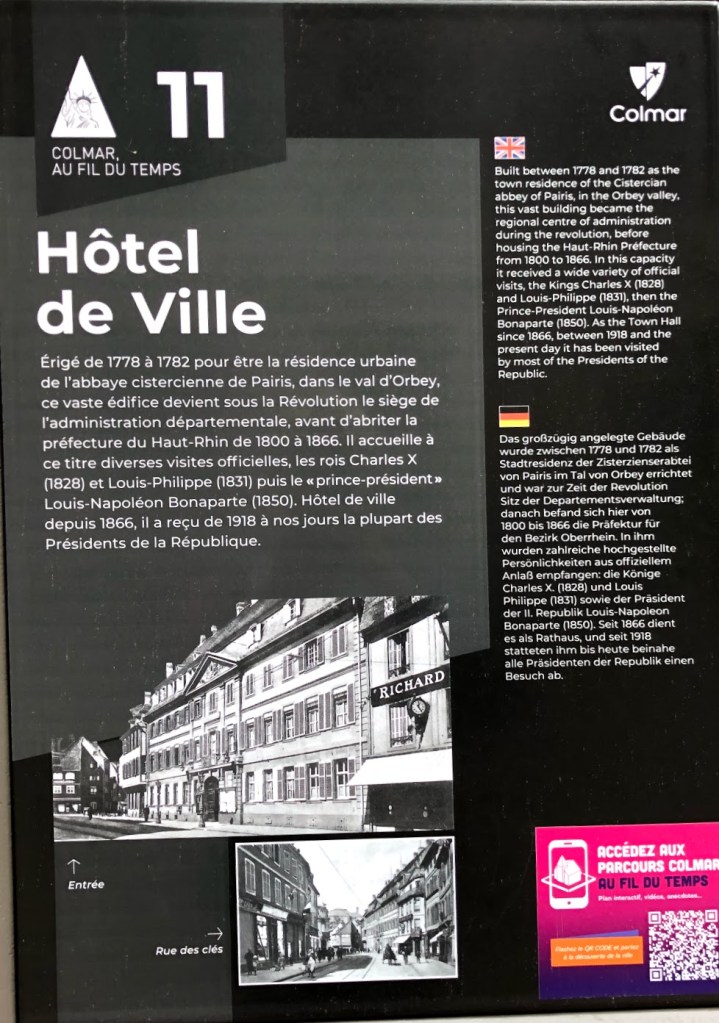
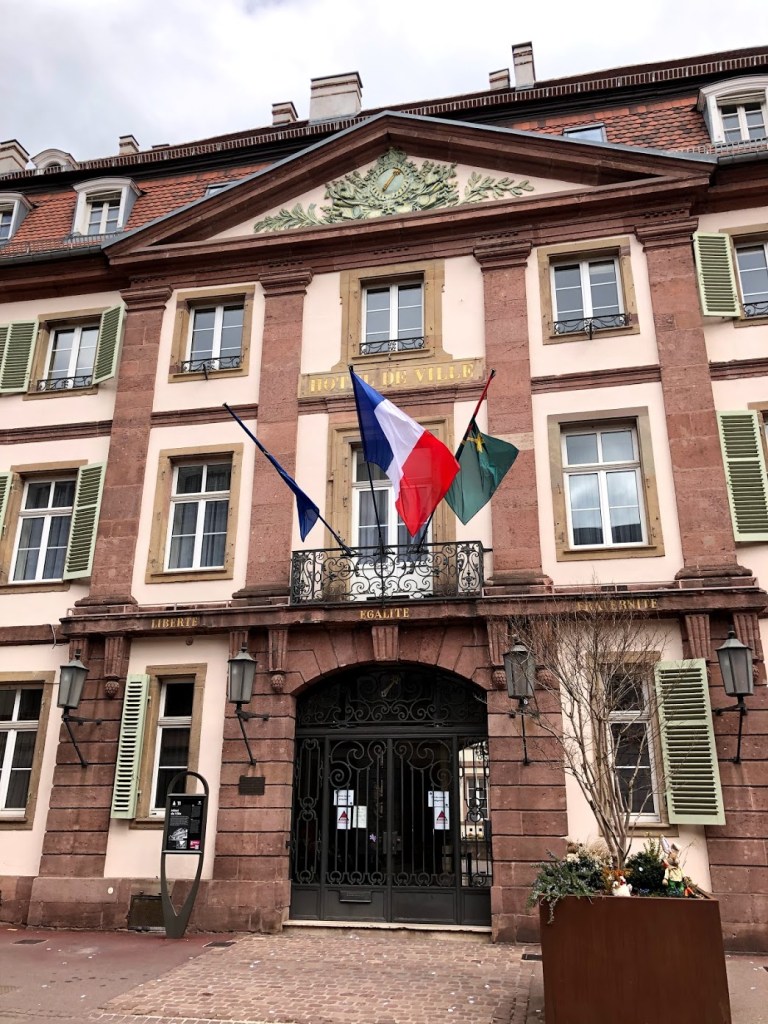
“The current form of the building is dating back to the late 18th century, and more exactly from 1775. The Cistercian monks from the abbey of Paris bought a property of Jean-Jacques Reiss, a bailiff from Ensisheim and Sainte-Croix-en-Plaine. Braconnot, steward of the abbey, asked the architect Ritter of Guebwiller to reconstruct the building in a neo-classic style, from 1778 to 1782. Confiscated during the Revolution, the building was firstly used by the administrative headquarters of the department in 1790, and then by the prefecture from 1810 to 1866, the year the building was bought by the city of Colmar to become its town hall.”
At this point, I decided to go home and eat lunch. I got some Starbucks on my way, as I couldn’t pass up the opportunity for an American style coffee. I ate in my room, grabbed another sweater, and headed back out to see the town. I resumed my walk at the town hall and decided to wander down some side streets while I was around.
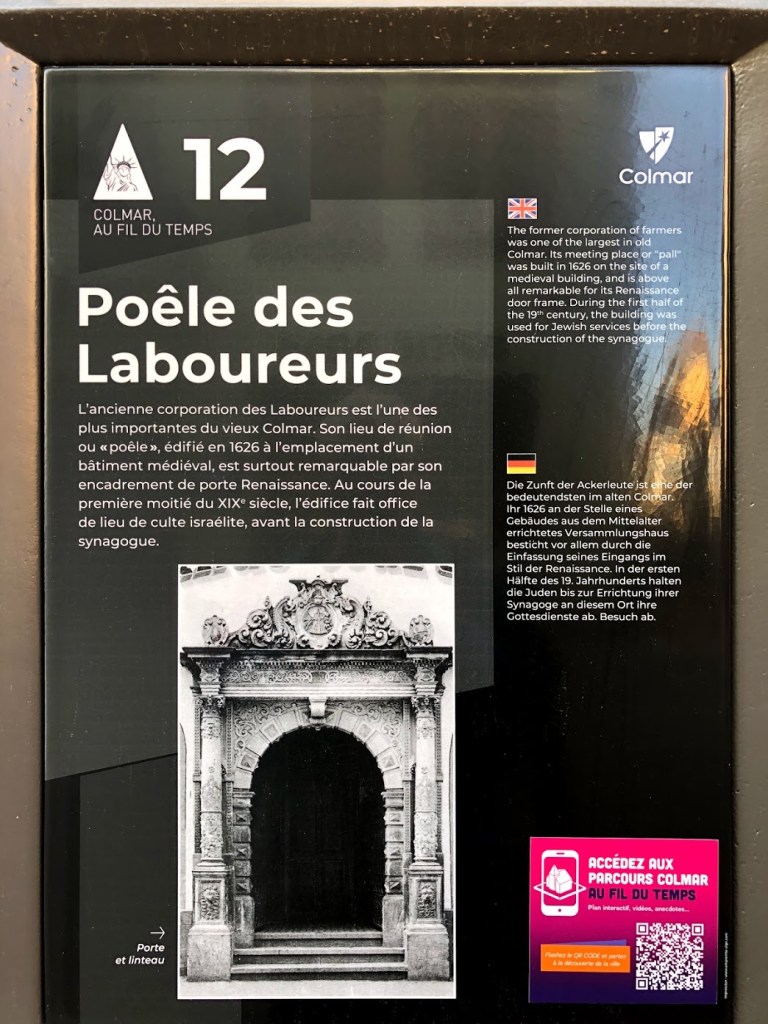
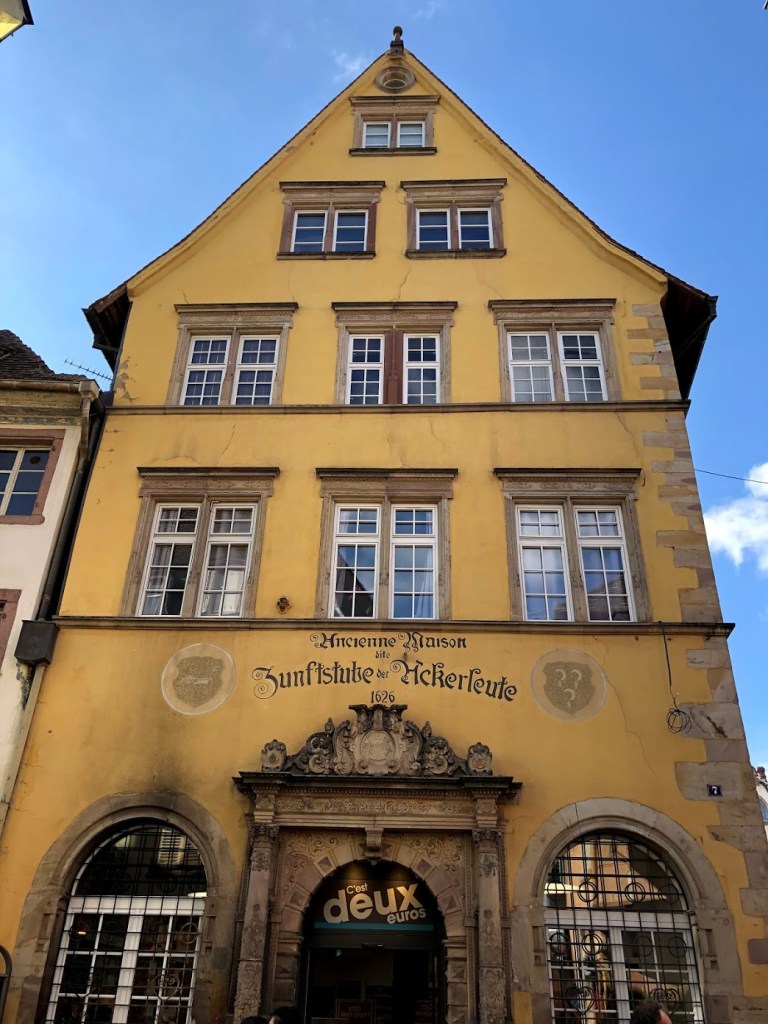
“The current building comes from the reconstruction in 1626 of a building which was already used by the powerful ploughmen’s guild. The guild, which had a role of executive functions on the inhabitants of Colmar, rebuilt its meeting place in the architectural style of the late Renaissance. The door frame, the transoms, the mullions and the decorated lintels of the windows offer a rather complete decorative repertoire.
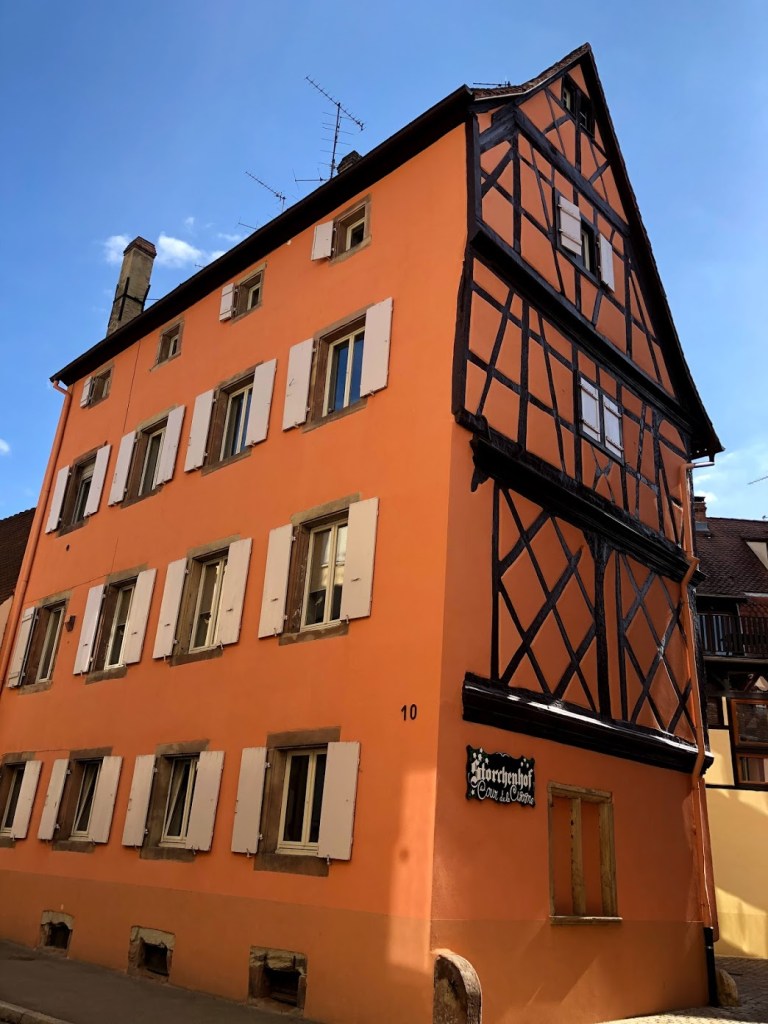
After the revolution, the Jewish community of Colmar used the building as a worship place until 1842. Then a new synagogue was built rue de la Cigogne.”
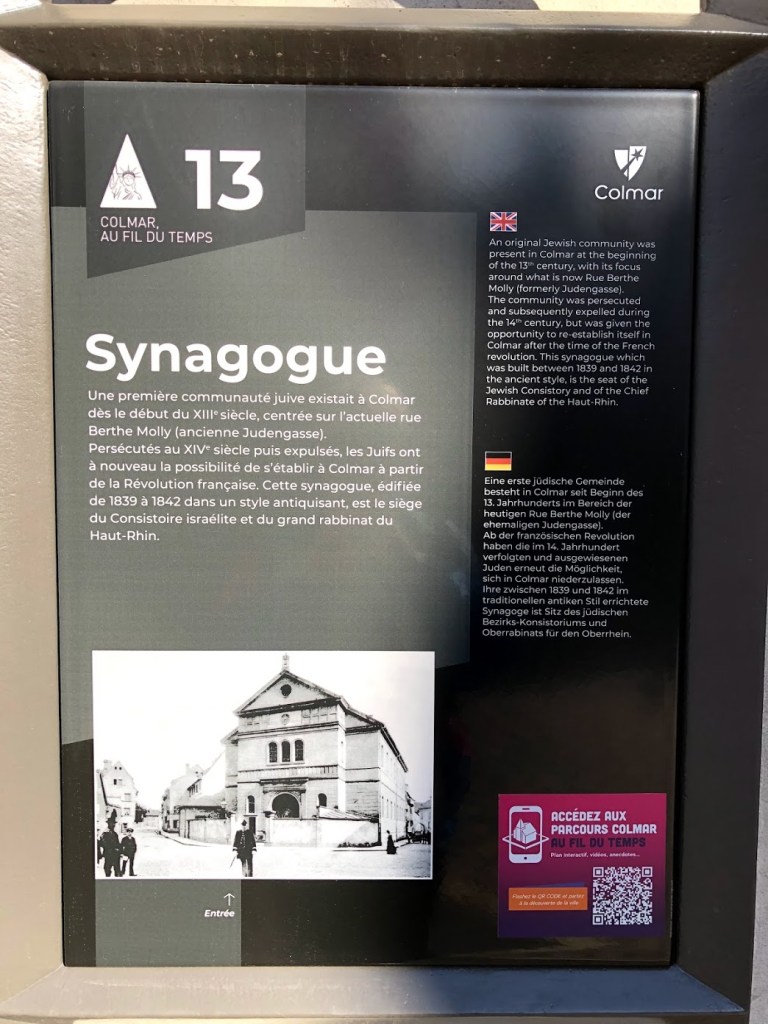
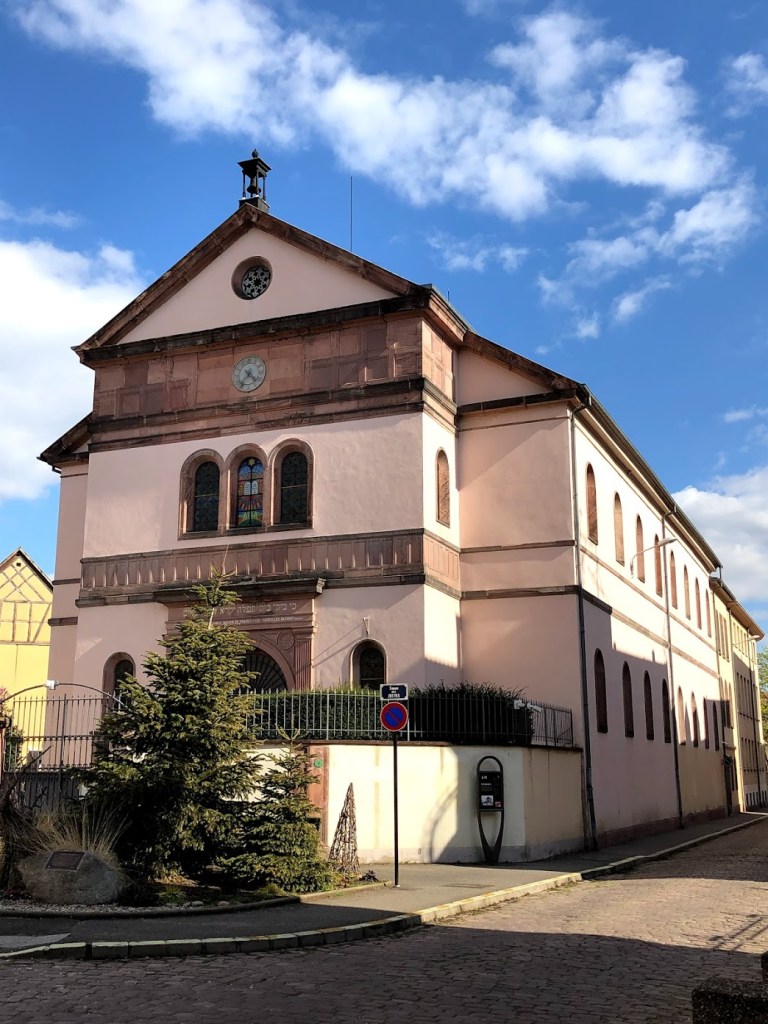
“Built from 1839 to 1842 on the site of an old farm, the synagogue of Colmar is the seat of the Israelite Consistory and the Grand Rabbinate of the Haut-Rhin.
The presence of the Jewish community in the city is testified since the 18th century. The Jewish community, expelled in the 16th century, came back in Colmar during the Revolution and had at that time an equipped oratory to worship in the former seat of the Ploughmen’s guild. The community filed a record of building in 1814, while the rabbi was transferred from Wintzenheim to Colmar in 1823. The reconstruction of the building started in 1839 in the antique-style of the early 19th century.
The synagogue of Colmar was renovated in 1885 and an annexe was added in 1936. Used as a saleroom and then as an arsenal during the German occupation, the synagogue was again restored after the war. It is the only synagogue in the region which has a bell tower.”
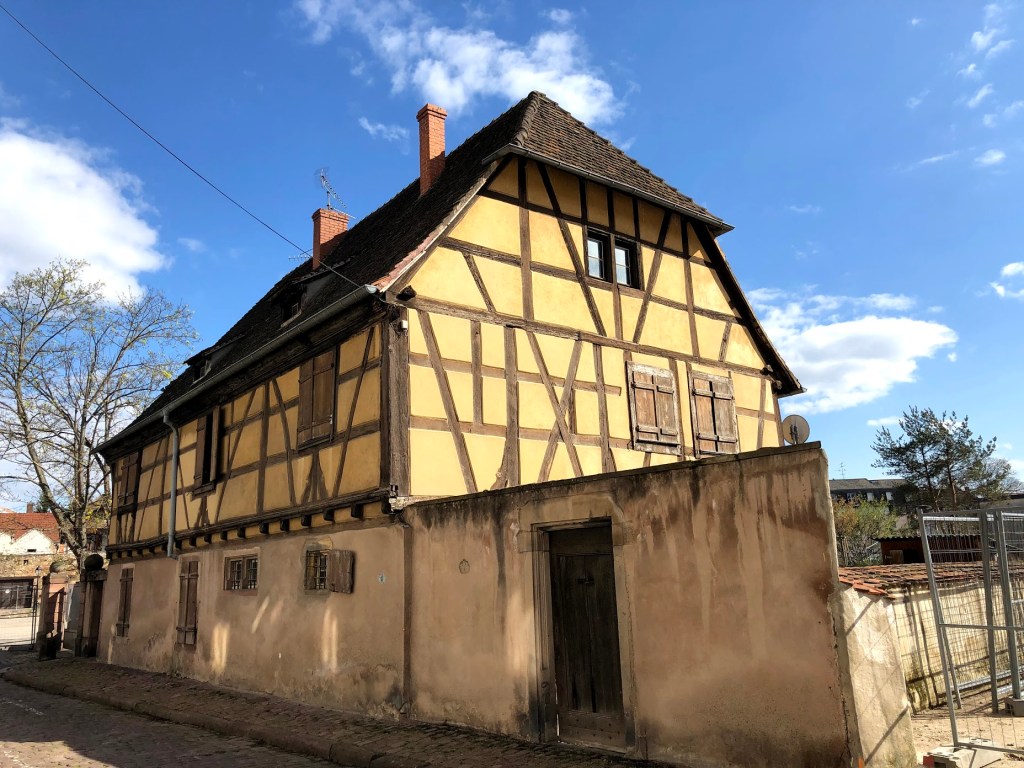
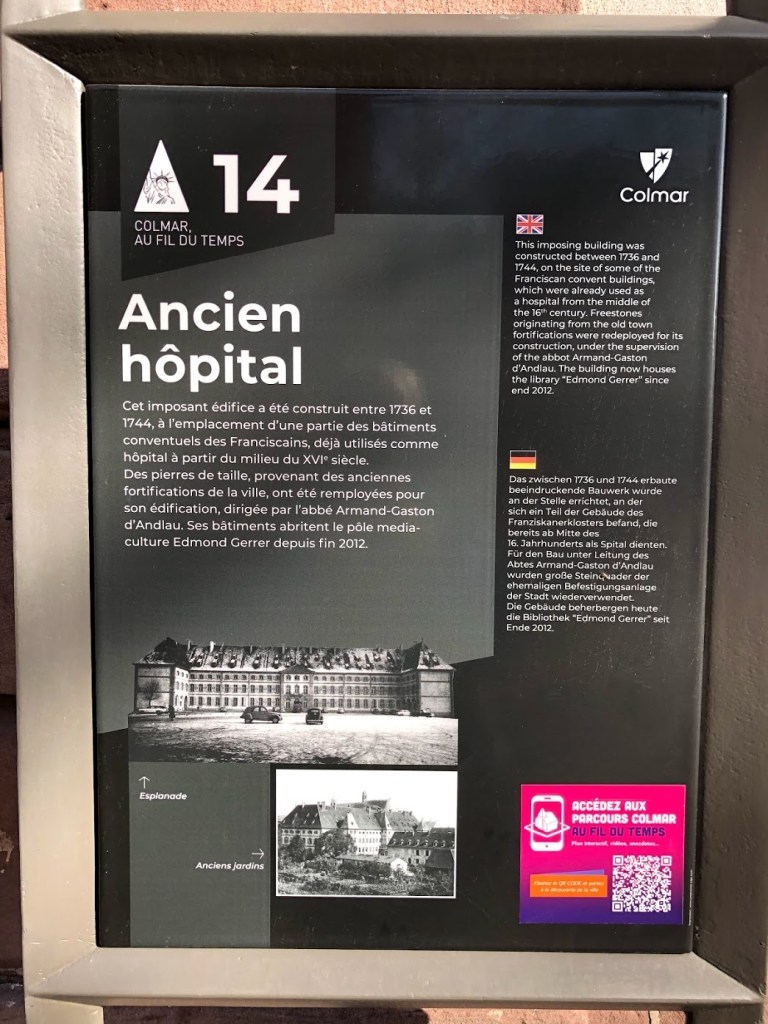
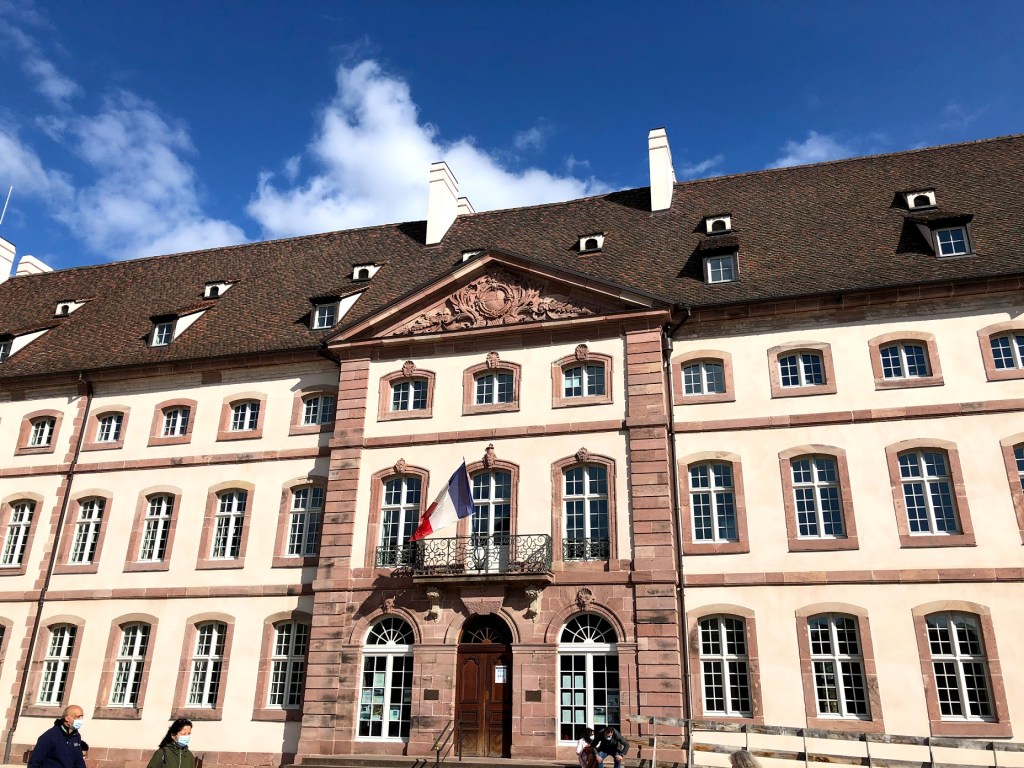
“After the departure of the Franciscans from their monastery, the superior of the religious order in the province sold the buildings to the city of Colmar in 1543. The monastery was then converted into a hospital, but it was struck by lightning in 1735 and destroyed. The hospital was rebuilt between 1736 and 1744 with the stones of the city fortifications, which were destroyed in 1673. The building is a fine example of French architecture of the 18th century, in the balanced and sober style of the neo-classicism.
In the late 16th century, the west side of the buildings was reserved for the military hospital. The neighboring Saint-Matthews Church was then separated in two; one side was for the Protestant community of Colmar and the other side was used as a Catholic chapel for the hospital. The military hospital was moved to the Catherinettes in 1792. However the civil hospital remained in the same building until 1937, the year when the Pasteur hospital was built, west of the city. The buildings were a time occupied by two departments of the IUT of the University of Haute-Alsace, before being restored and refit/refurbish to become, in 2012, the media library of Colmar.”
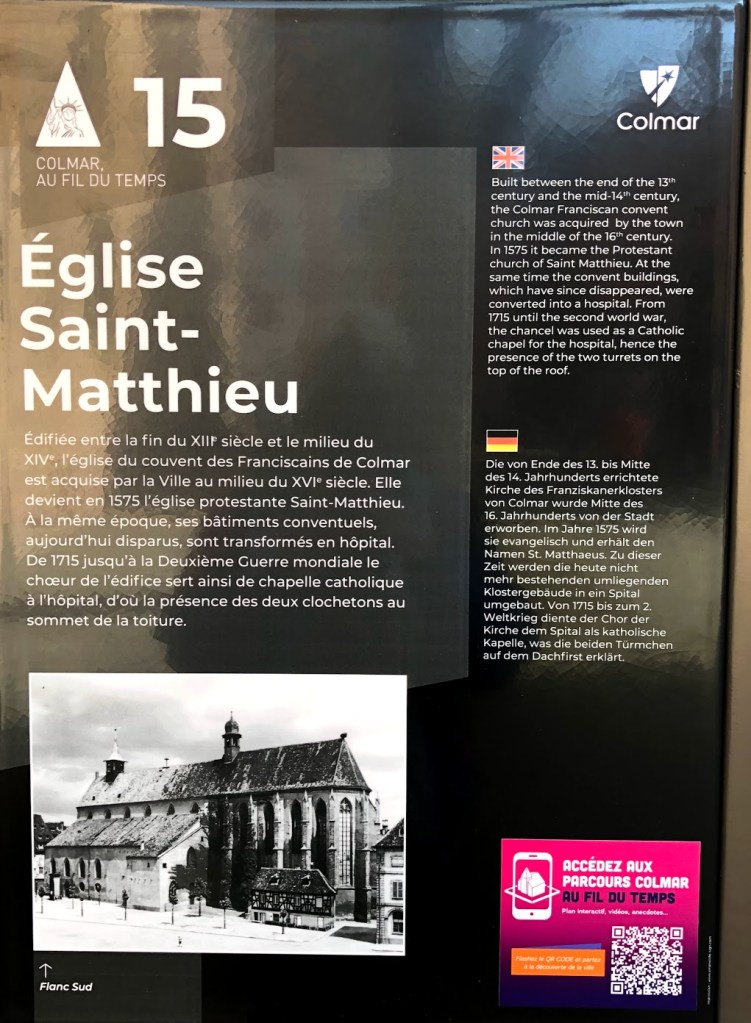
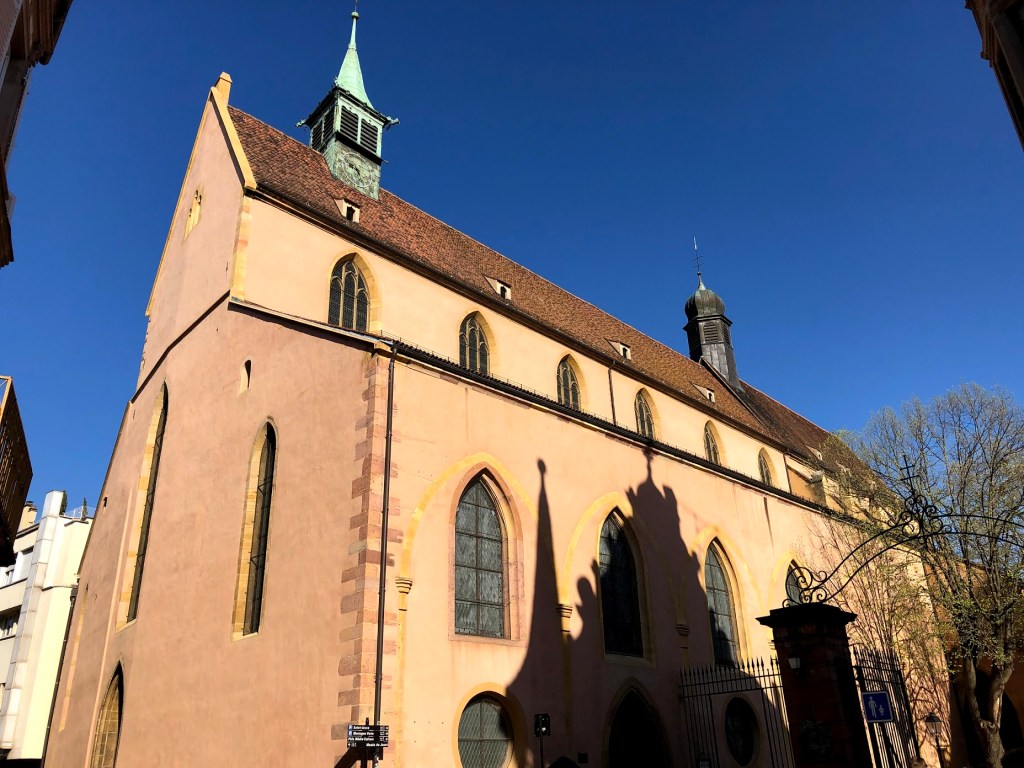
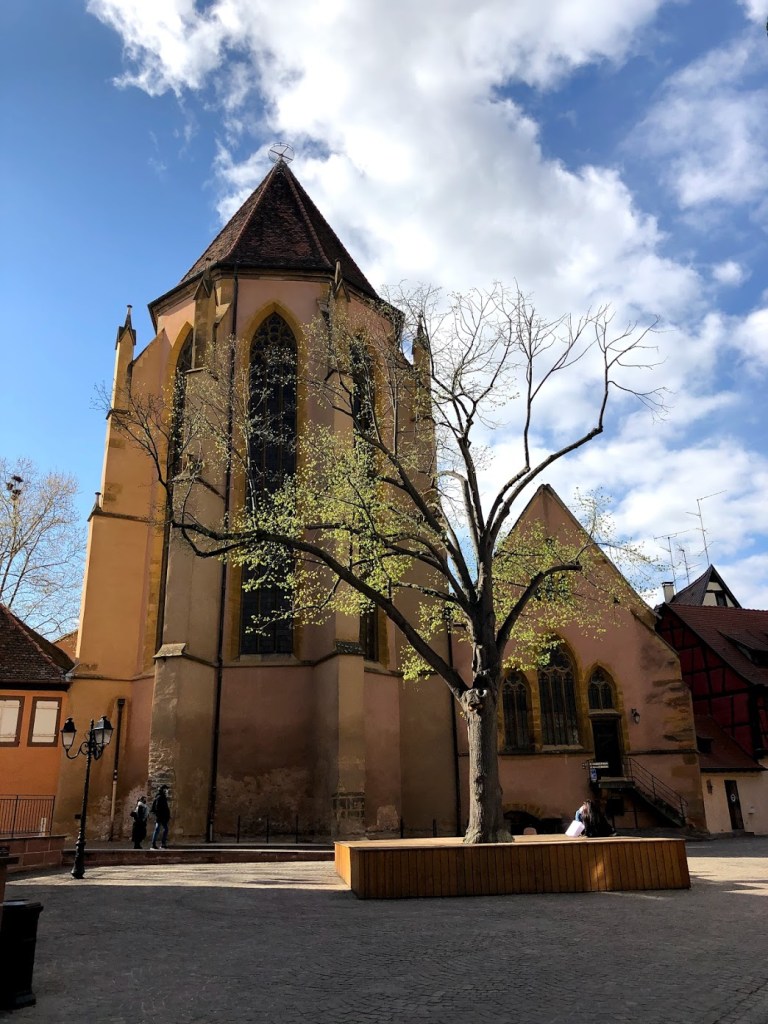
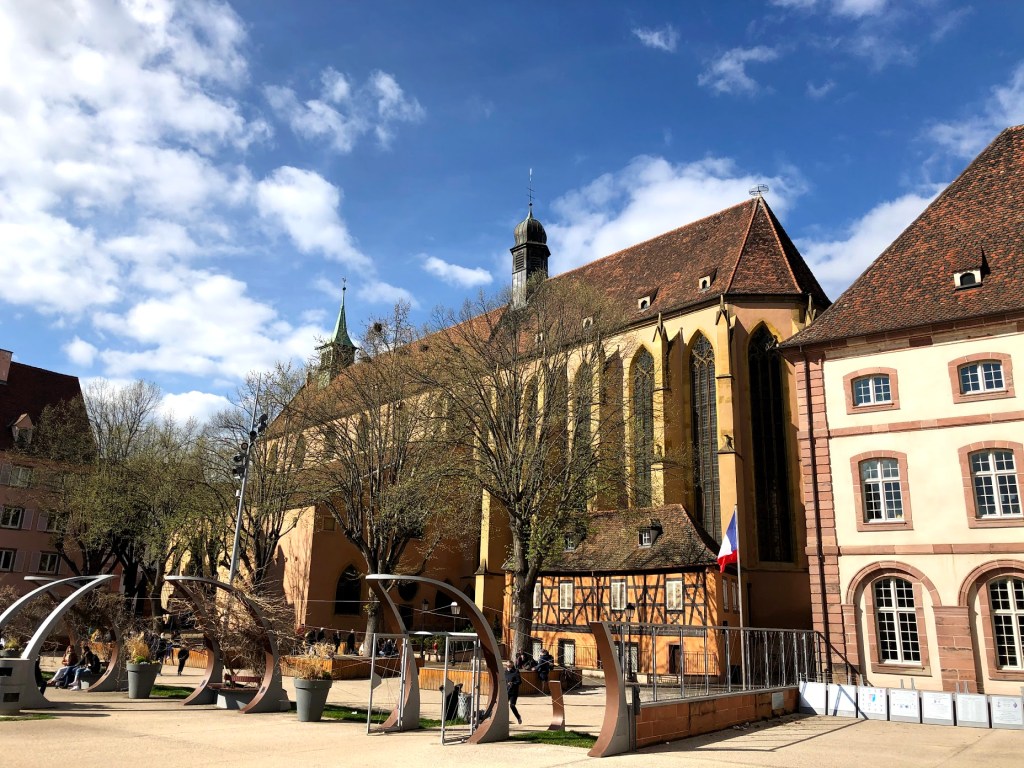
“The Franciscans, arrived in Colmar before 1250, started in 1292 the construction of a building which was ended only during the first half of the 14th century. With the Dominicans church, this monument is one of the major achievements of the mendicant orders in Alsace. After several restorations from 1982 to 1997, the church has recovered its initial state. For example the ceilings, lowered in 1862 to save money on heating, were raised again. Thanks to the church remarkable acoustic, concerts from the International music festival of Colmar take place there every year.In 1543, the Franciscan monastery closed definitely and the city of Colmar bought the buildings in order to set up the hospital. In 1575 the church was used by the Lutheran community of Colmar. A wall was built in 1715 to separate the protestant chapel in the nave one side and the catholic chapel in the choir on the other side, for the hospital installed close to it. After the construction of the new Pasteur hospital in 1937, the church was again entirely reserved to the protestant worship and in 1987 the wall was destroyed.”
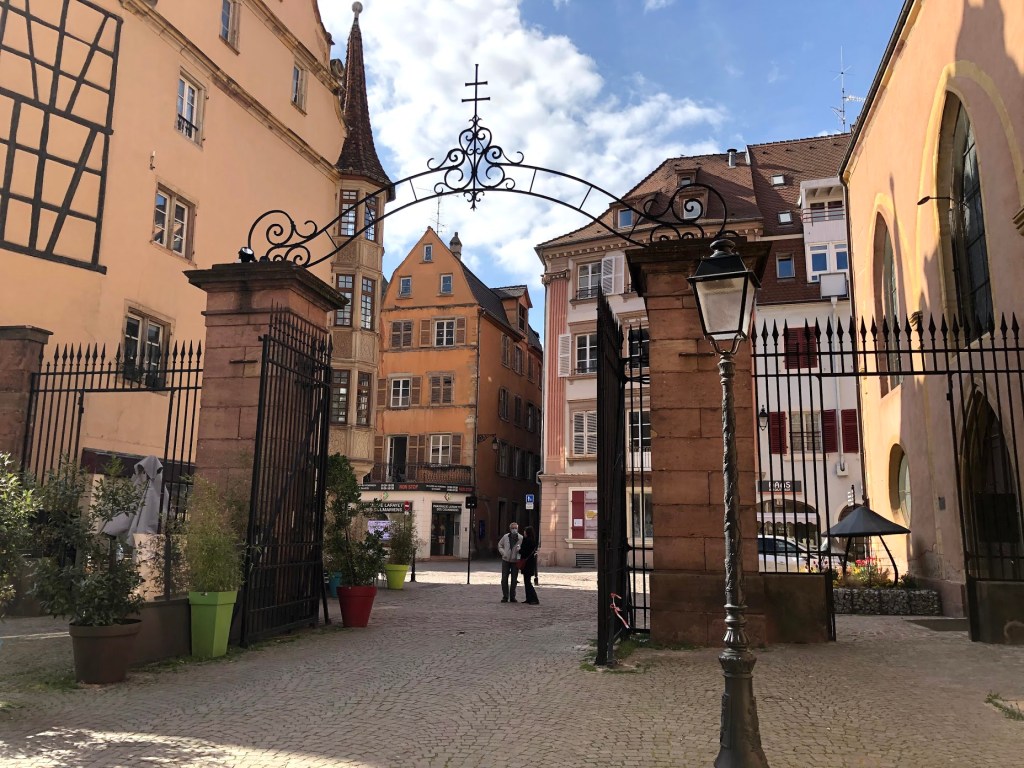
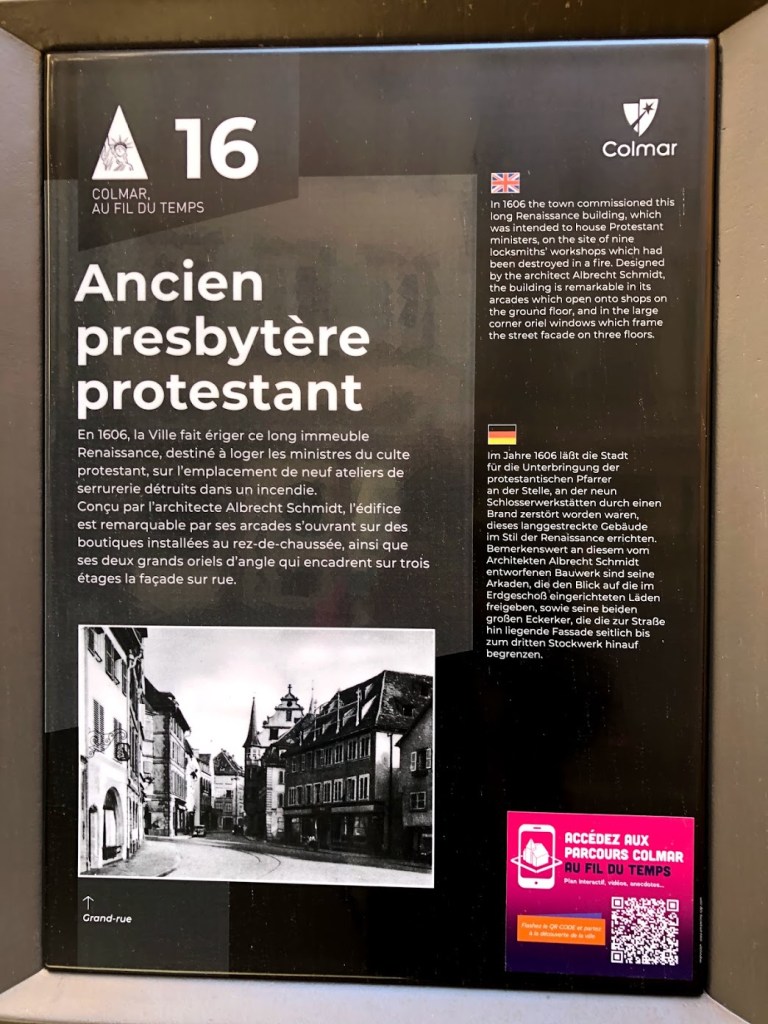
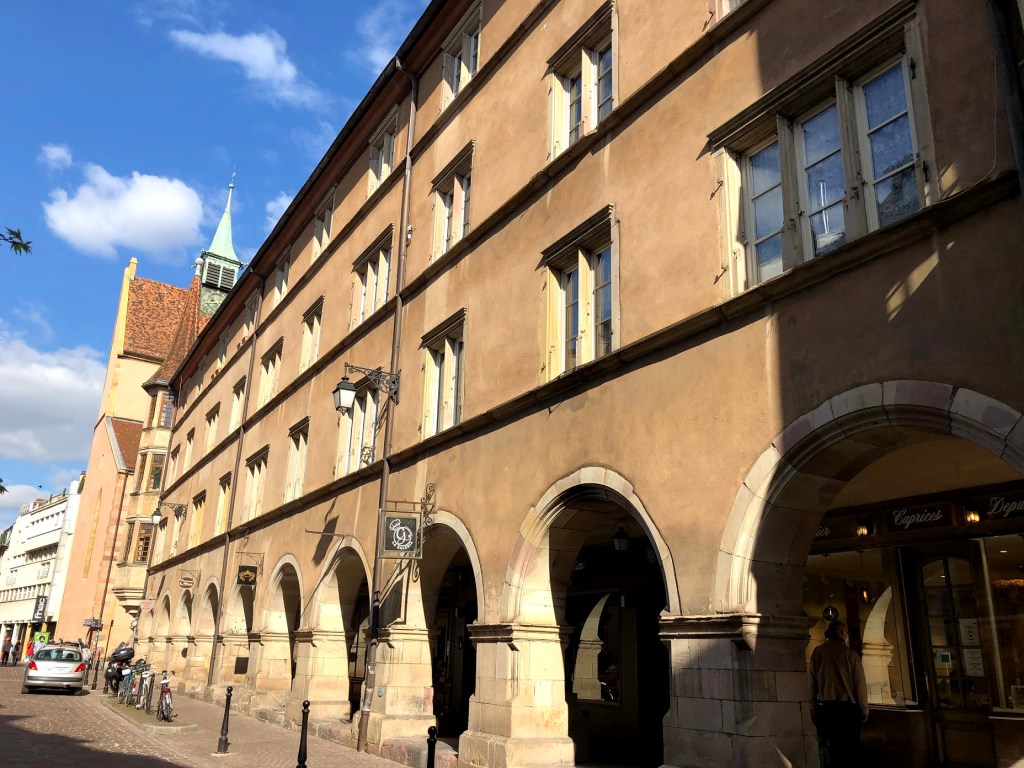
“Albert Schmidt, also architect of the house called the House of the St. John’s Knights (1608) and The House of Heads (1609) is the author of this building on the Grand Rue, which was built in 1606. Built in a German Renaissance style, the building has three floors and is bordered at each end by a scrolled gable and an oriel window, which adorn the building.”
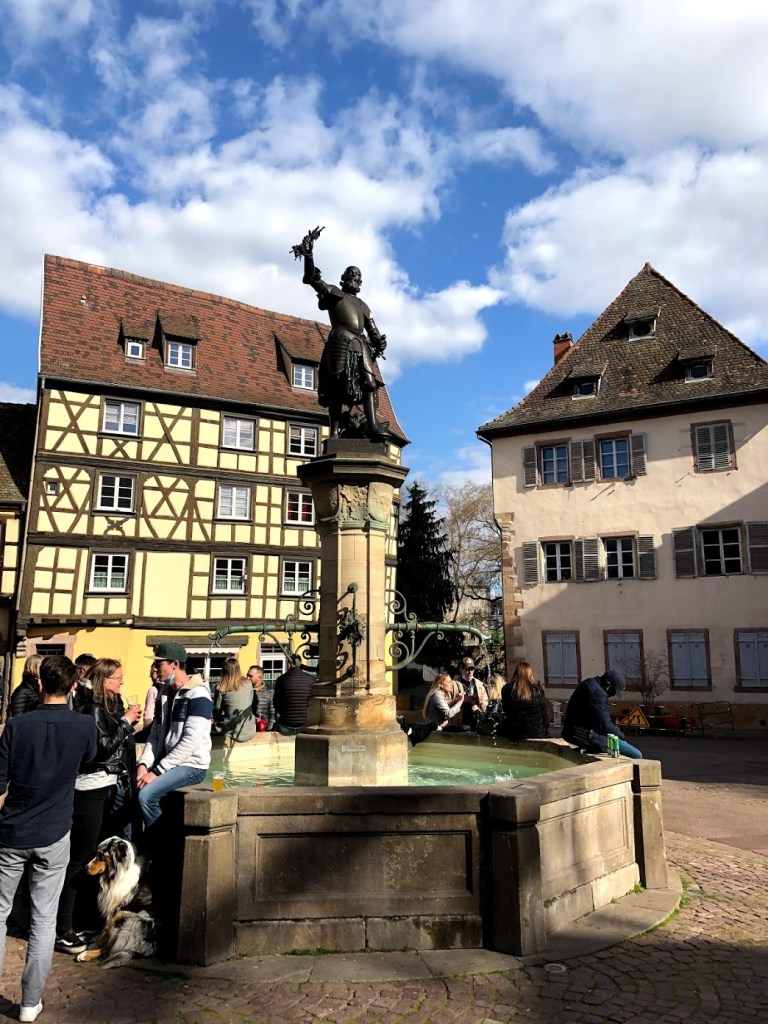
“This fountain, designed by Auguste Bartholdi in 1898 is surmounted by a bronze statue of Lazare de Schwendi (1522-1583). Demolished in 1940, the fountain was rebuilt after the war with a smaller fountain basin, oriented differently. The statue is now back on the former customs place.
Lazare de Schwendi was war chief between 1564 and 1568 under the emperor Maximilian II and fought against the Turks in Hungary, from where he would have brought the grape variety from Tokay. Auguste Bartholdi was inspired by this legend and decided to represent Lazare de Schwendi with a vine stock in the hand.”
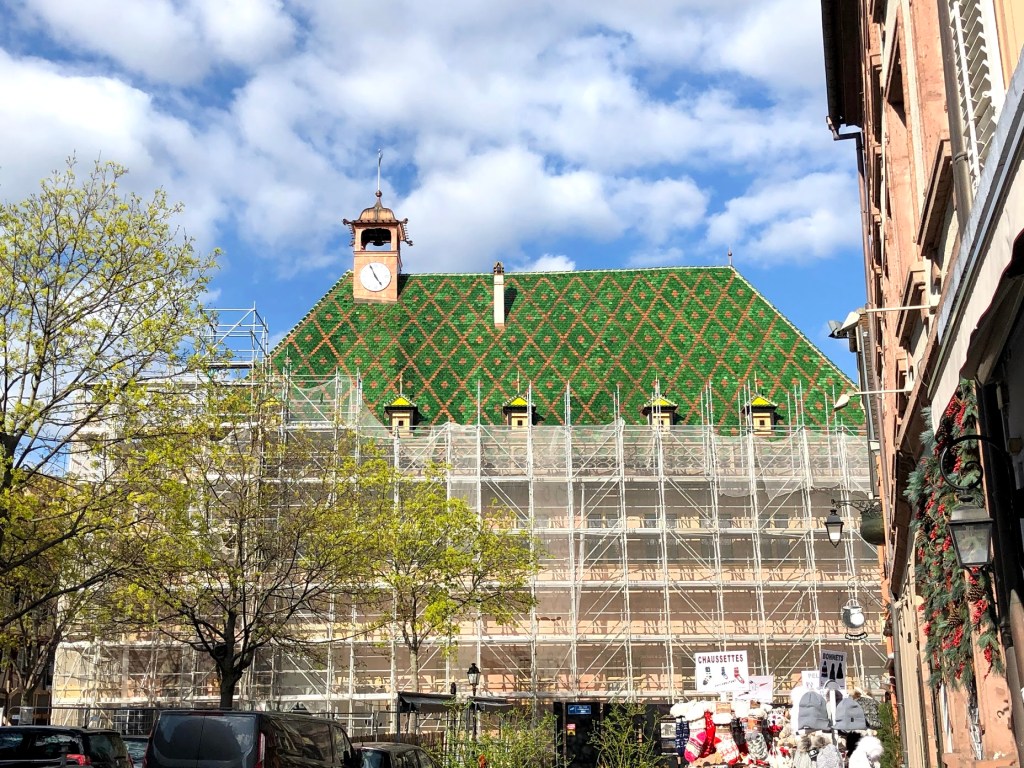
“The Koïfhus or the former customs house had a strategic place at the confluence of the Grand’Rue and the rue des Marchands, two of the major roads in the medieval city.
Imagined since 1433, the construction of the current building was ended in 1480. Two adjoining buildings were added in the 16th century. The condition of the building was in the 19th century so worrying that a demolition was envisaged. But the project was cancelled and restorations took place from 1895 to 1898. The turret and the glazed tiles came from that time. The last renovation in 2002 was to repair the sandstone balustrade in a Renaissance style which was removed in 1976.
The Koïfhus is the older public local building and had from its creation a double function. The ground floor was used as a warehouse and as a place of taxation for imported and exported goods. The floor was used for the meetings of the deputies of the Décapole, the federation of the 10 imperial cities of Alsace, which was created in 1534. The Magistrate also met there. The revolution abolished commercial privileges and the building was used for other uses. Around 1840 a theatre took place there and in 1848 the first office of the discount bank. The Koïfhus was occupied by the Chamber of Commerce and Industry from 1870 to 1930 and by a catholic boy school and an Israelite school in the late 19th century. Today many manifestations and public activities take place here.”
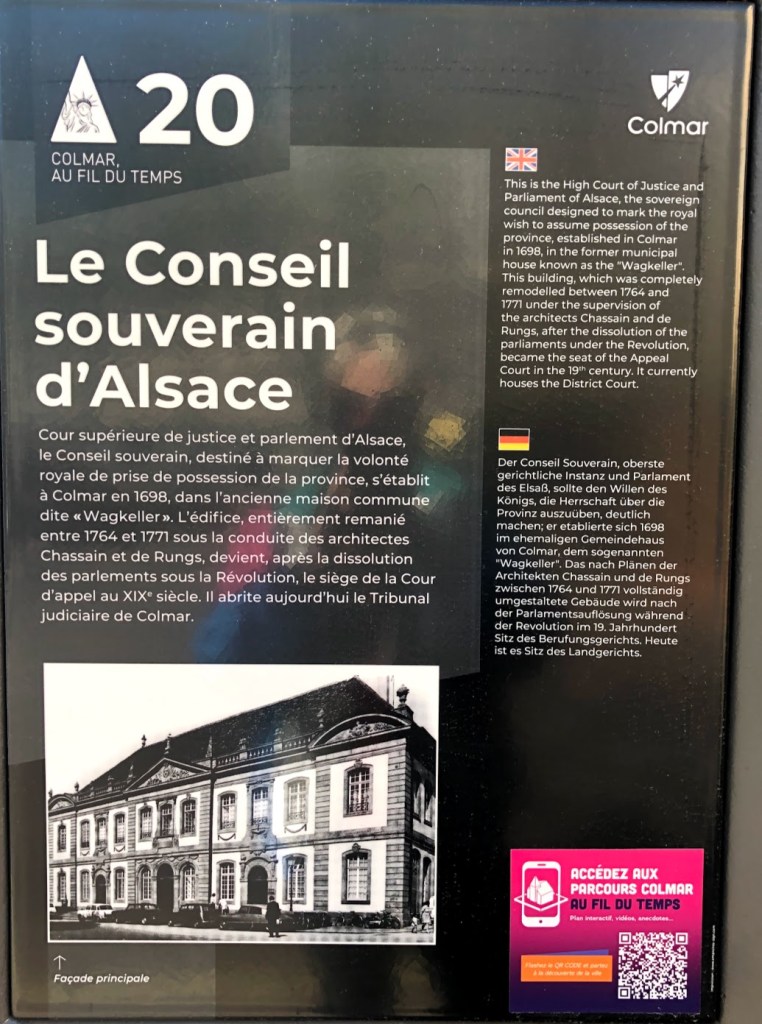
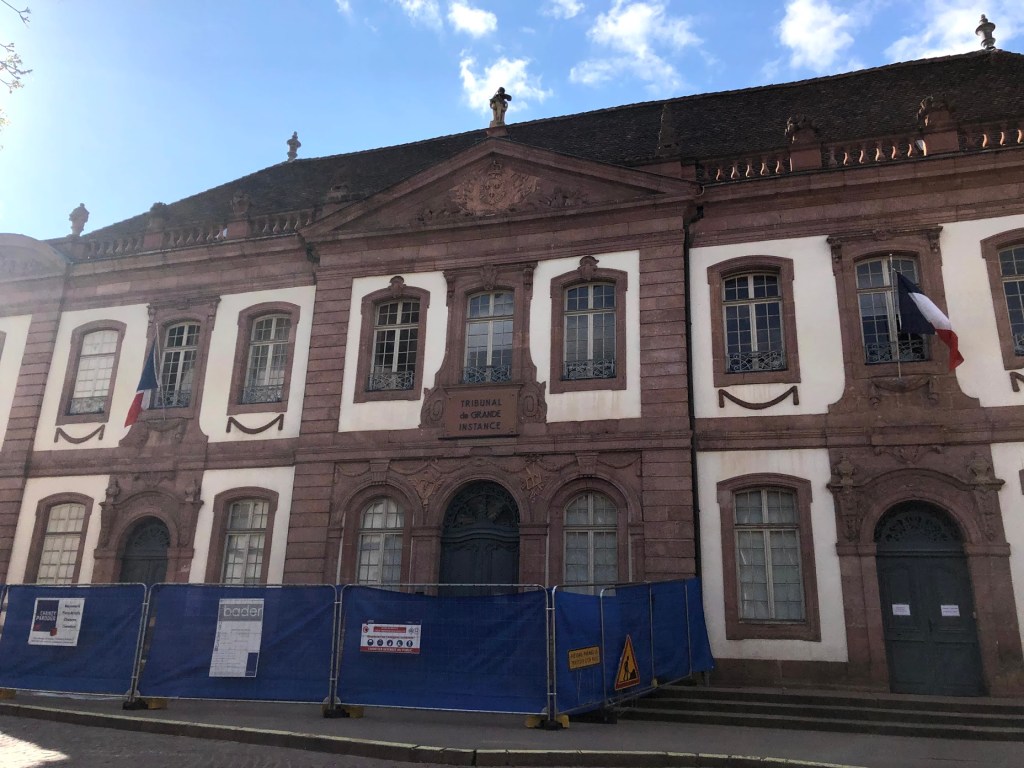
“This building, rebuilt in 1532 and constituted from a group of houses, encroached on the cemetery of the Augustinian convent nearby. In the late 16th century the building was deeply changed in the style of the Renaissance. Paintings and epigrams, which have now disappeared, decorated the exterior façades. In 1595, a statue symbolizing the justice came to decorate the new façade. After the installation of the Sovereign Council in 1698 the building has been restored several times. Its current neo-classic façade was made between 1769 and 1771.
Initially the building was used for the meetings of the patrician society Wagkeller, but since 1532 the meetings of the judge which where before at the Koïfhus, took place there. Louis XIV lived there during its visits in 1681 and 1683. The Sovereign Council of Alsace, created in 1657, moved there in 1698. Former court of appeal in the 19th century, the palace of the Sovereign Council is now occupied by the court of first instance in civil and criminals matters.
A niche was built on the façade rue des Augustins, and it contains a replica of the Manneken-Pis. The sculpture, initially installed in front of the public baths, was a gift from the city of Brussels to Colmar in 1922, in memory of the sufferings both cities had known during the German Occupation.”
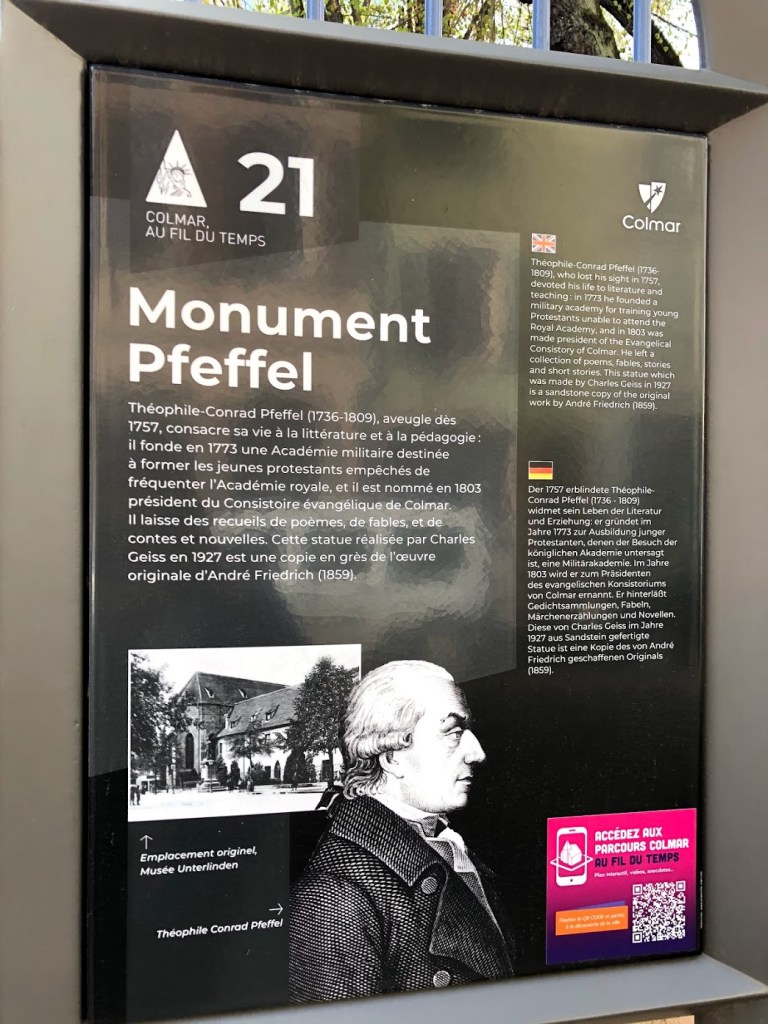
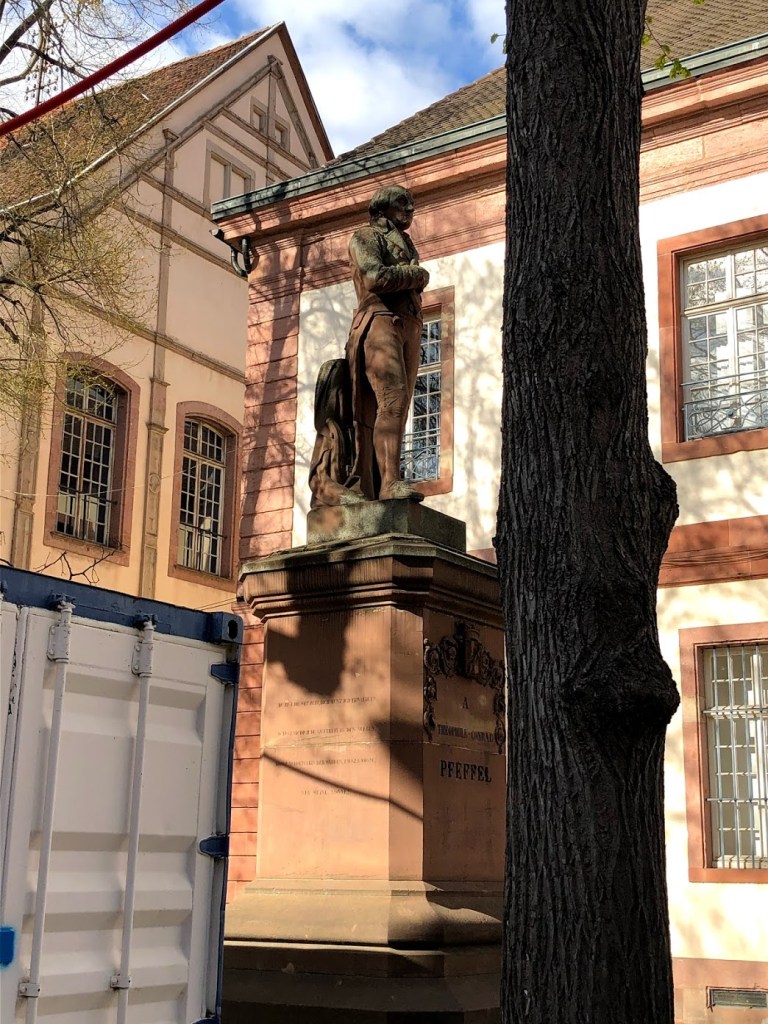
Number 21: The Peffel Monument
“This statue of the poet and teacher Théophile Conrad Pfeffel (1736-1809) who was born in Colmar is a copy of an original work of André Friedrich (1859). Initially placed in front of the Unterlinden Museum, the statue was damaged and was replaced by a bronze copy in 1899. However in September 1918, this copy was removed and brought to Frankfurt to be melted for weapons purposes. The current statue was sculpted by Charles Geiss in 1927 and installed in the square next to the former sovereign palace.”
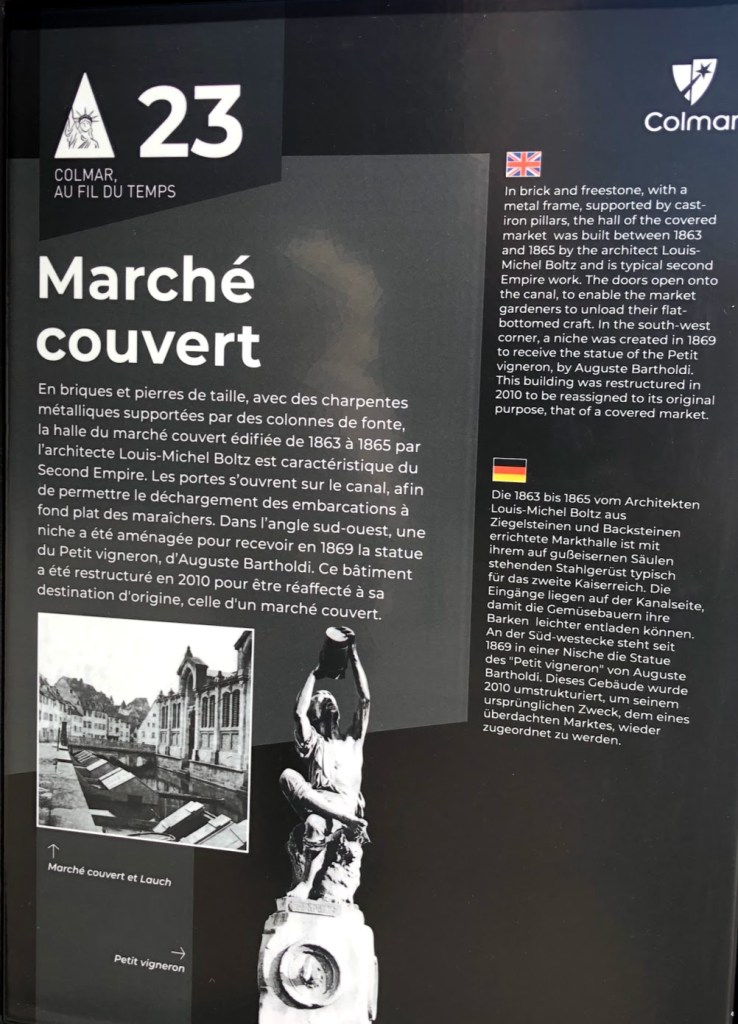
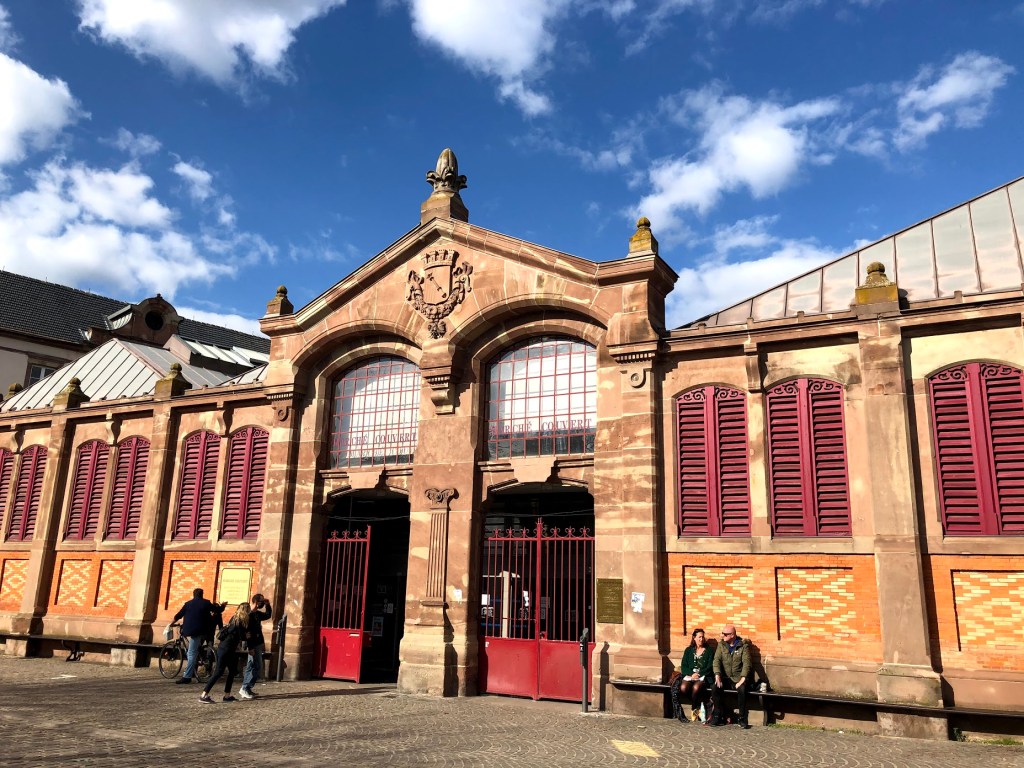
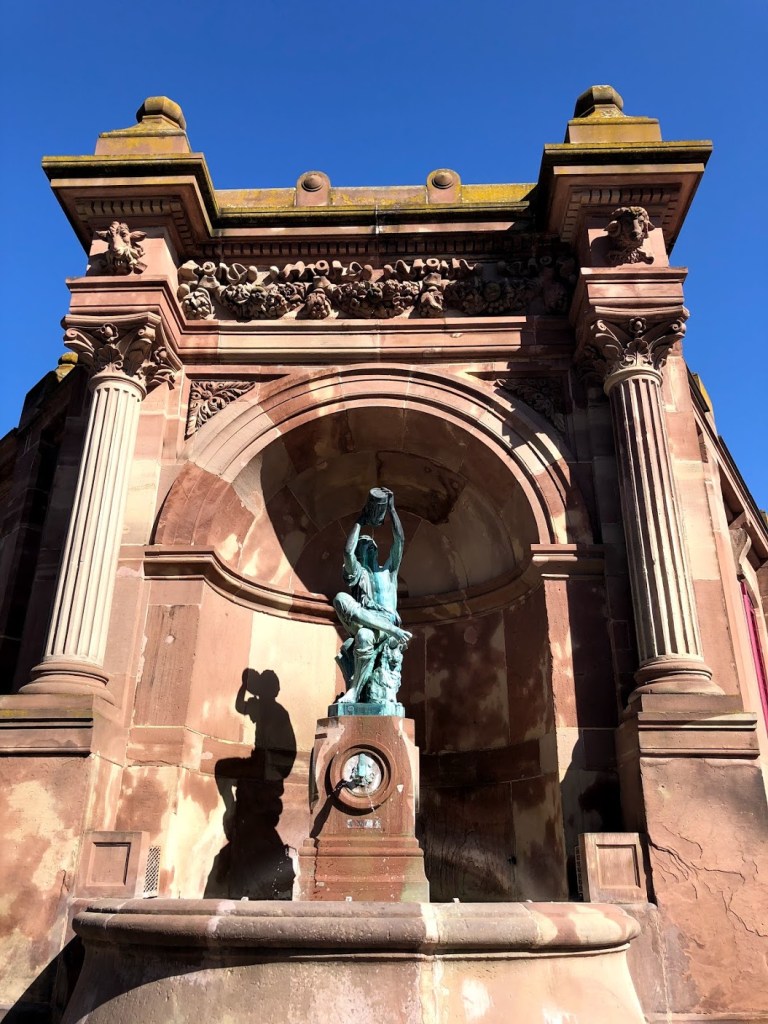
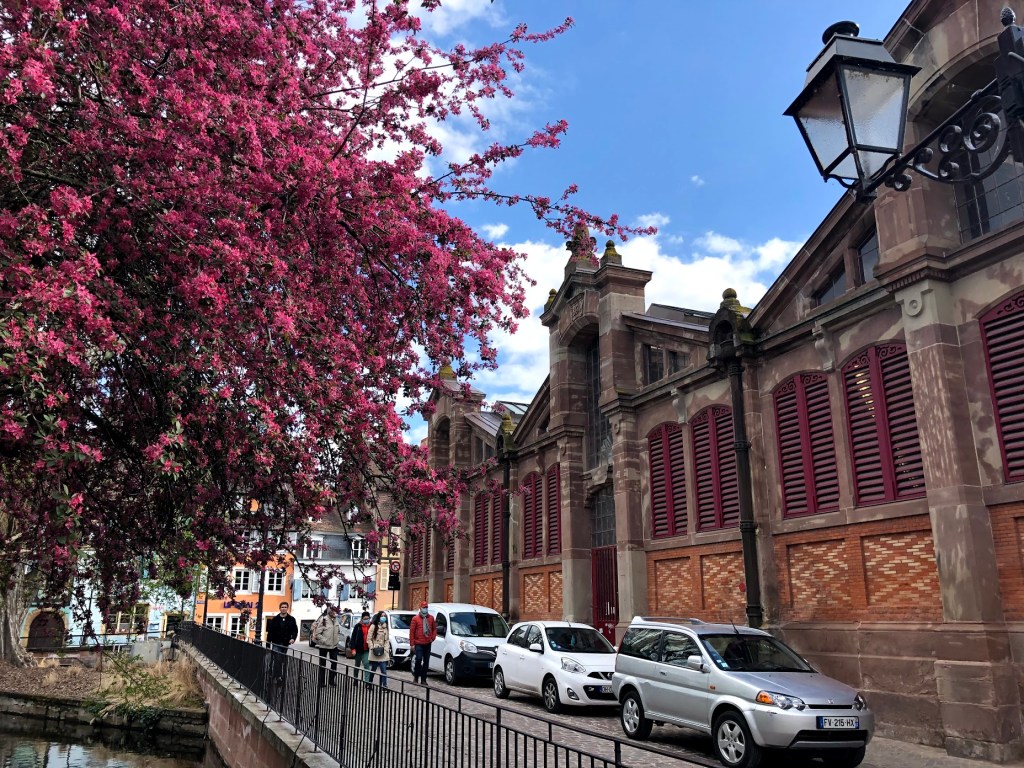
“Opened in 1865, this building was designed by Louis-Michel Boltz. It sits on the river, allowing people to bring their goods in directly from barges. On Thursdays, there are stands allowed outside, though there is a market inside every day. The statue on the outside of the building is by Bartholdi and was installed in 1869.”
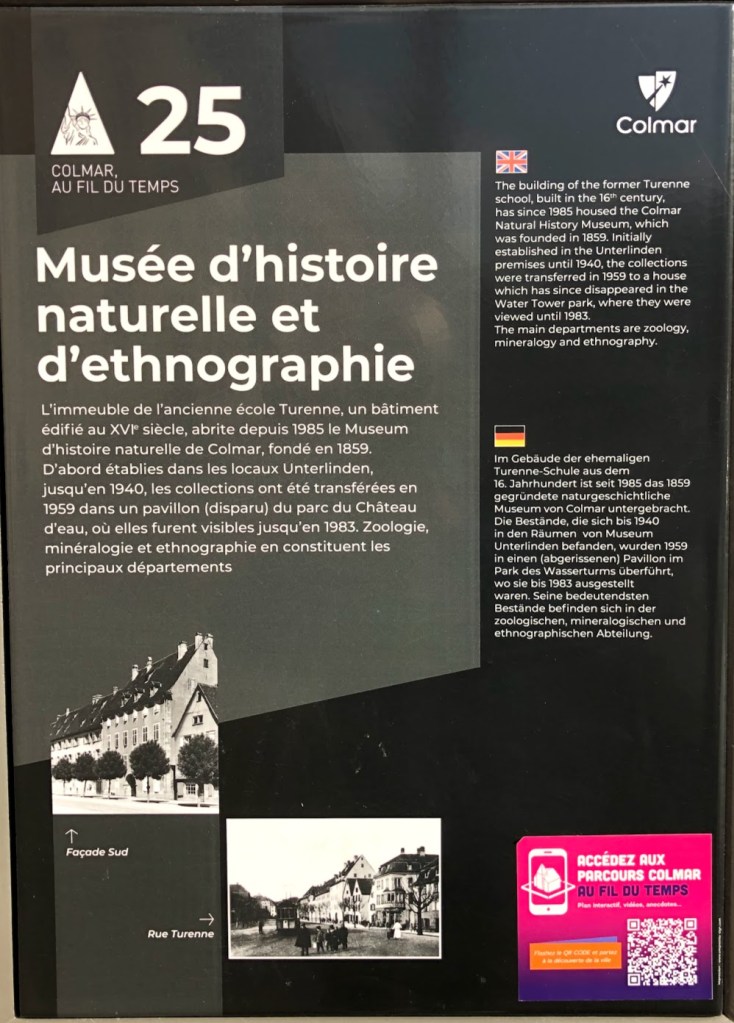
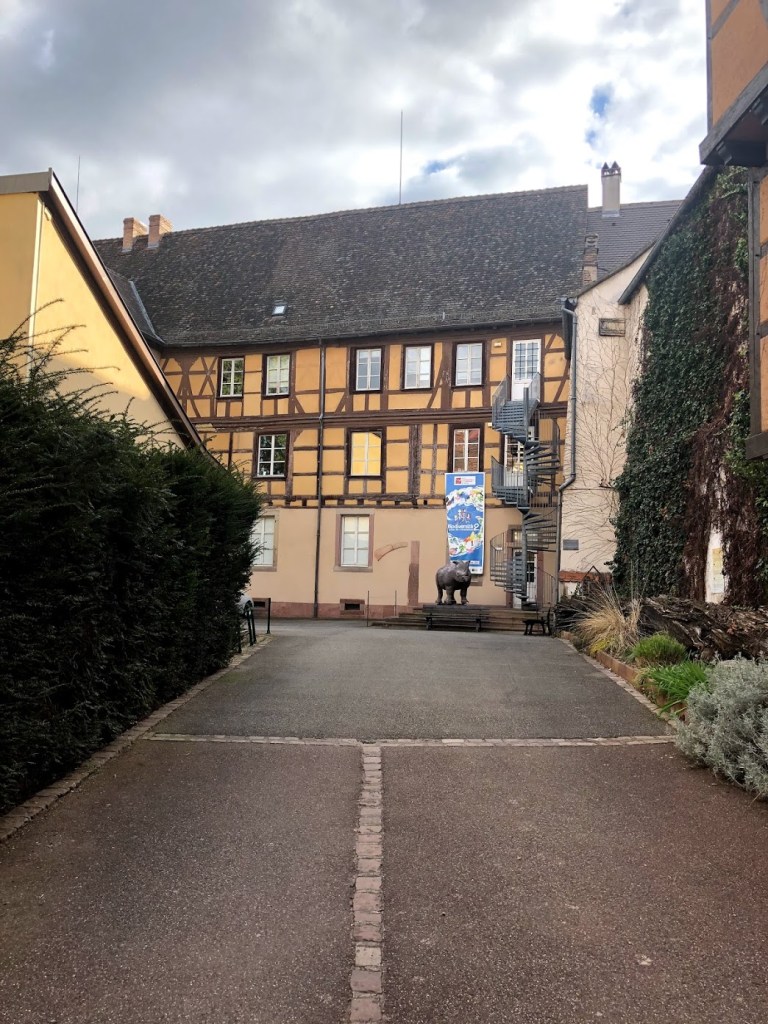
“At the heart of the Little Venice district, in a beautiful historic building, the Colmar Museum of Natural History and Ethnography presents rich collections of regional and exotic naturalized animals, the geology of the planet with precious minerals. extraordinary fossils of prehistoric animals found in the region, rare ethnographic objects of the Marquesas Islands, China, Latin America, Africa and an important collection of ancient Egypt (mummies, Coptic fabrics …), the only visible in Alsace.”
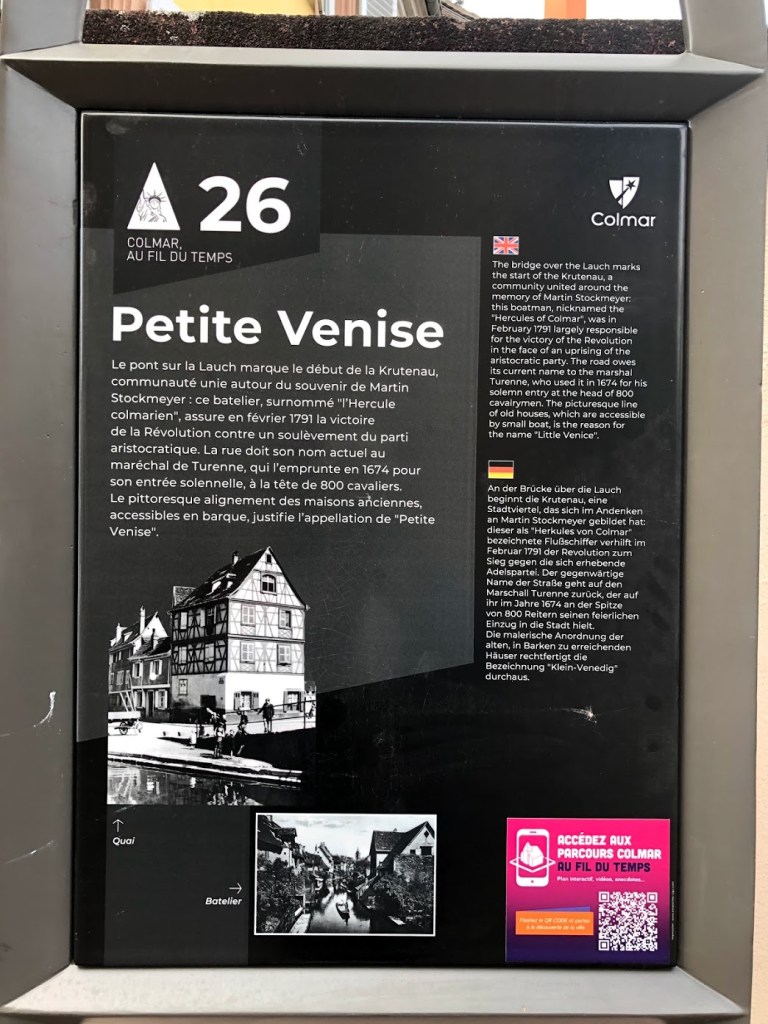
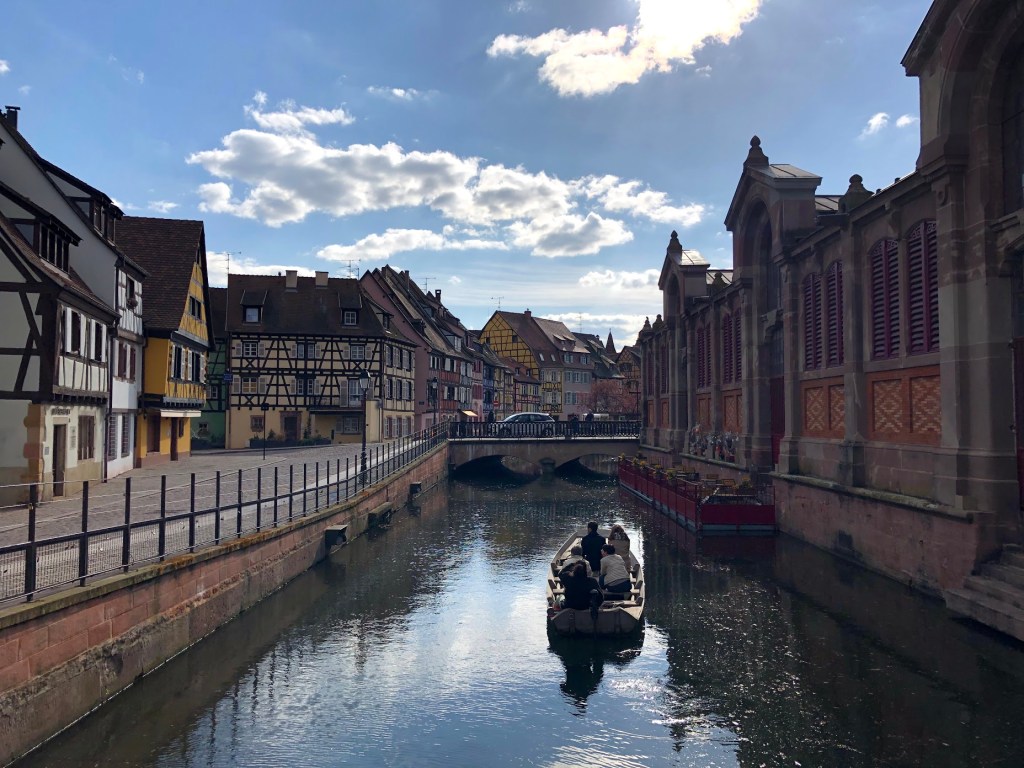
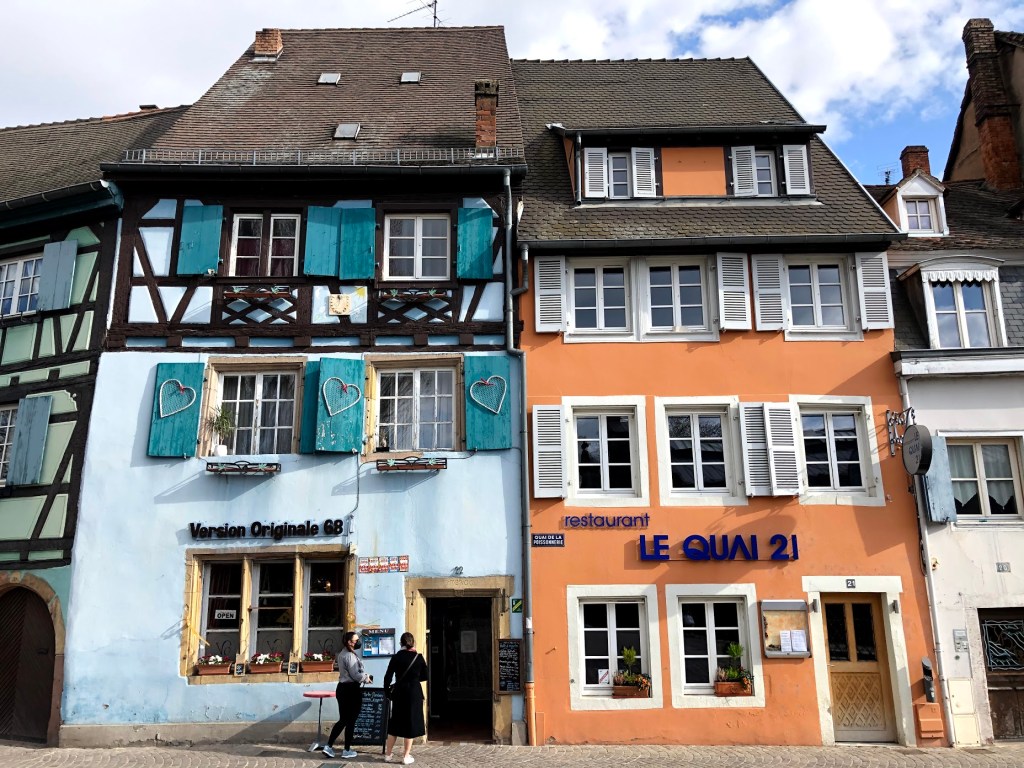
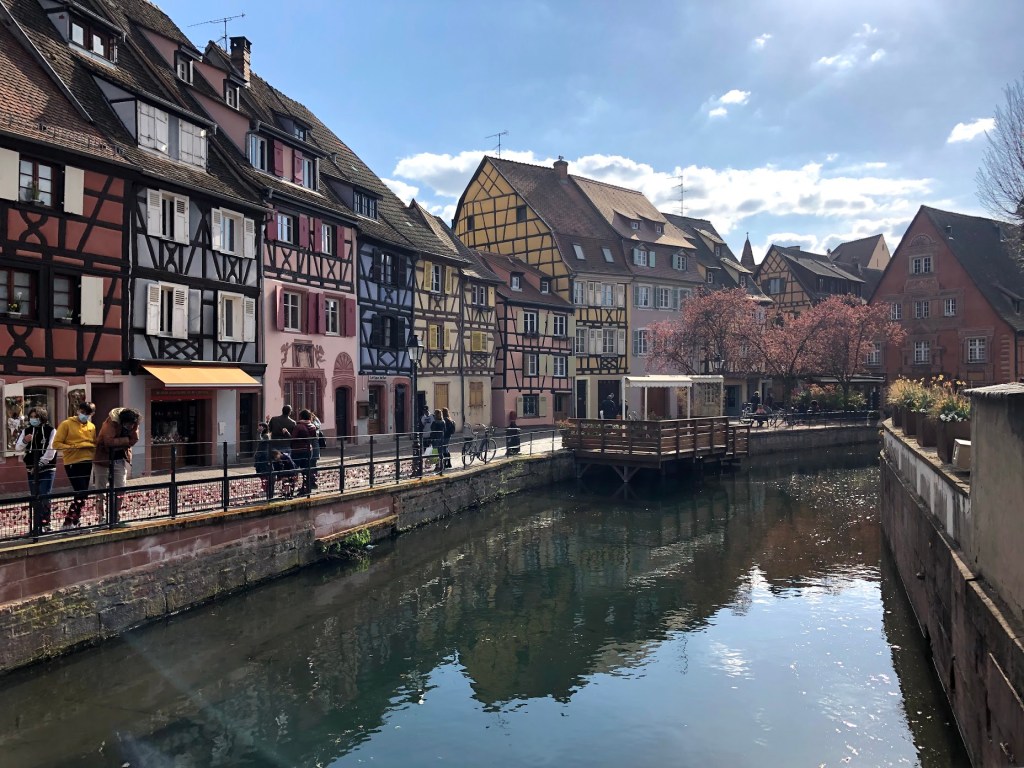
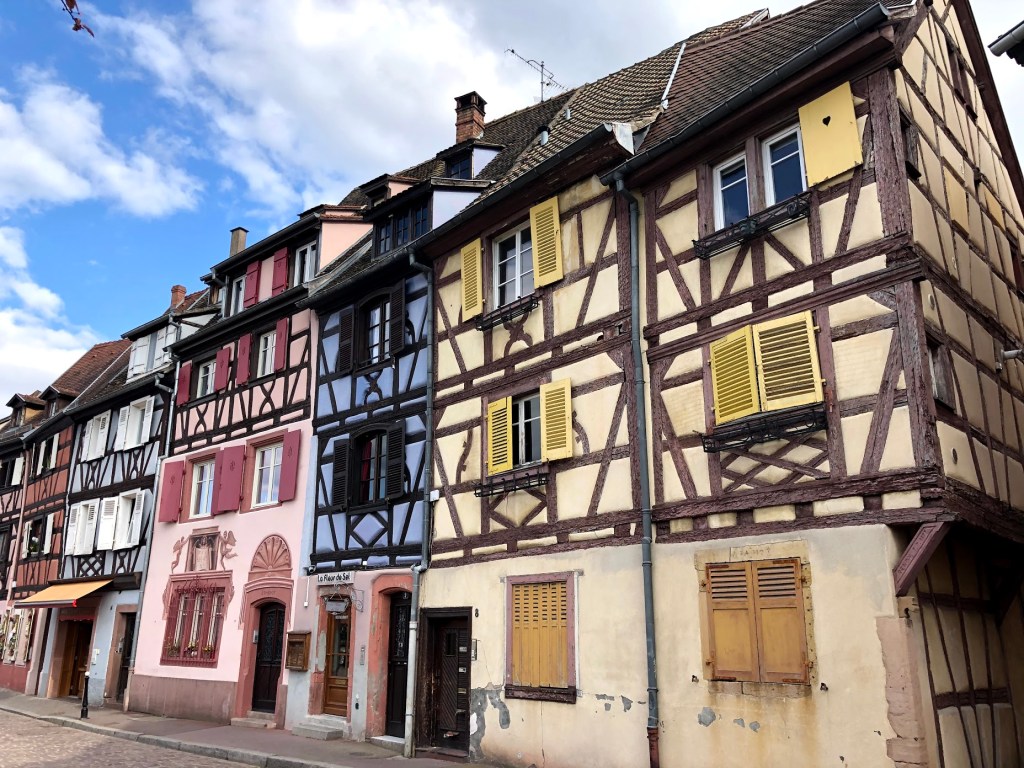
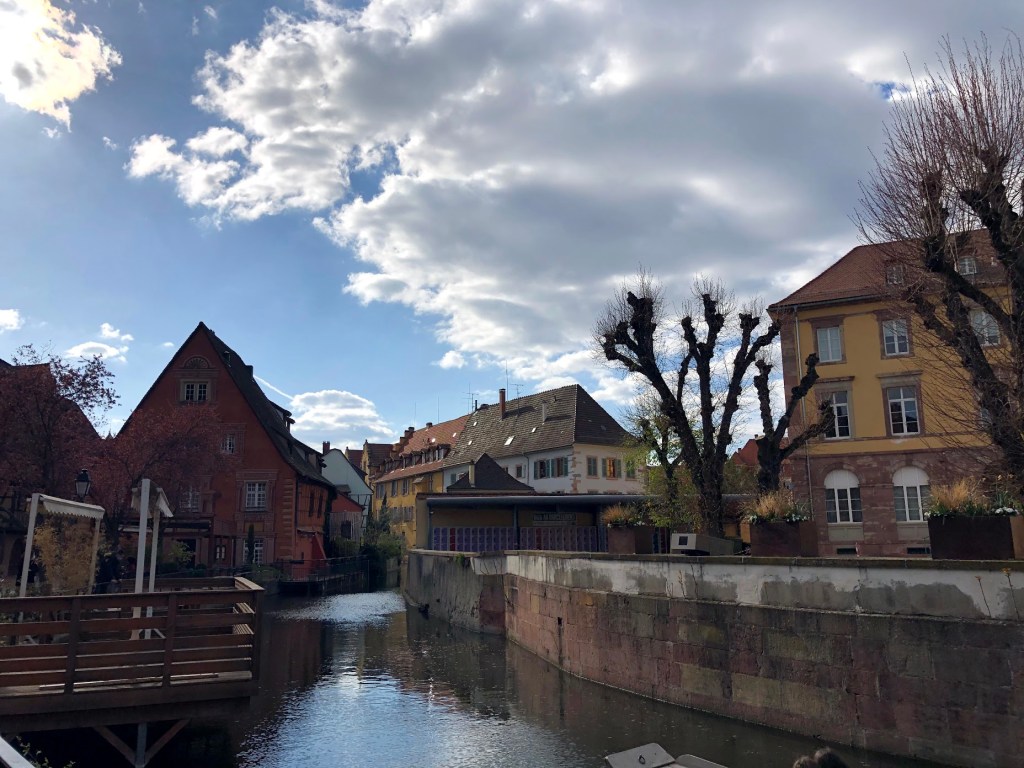
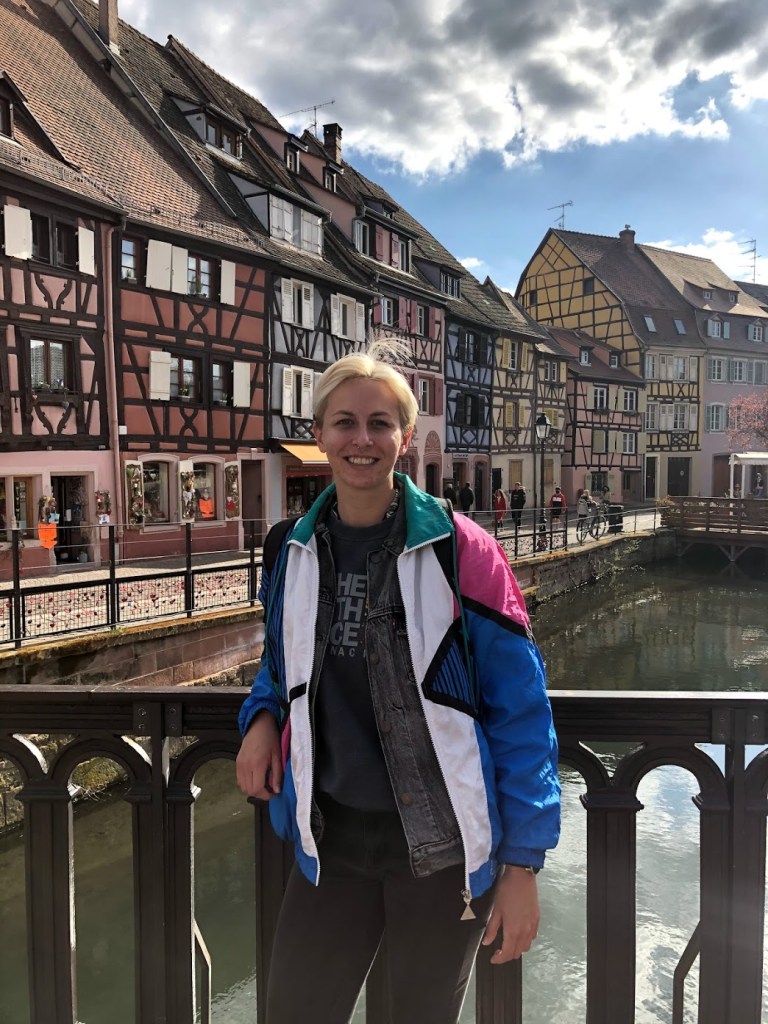
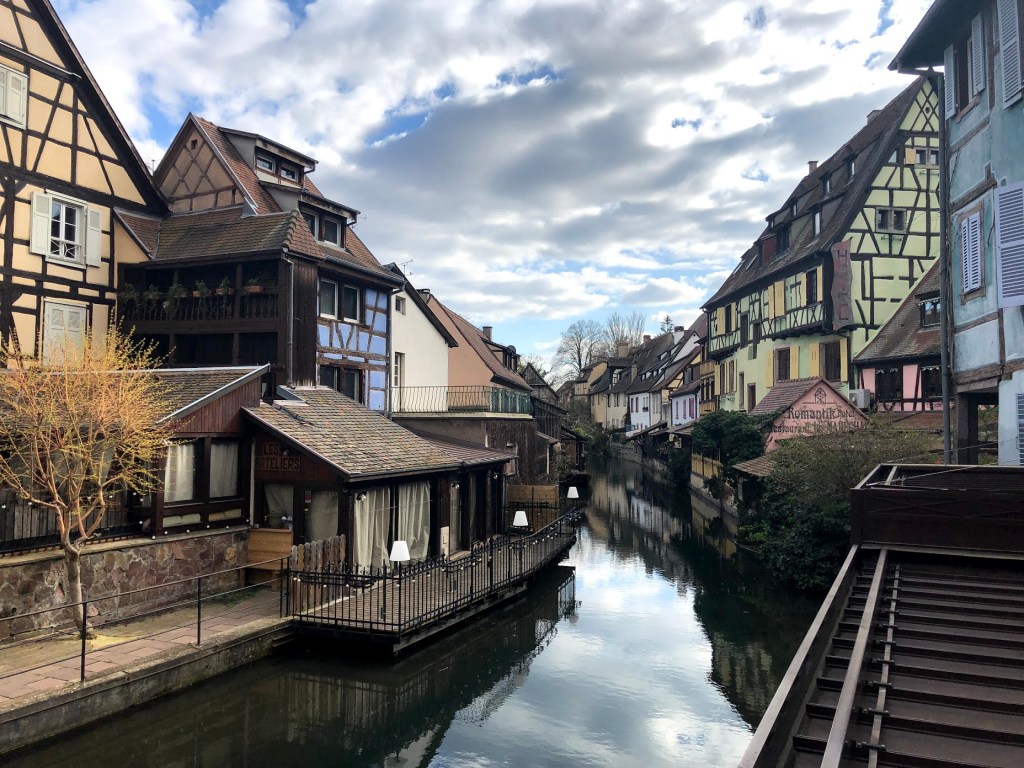
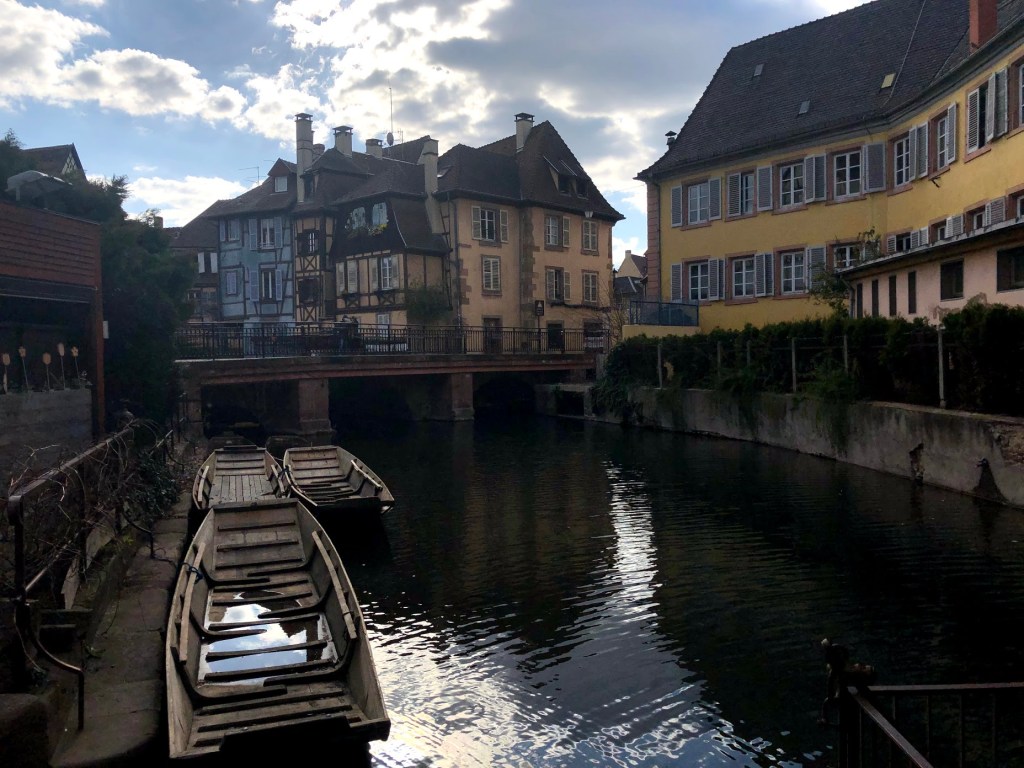
“The « little Venice » is the name given to the course of the Lauch in Colmar. This name probably came from the original line of the houses on both sides of the river, which serves the southeast of the city. This district starts behind the Koïfhus, goes through the fishmonger’s district and to the bridges Turenne and Saint-Pierre. It is therefore at the beginning of the Krutenau, whose etymology refers to places of market gardening on the outskirts of the towns. Originally inhabited by a rural community of wine-producers, market gardeners and boatmen, the Krutenau stretches out around the Turenne Street that the marshal took in 1674 for his triumphant entry in the city. Boat rides are possible there.”
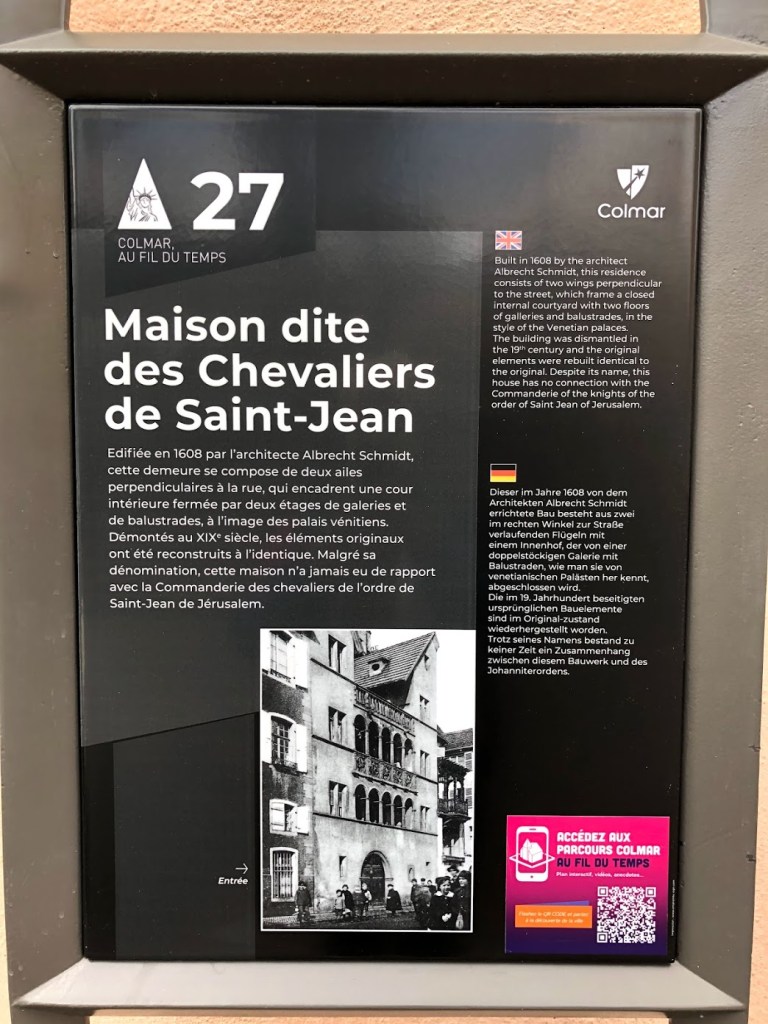
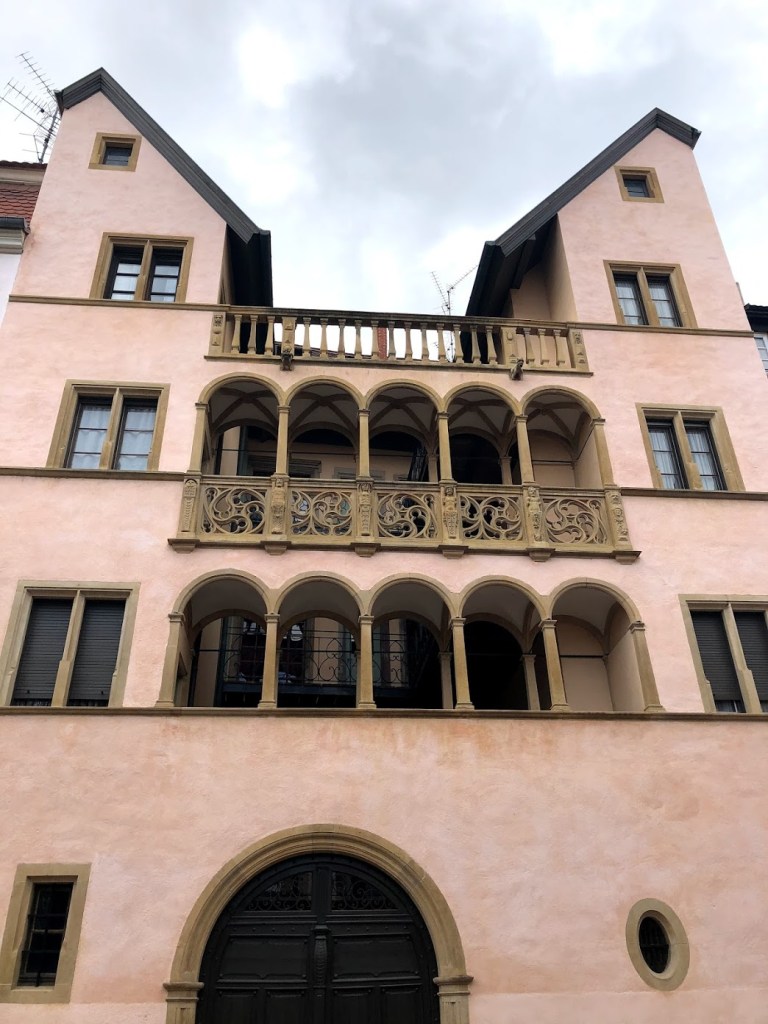
“The architecture of this house is reminiscent of Venetian palaces. The house has a two-floor gallery of arched arcades, surmounted by a stone balustrade, which links together two buildings. One side of the building overlooks the road and the other the inner courtyard.
The building is in reality a reconstitution from the 19th century. The original elements have probably been dismantled and then reassembled in Germany. The house has been built in 1608 by the architect Albert Schmidt, also known for the House of Heads and the House of Arcades. This house has never belonged to the Johannites and so there is no real reason to call it the house of the St. John’s Knights.”
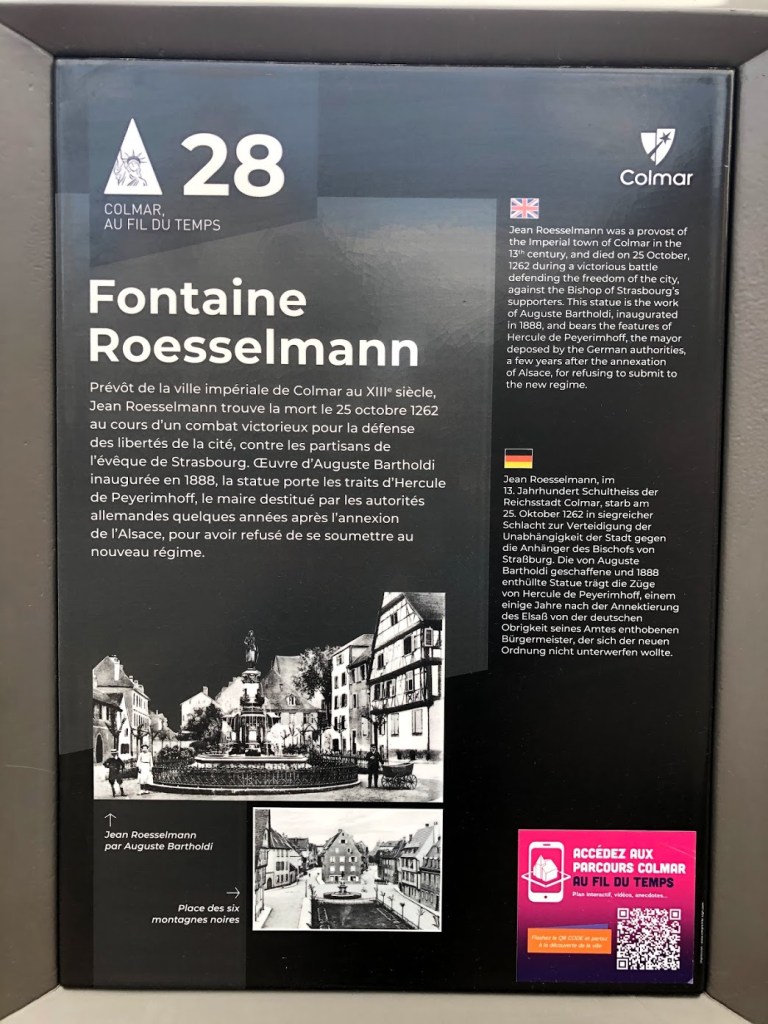
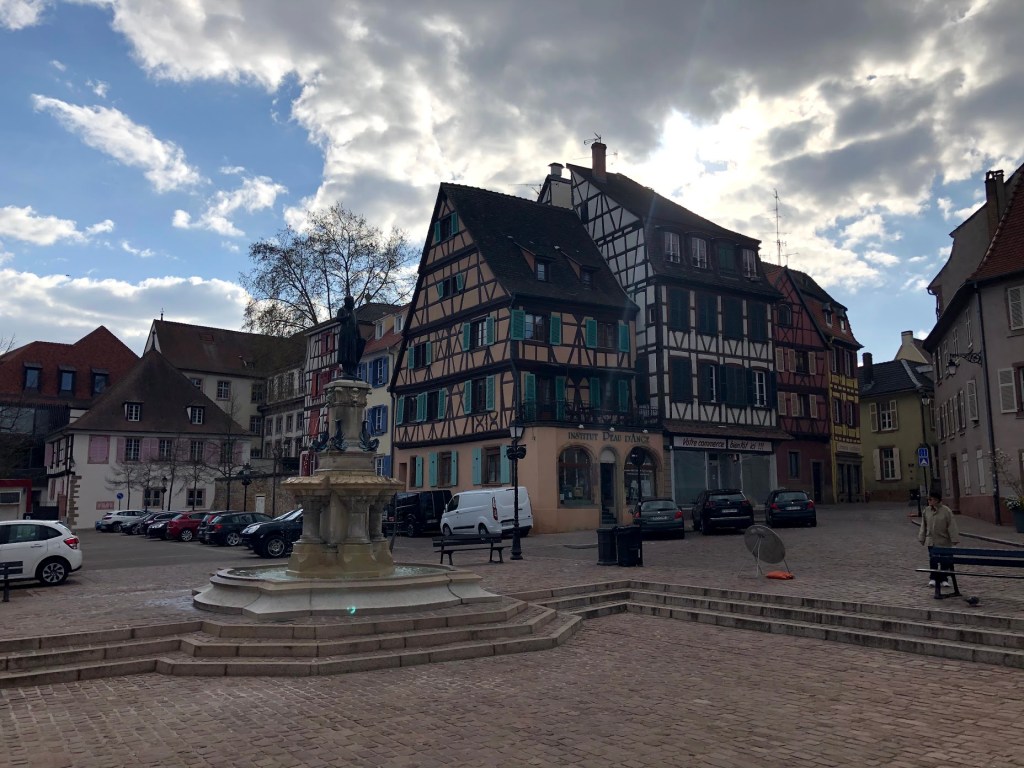
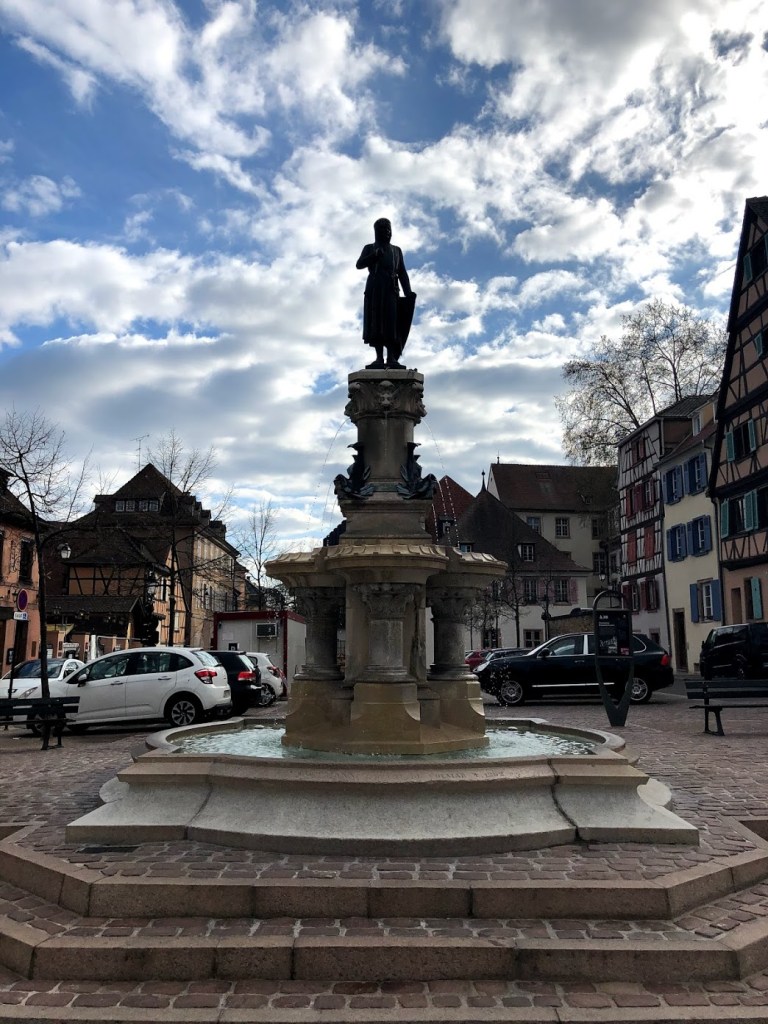
“Auguste Bartholdi’s statue, sculpted in 1888, represents the public judge Jean Roesselmann. He passed away while defending Colmar and the municipal liberties against the troops and the covetousness of the Bishop of Strasbourg. He is also considered as the first hero of Colmar and has similarities with Hercule de Peyerimhoff, the mayor of the city from 1855 to 1877, who was relieved from his duties because he refused to submit to the German authorities. Taken away by the Germans in 1943, the bronze statue was restored and reinstalled in 1945 on a white stone monument decorated with four fishes.”
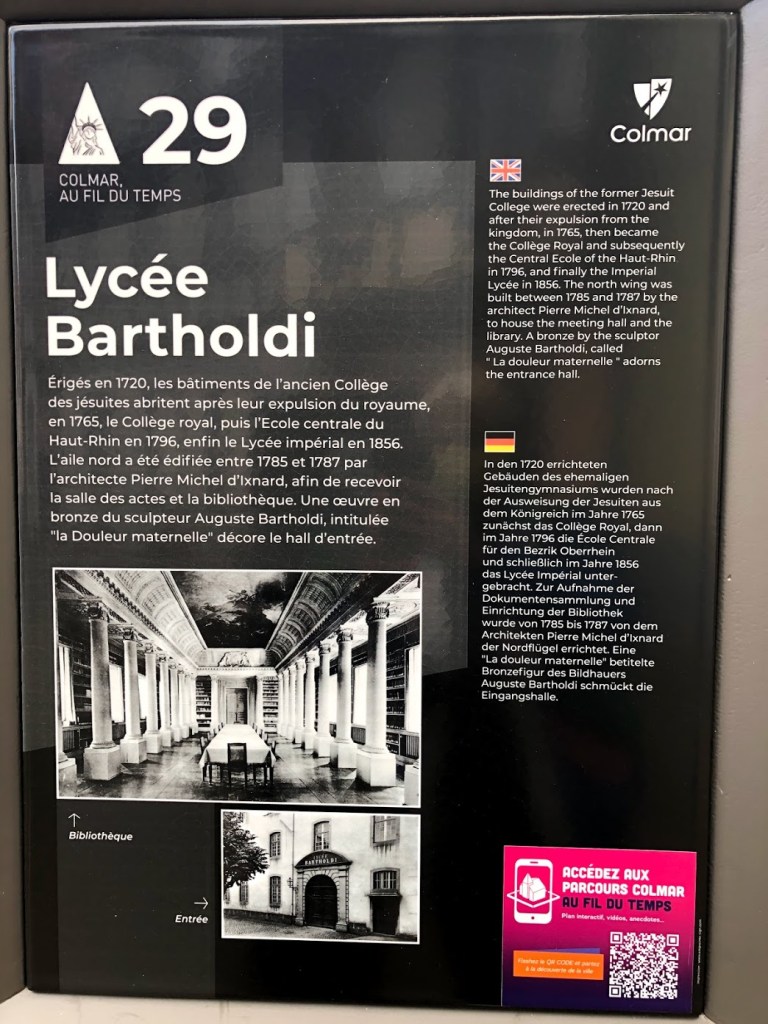
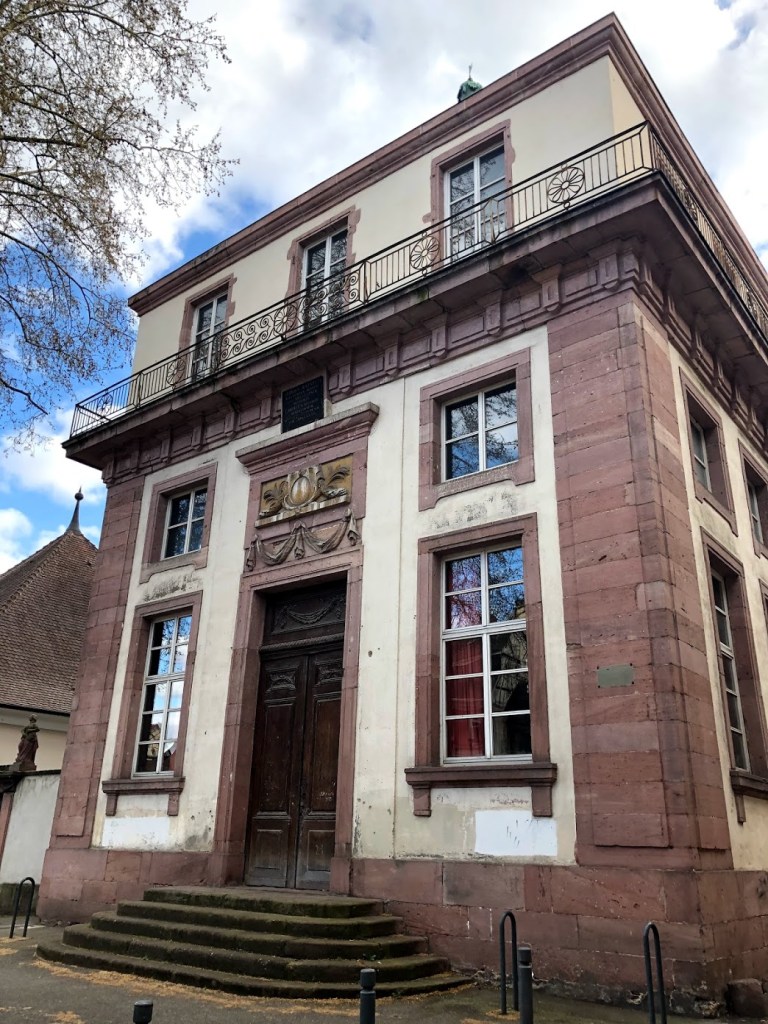
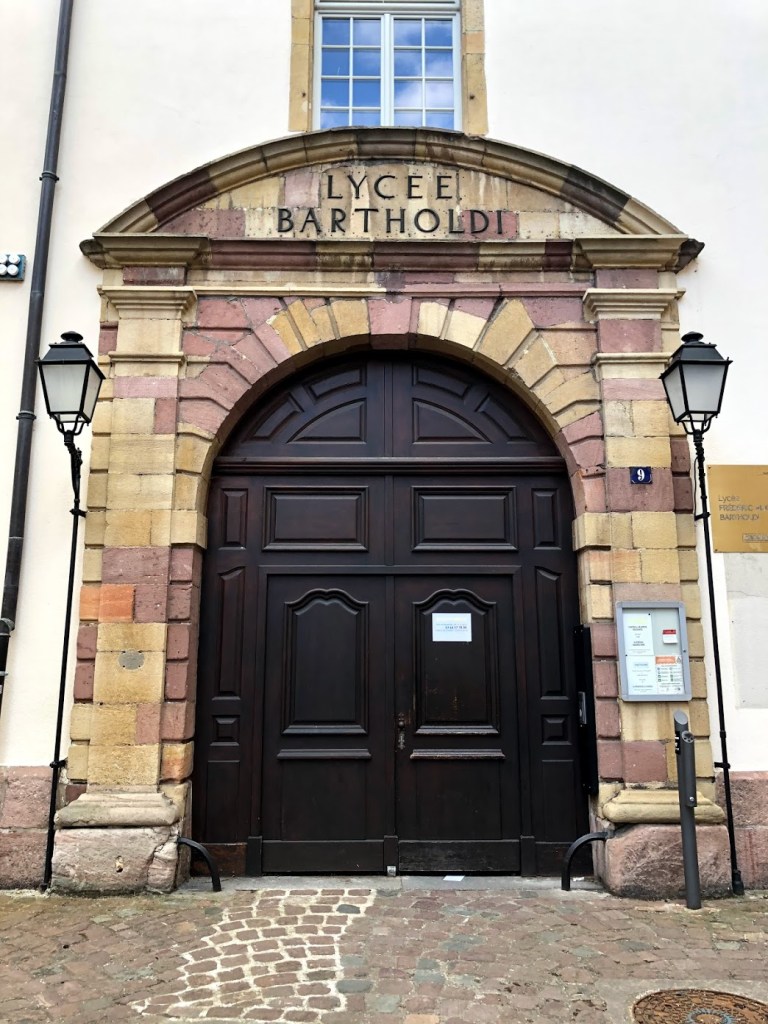
“The Bartholdi high school is on the Oberhof, which is a Carolingian estate at the origin from the city of Colmar. On this site where was the Benedictine Saint Pierre priory, the Jesuits created in the 18th century the first French school of the city. After the dissolution of the Society of Jesus in 1764, the school became College royal. The neo-classic library and the auditorium (salle des actes) came from this period and were imagined by the architect Pierre Michel d’Ixnard between 1785 and 1787.
After becoming a national college in 1791, the school had to wait until 1856, and the Second French Empire, to have the status of high school. In tribute to the famous sculptor from Colmar, the school is named “Lycée Bartholdi” in 1919.”
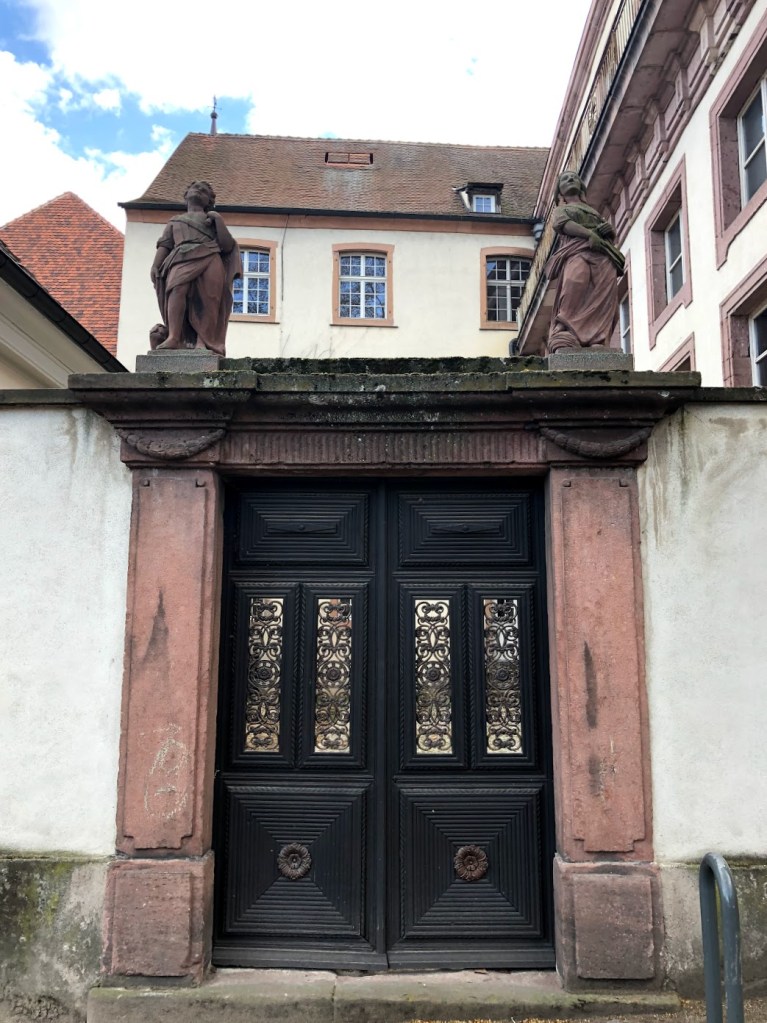
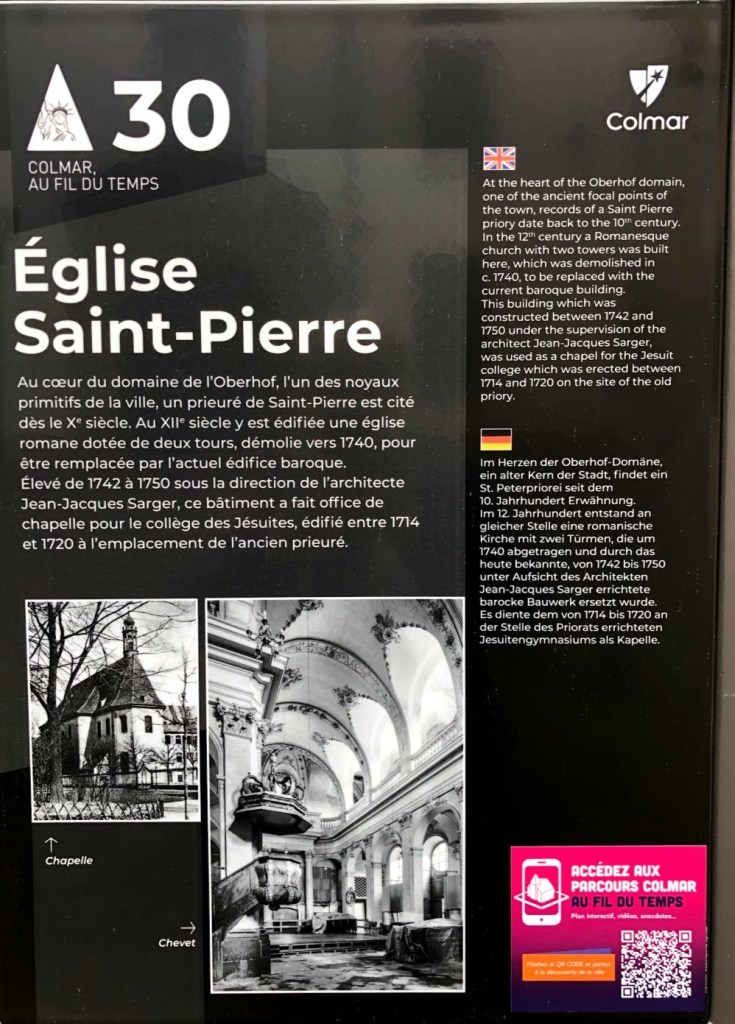
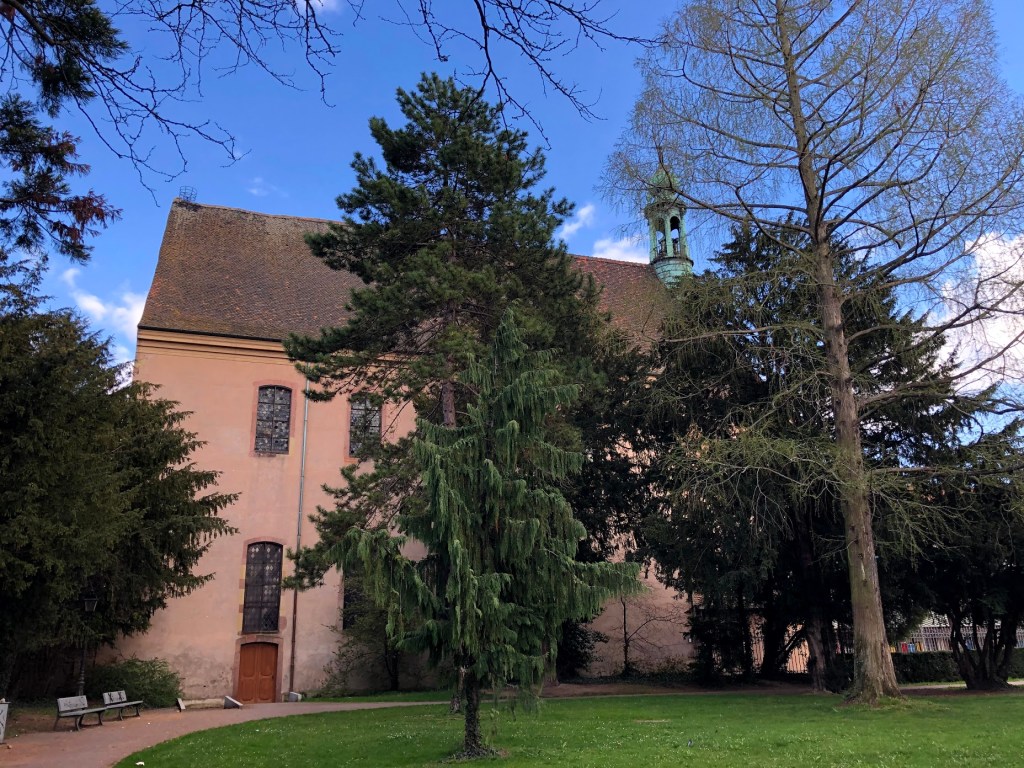
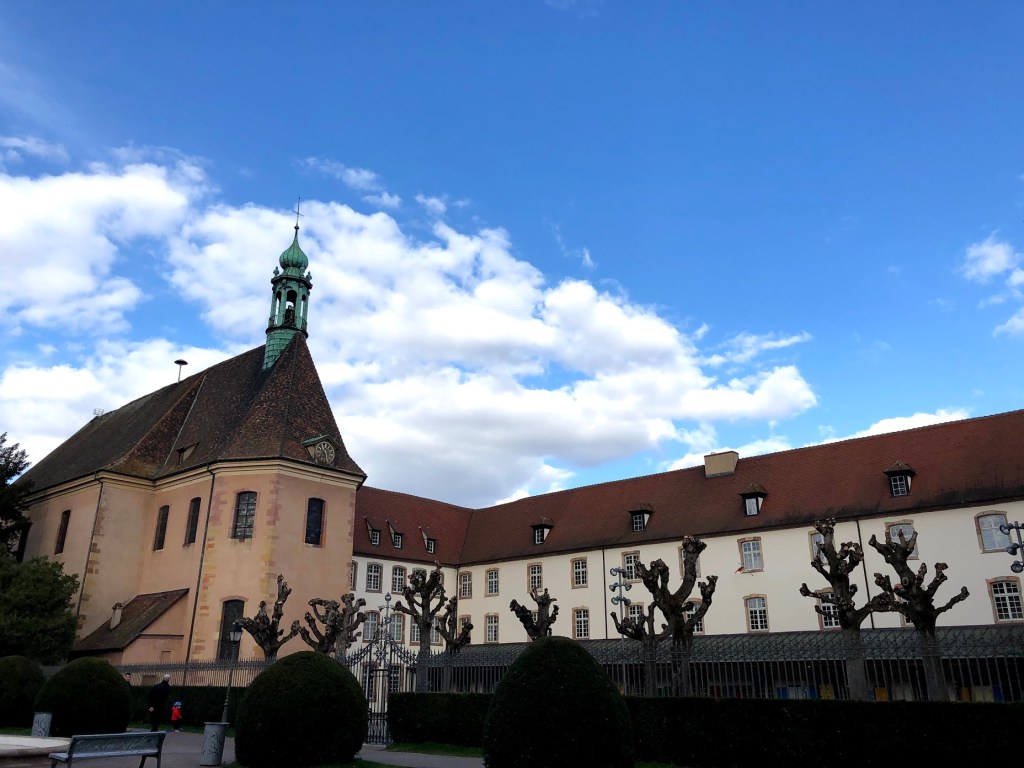
“On the Oberhof, one of the original nucleus of Colmar, stands since the 10th century the Saint Pierre priory, which is a property of the Swiss Benedictine abbey from Payerne. A roman church with two towers and which is possible to see on the older maps, was built in the 12th century and then replaced by the Jesuit chapel. The chapel was built from 1742 to 1750 by the architect from Strasbourg Jean-Paul Sarger. He used the stones of the former city fortification, destroyed in 1673. The simplicity of the building is decorated with a stucco decor.
From 1658 to 1679 the chapel was used by the protestant community of Colmar and then in 1698 by the Jesuits. After the dissolution of the Society of Jesus in 1765 the chapel became the chapel of the Collège Royal, which followed the Jesuit school. Every year several concerts of the international music festival from Colmar took place there.”
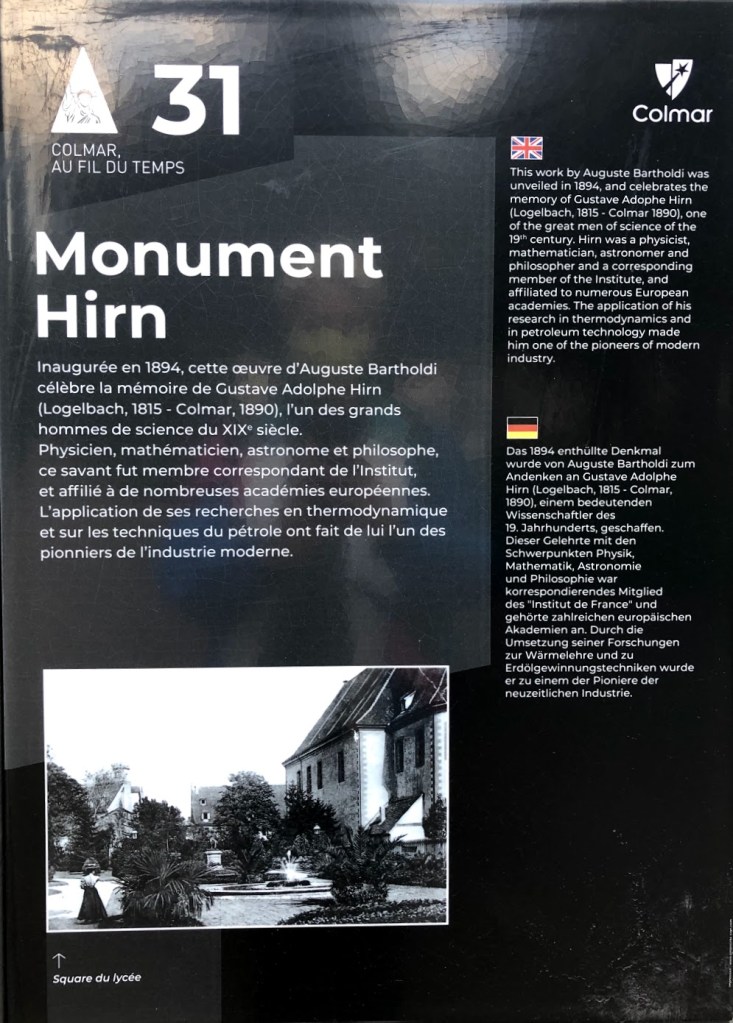
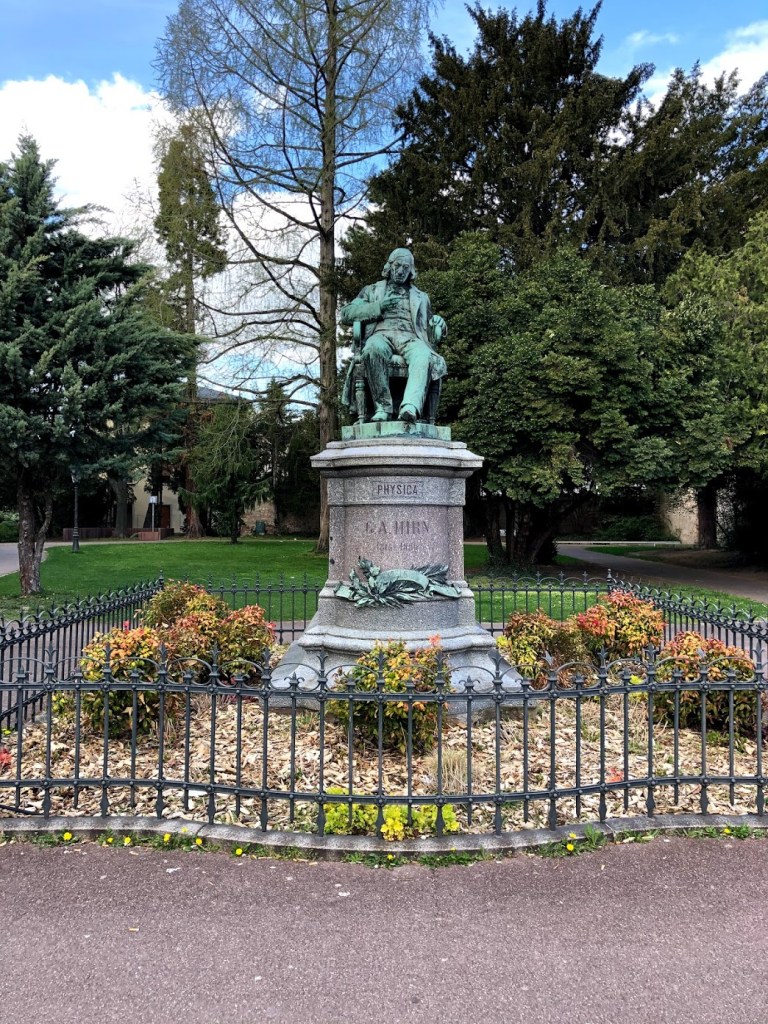
“Physicien, astronome, mathématicien et philosophe, Gustave Adolphe Hirn (1815-1890) est le grand savant colmarien. L’application de ses recherches en thermodynamique et sur les techniques du pétrole en fait un des pionniers de l’industrie moderne. La statue en bronze représente le membre de l’Institut à sa chaire. Elle est l’œuvre d’Auguste Bartholdi et a été inaugurée quatre ans à peine après le décès du savant, en 1894.”
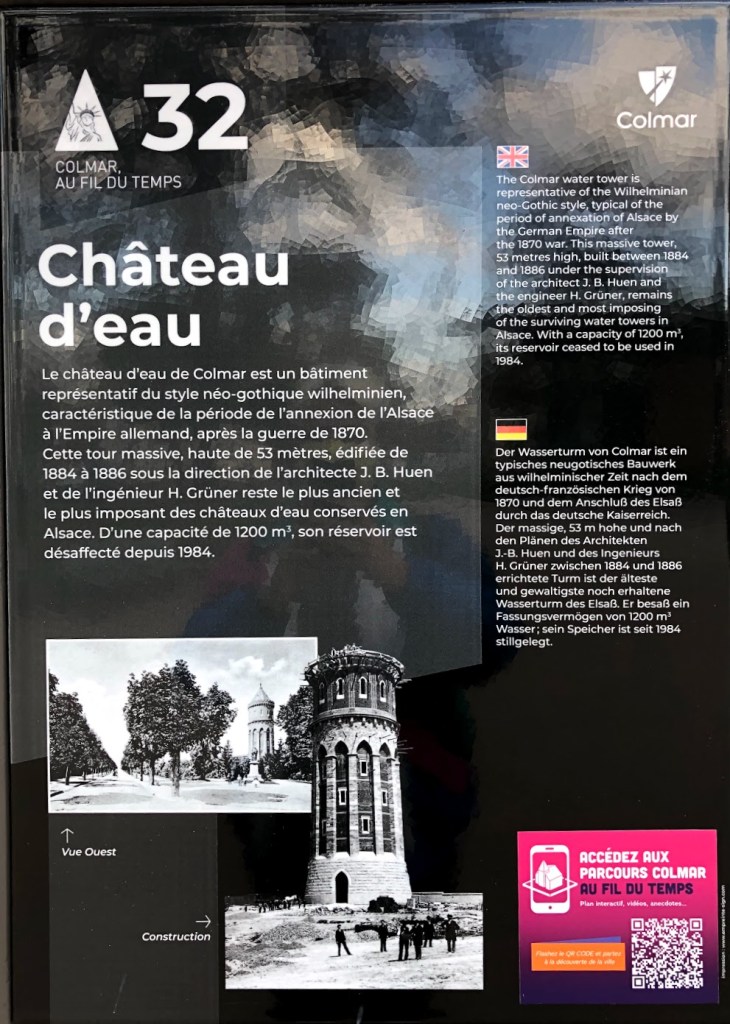
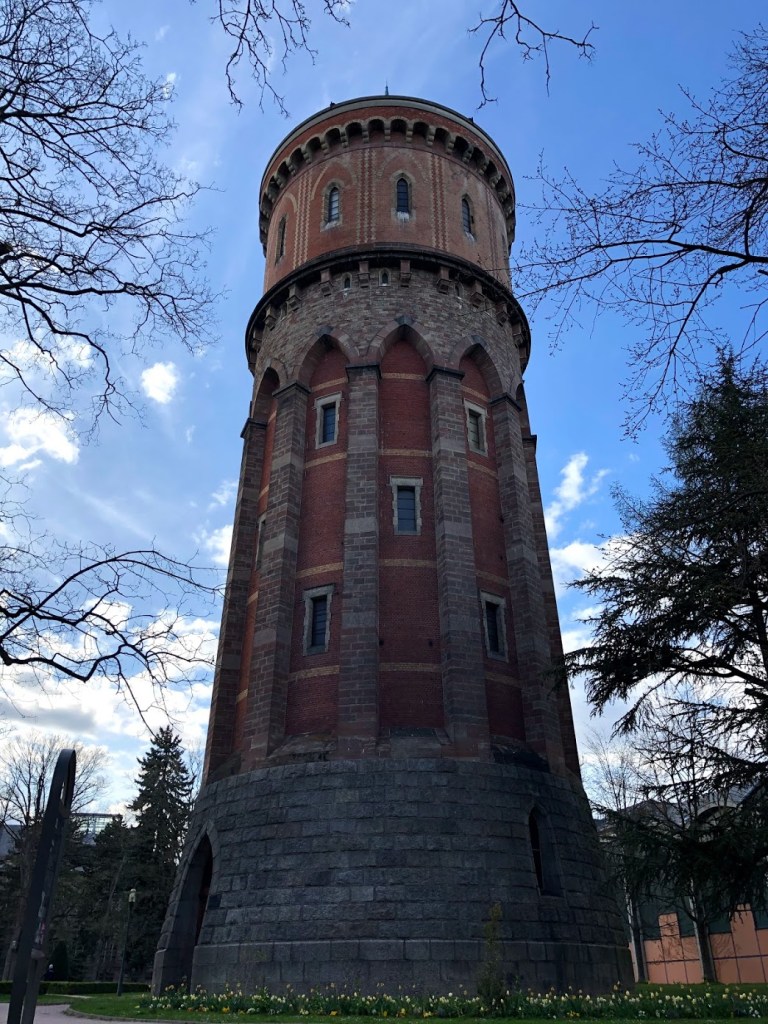
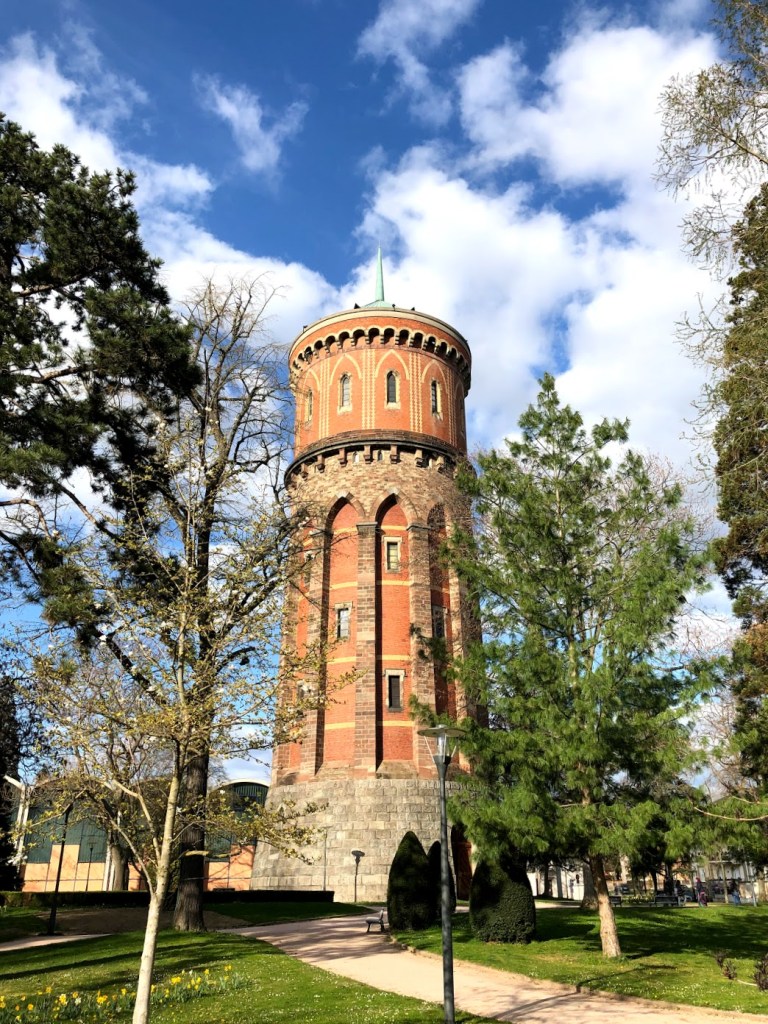
“The water tower was used for the regulation and the distribution of drinking water in Colmar, controlled in July 1884 by municipal wastewater treatment plants. It was imagined by the city architect Jean-Baptiste-Victor Huen and Swiss engineer Henri Grüner. Its tower, in a German neo-Gothic style, is situated on one of the highest points of the city. It has been a feature of the Colmar landscape since 1886. It is 53 meters high and can contain up to 1200 m3 of water. It has not been used since 1984, but remains the oldest water tower in Alsace.”
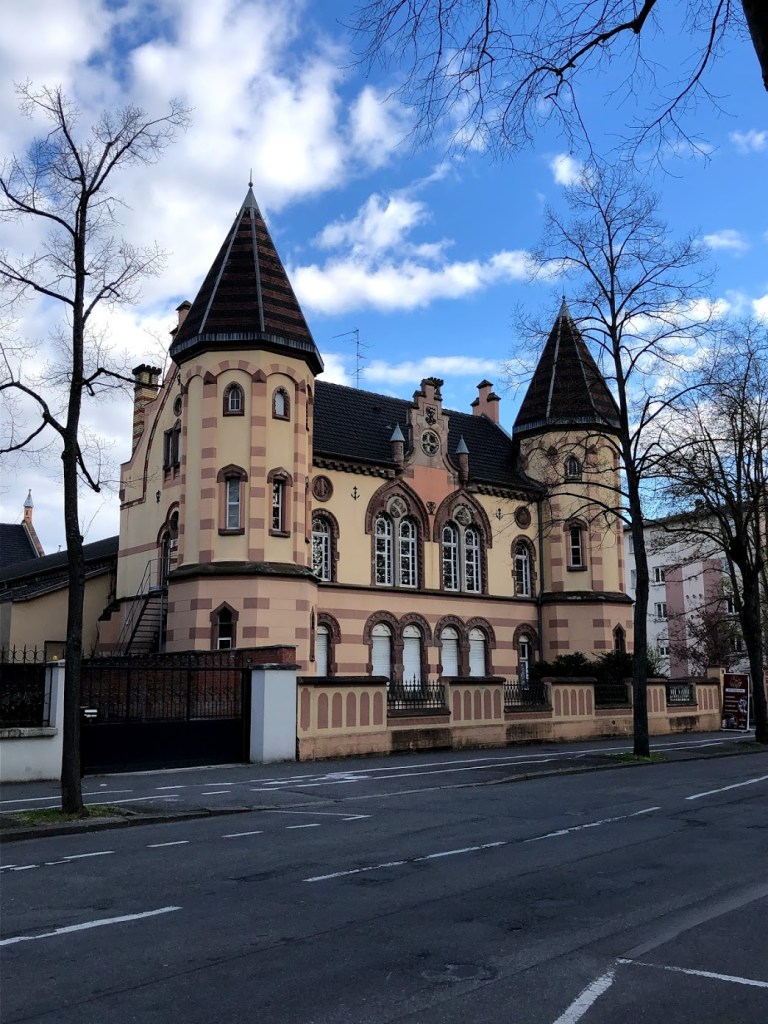
“Created in 1880 and reused in 1890 by the priest Etienne Frey, the St Martin’s circle was imagined to provide cultural activities for men, to promote physical exercises and supervise youth. In 1895, the architect François-Xavier Kreyer ends the new building of the association. With its 72 meters long, this massive building combines the neo-Romanesque style and the Gothic style.
Most of the major cultural and sporting events of the interwar years took place in the St Martin’s circle. Members of the Clergy and the City Council often met there to share ideas in this high place of the Colmar society. After the war the St Martin’s circle lost its importance.”
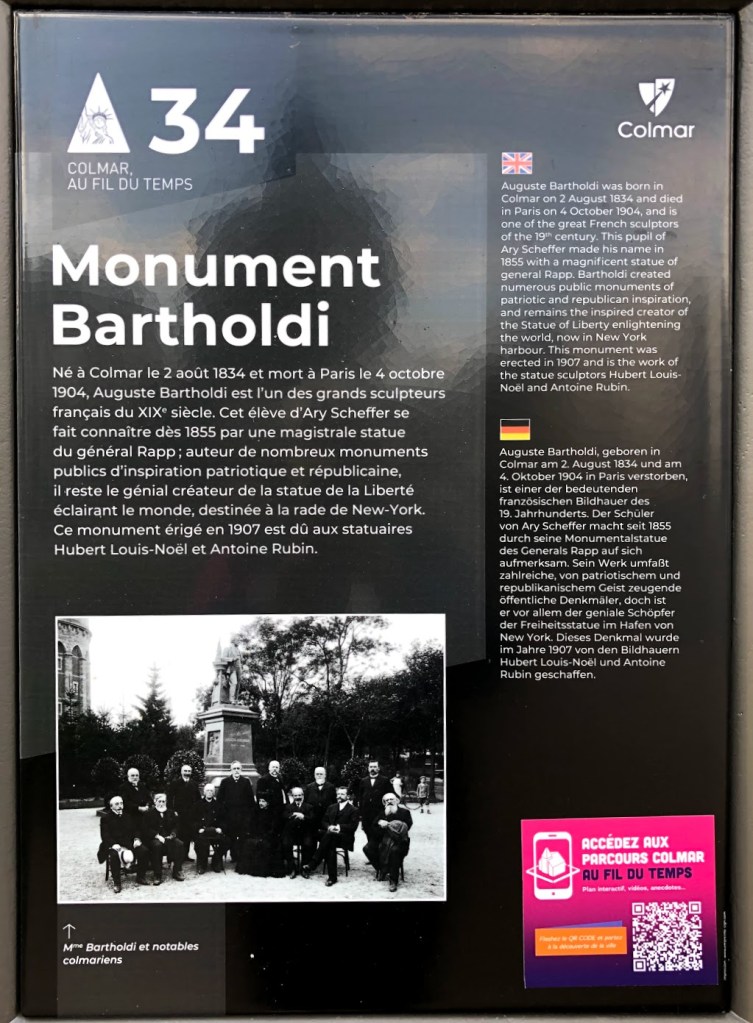
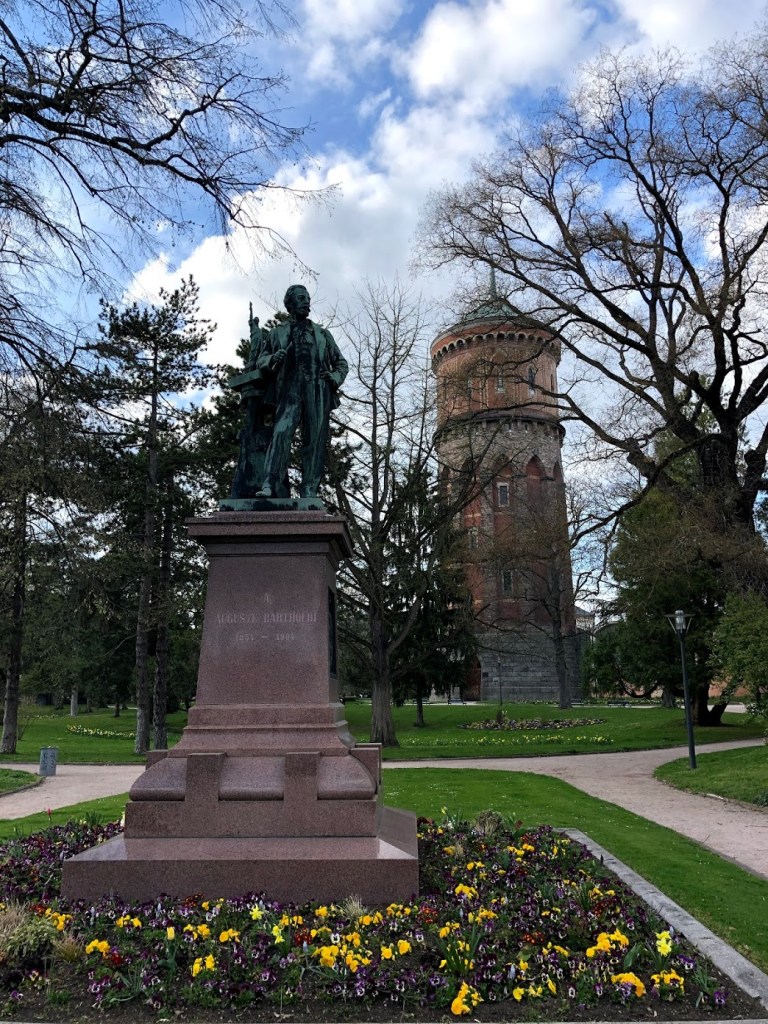
“Auguste Bartholdi (1834-1904) created among others the Lion of Belfort (1880) and the Statue of Liberty (1886). He is, with Martin Schongauer, one of the most important artists of Colmar. The hometown of this international artist, Colmar, paid him homage in 1907, by dedicating him a monument in the park’s water tower. Many personalities were there for the inauguration of this sculpture, created by the Hubert Louis-Noel and Antoine Rubin, former pupils of the master.
In 1922, a museum dedicated to the artist was opened in his birthplace. In 2004, for the hundredth anniversary of his death, a resin replica of the Statue of Liberty was installed north of the city in tribute to the artist. The sculpture is 12 meters high.”
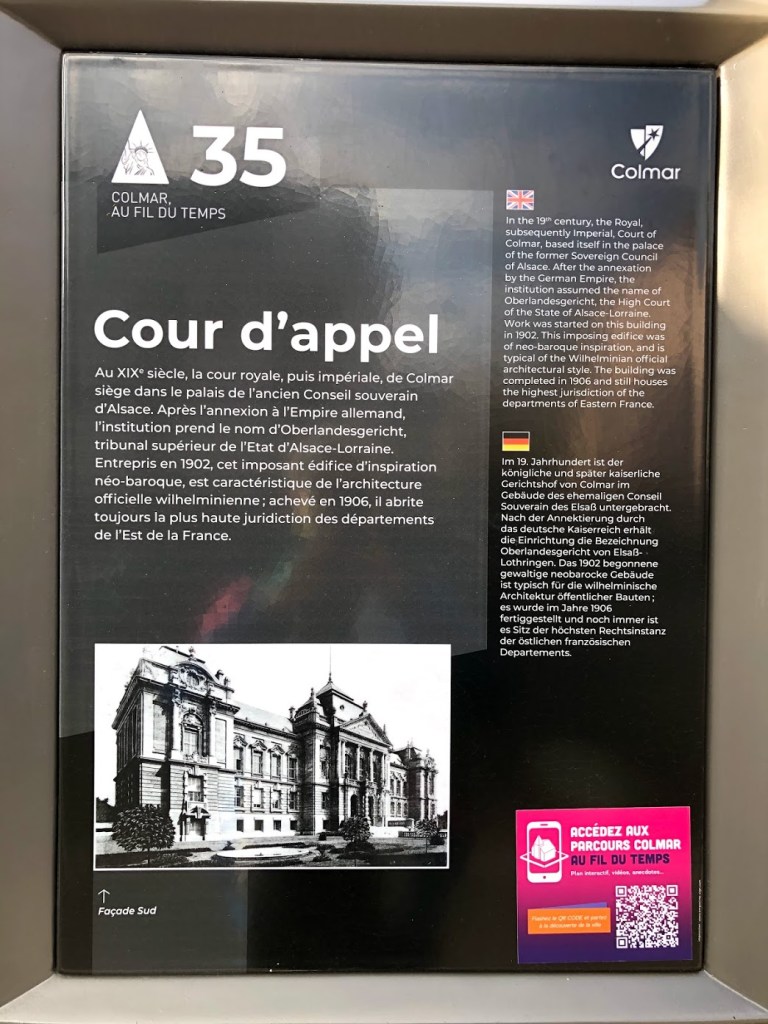
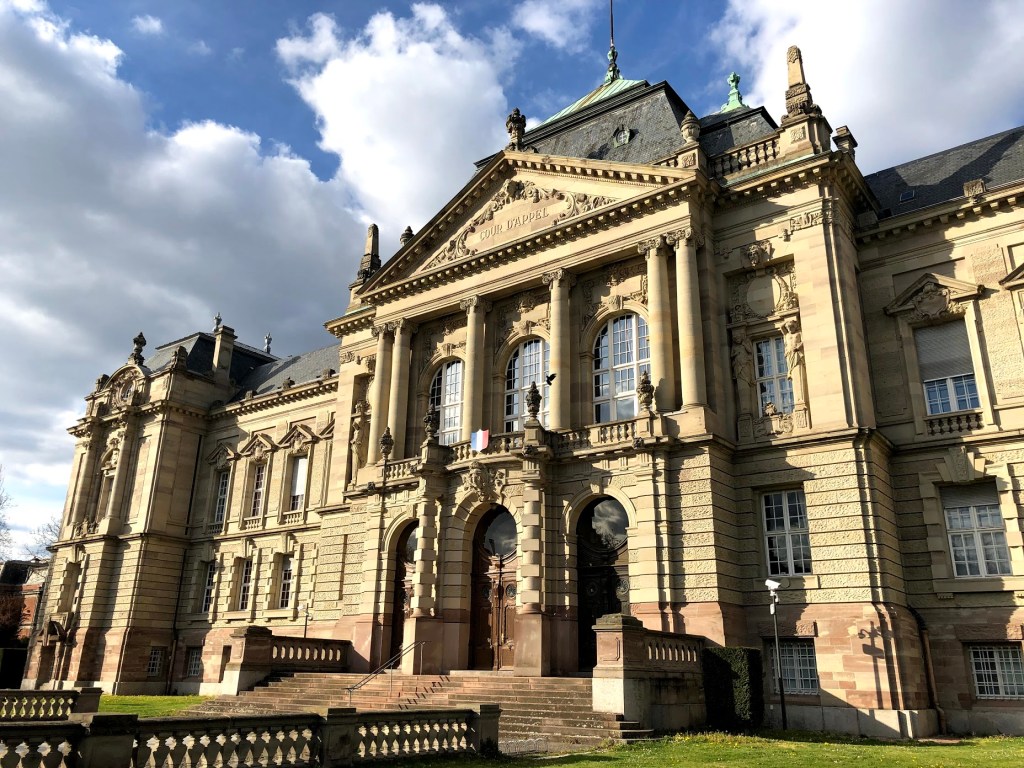
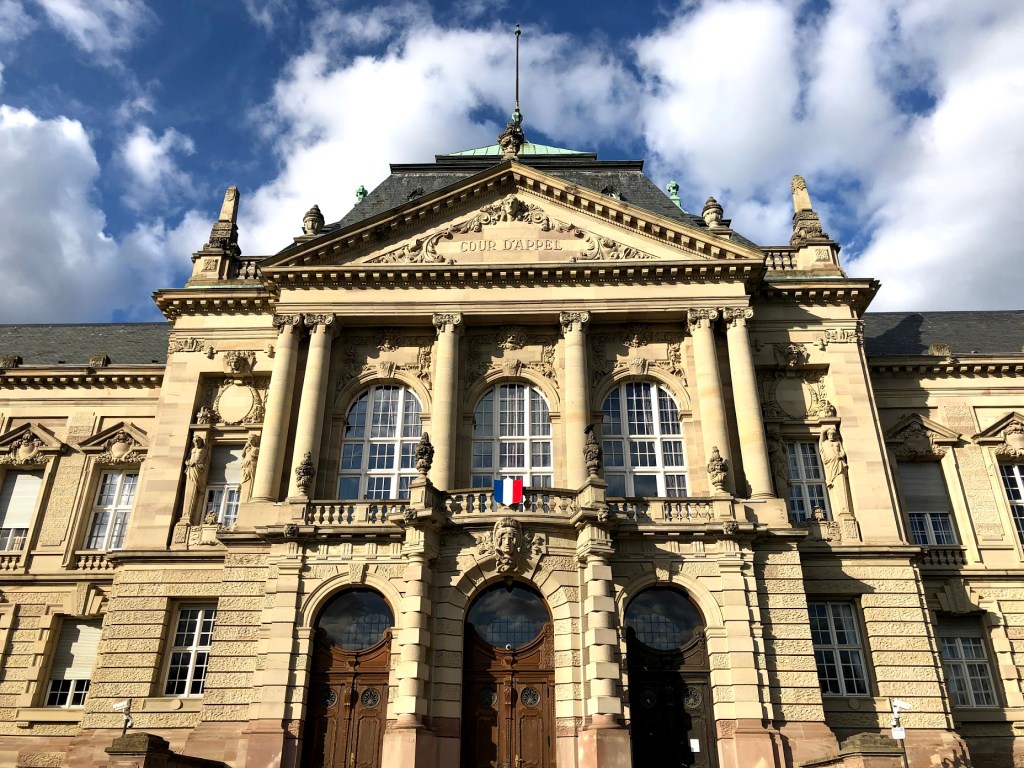
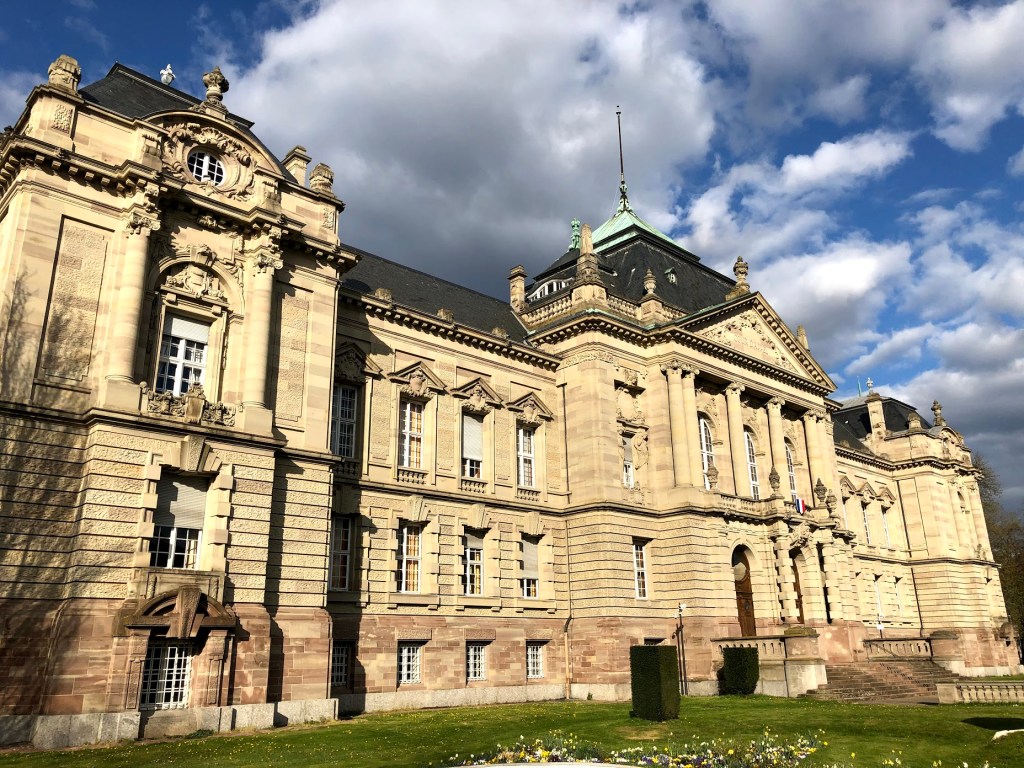
“Intended for the Oberlandesgericht or High Tribunal of Reichsland, which was too cramped in the palace of the Sovereign Council, this building was inaugurated in 1906. The construction started in May 1902 on the former site of the experimental vineyard of the Horticultural and Viticulture Society. The building was designed by the architects Kuder and Müller in a German neo-baroque style.
Colmar is the regional judicial capital since the arrival of the Sovereign Council in 1698. From the Revolution it has a superior court, called Court of Appeal, imperial Court or royal Court, according to the periods. The superior court of Alsace-Lorraine succeeded in 1918 to the Oberlandesgericht who settled with the annexation of Alsace by Germany. It became again the Court of Appeal in 1923 and is today still in the same building.”

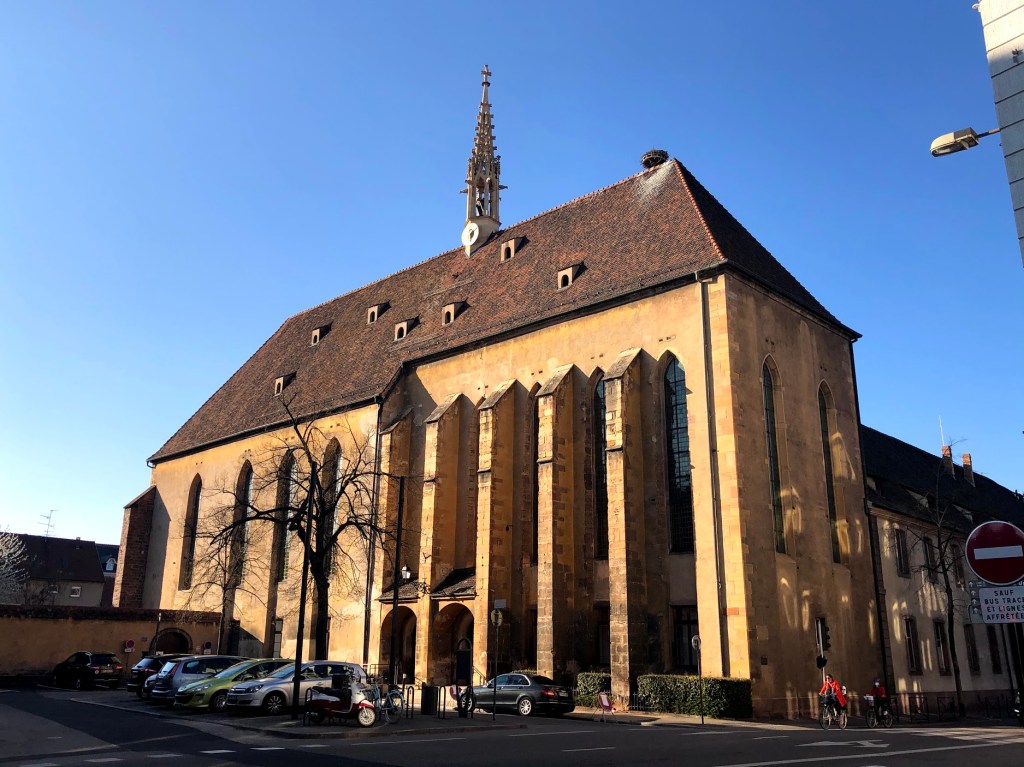
“The Dominican Sisters of St. Catherine founded their convent in Colmar in 1310. They originally came from Ammerschwihr. The provisory chapel where they first were was not consecrated until late 1371. The nave was ended in 1436 and the cloister was rebuilt in the 16th century. Other transformations were made during the 18th century. The apse of the choir was cut off in the 19th century to allow works in the rue Kléber. In 1792 the monastery was used as a military hospital. Today the buildings house a school, a party room and the administrative headquarters of the tourist office. Only the very elegant pinnacle, carefully restored, still recalls the original affectation.”
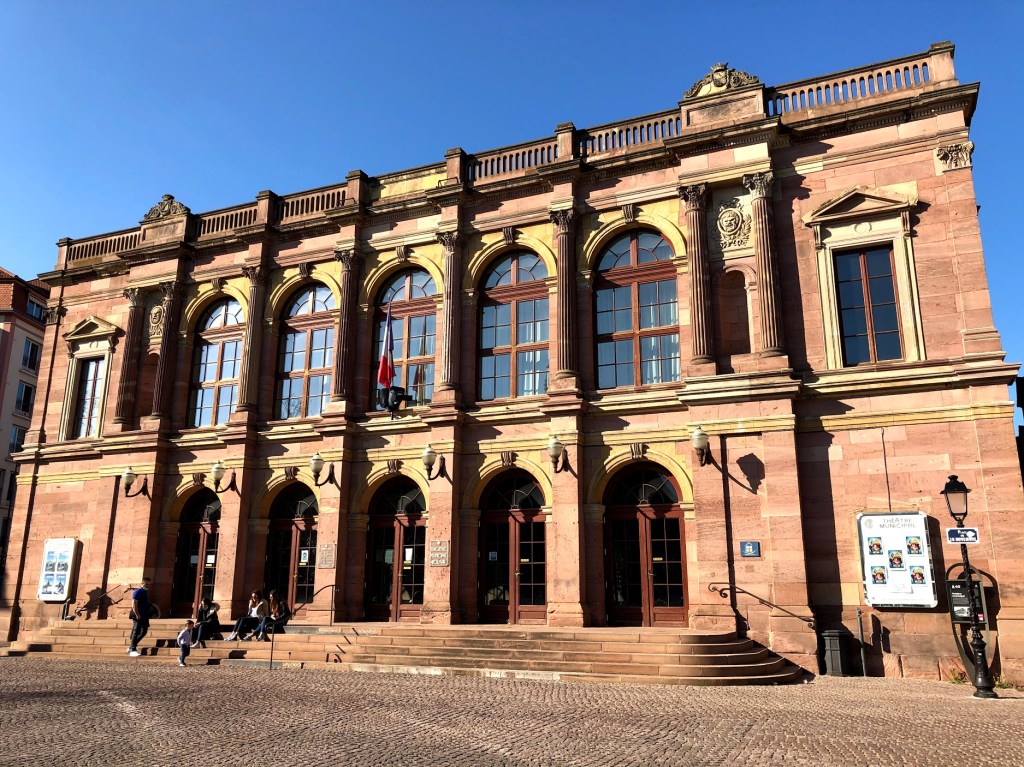
“The municipal theatre neighboring the former unterlinden convent was completed in 1849, and was designed in the Italian style by Parisian architect Louis Michel Boltz. The interior, with its remarkable ceiling paintwork, is the work of another Parisian, Boulangé. Painstaking restoration work was finished in 2000 and the theatre can now be seen as it was when first built.”
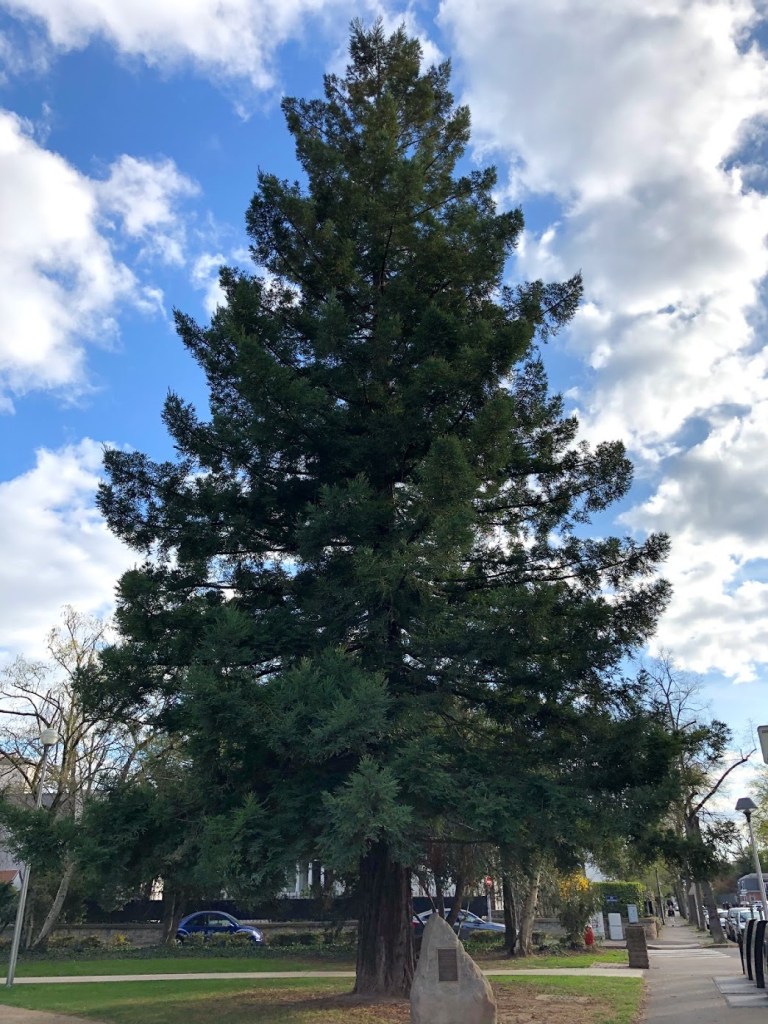
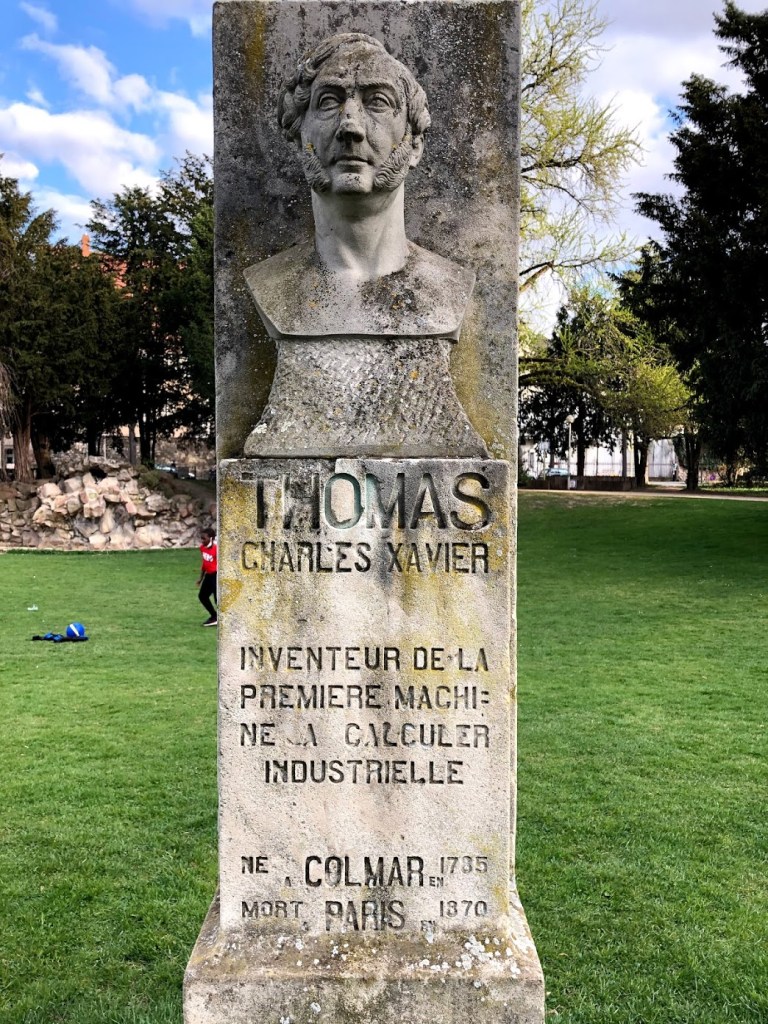
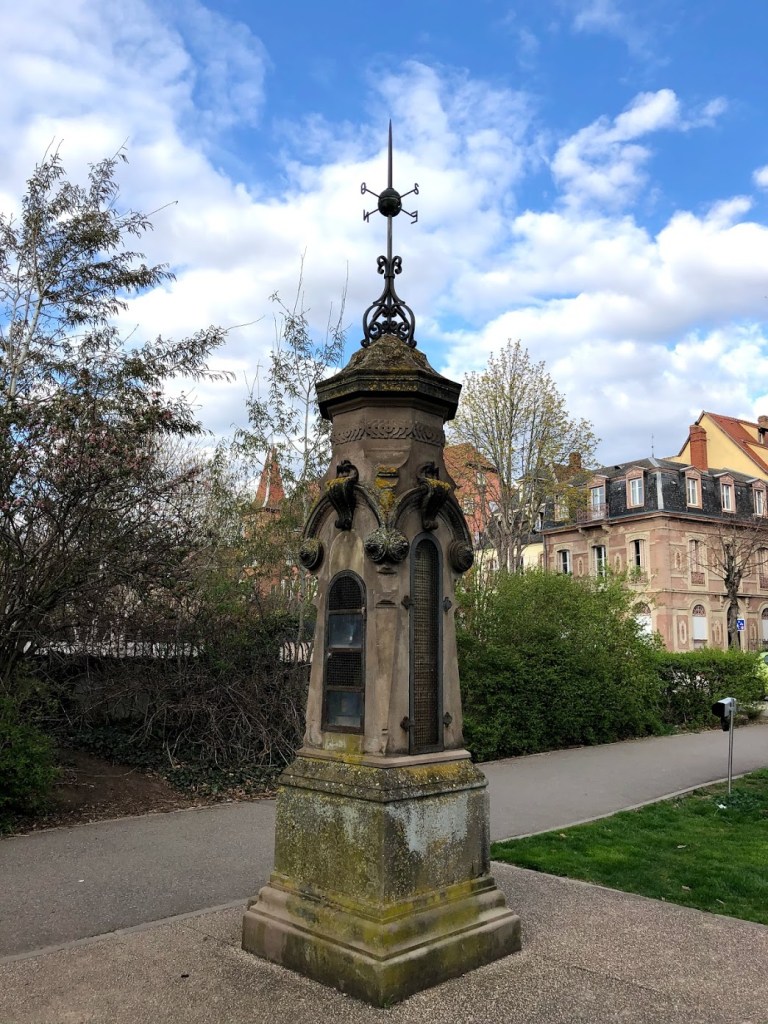
At this point, I realized that I needed to pick up some food for the next day. I located a Casino store and made my way there. I walked through a park and made a little discovery.
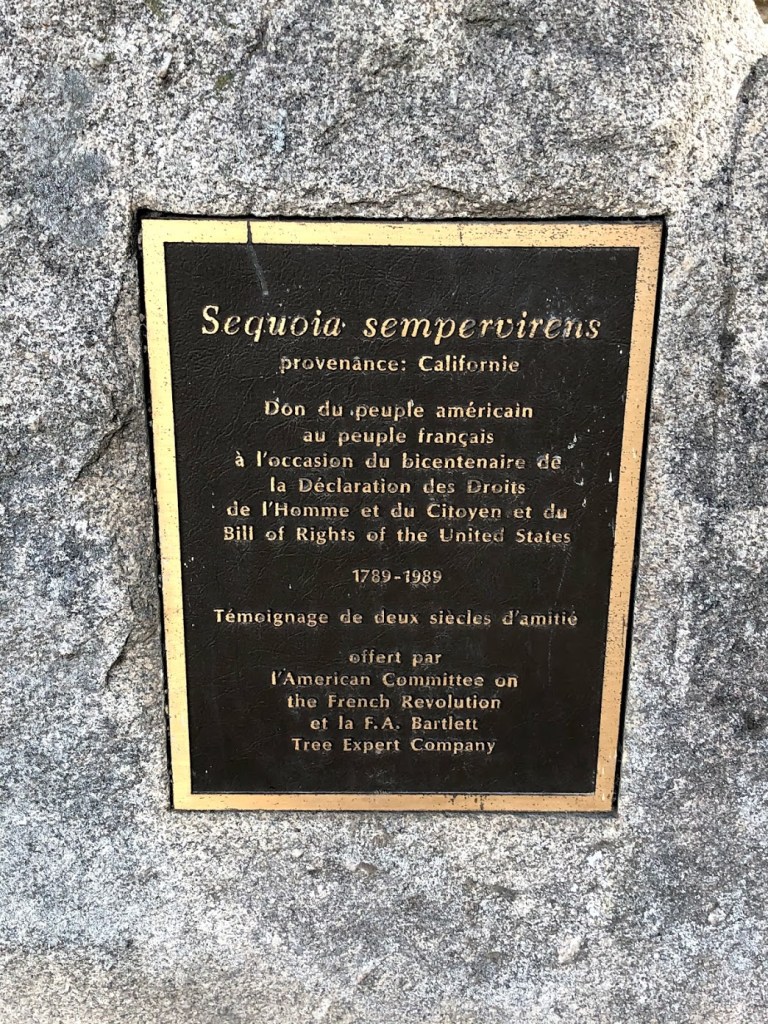
“Gift from the American people to the French people on the occasion of the bicentennial of the Declaration of the Rights of Man and Citizen and the Bill of Rights of the United States, 1789-1989. A testimony to two centuries of friendship offered by the American Committee on the French Revolution and the FA Bartlett Tree Expert Company.”
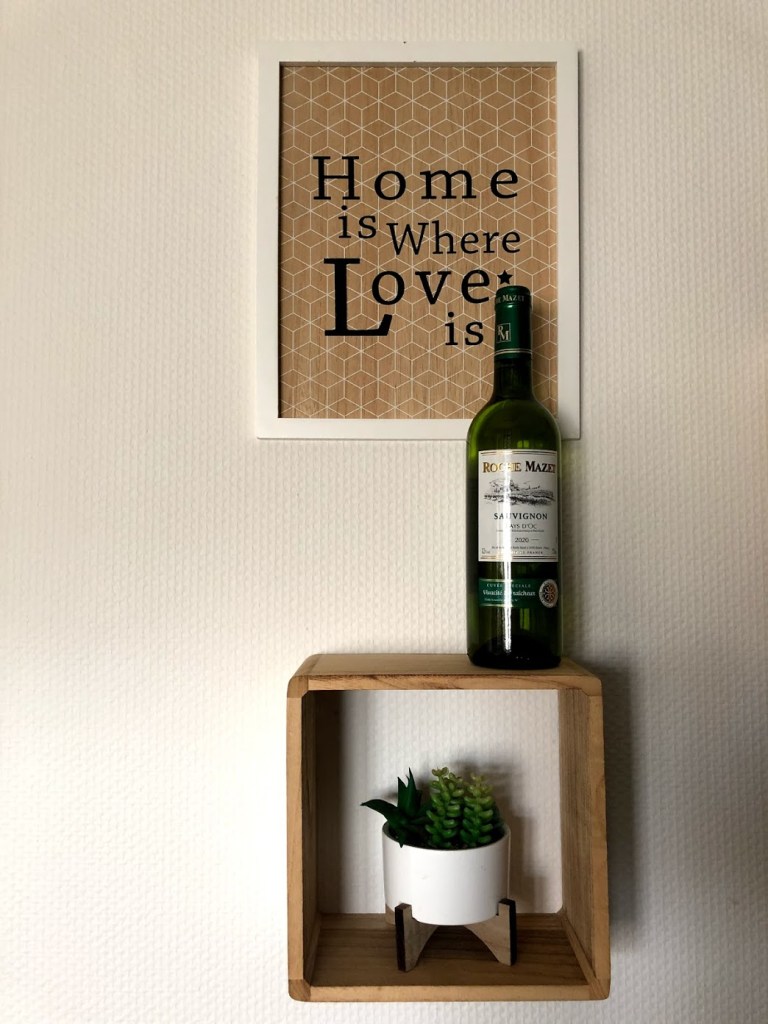
I arrived home, ordered a pizza, popped open a bottle of wine and sat back to enjoy a night of movies and calls with friends. I hope you enjoyed this virtual tour of Colmar!
 Mary-Est-En-France