I spent my morning packing and cleaning up the apartment. I didn’t want things to be a mess or for there to be a dirty sink when I got back at the end of the week. I left around 12 on the bus to Lyon. I took the tram in the rest of the way.
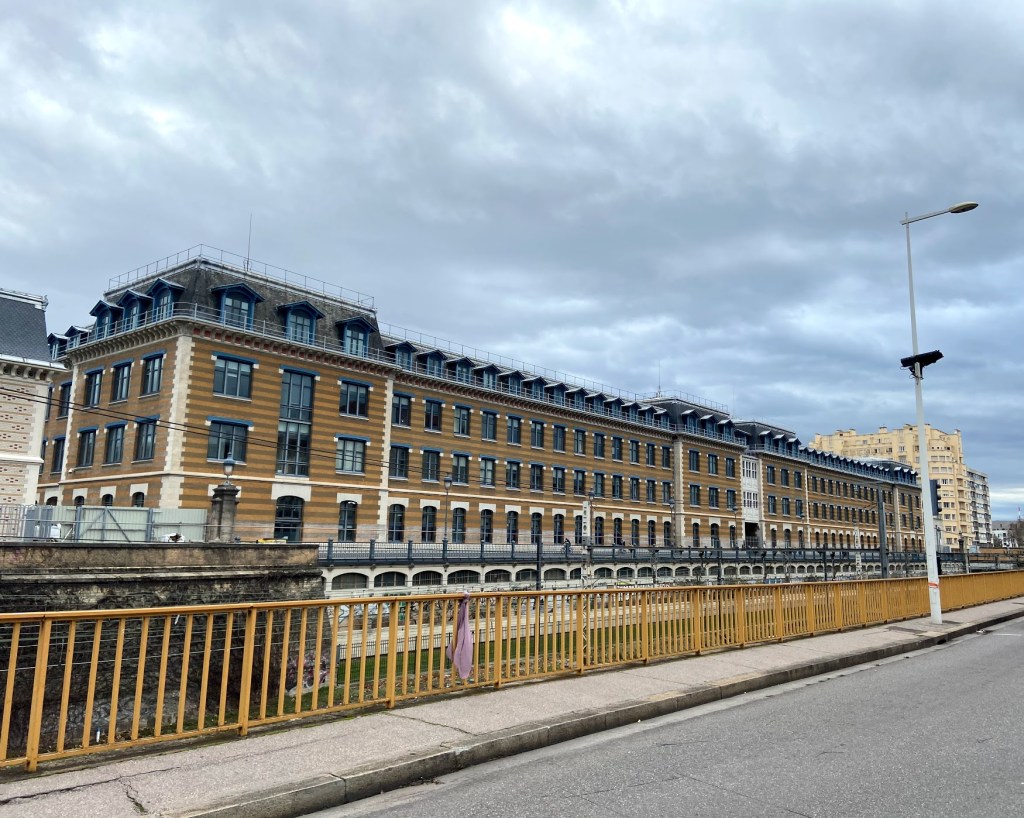
I had an hour to kill before my train and didn’t want to sit outside the station, so I picked a direction where there was a cool building and set out. At the end of the street, I saw a huge building with bright tiling. I found out that it was part of the Université Jean Moulin. Jean was a famous French Resistance fighter in WWII. He was imprisoned by the collaborationist regime and died as he was transferred to German by the Gestapo.
The Université Jean Moulin.
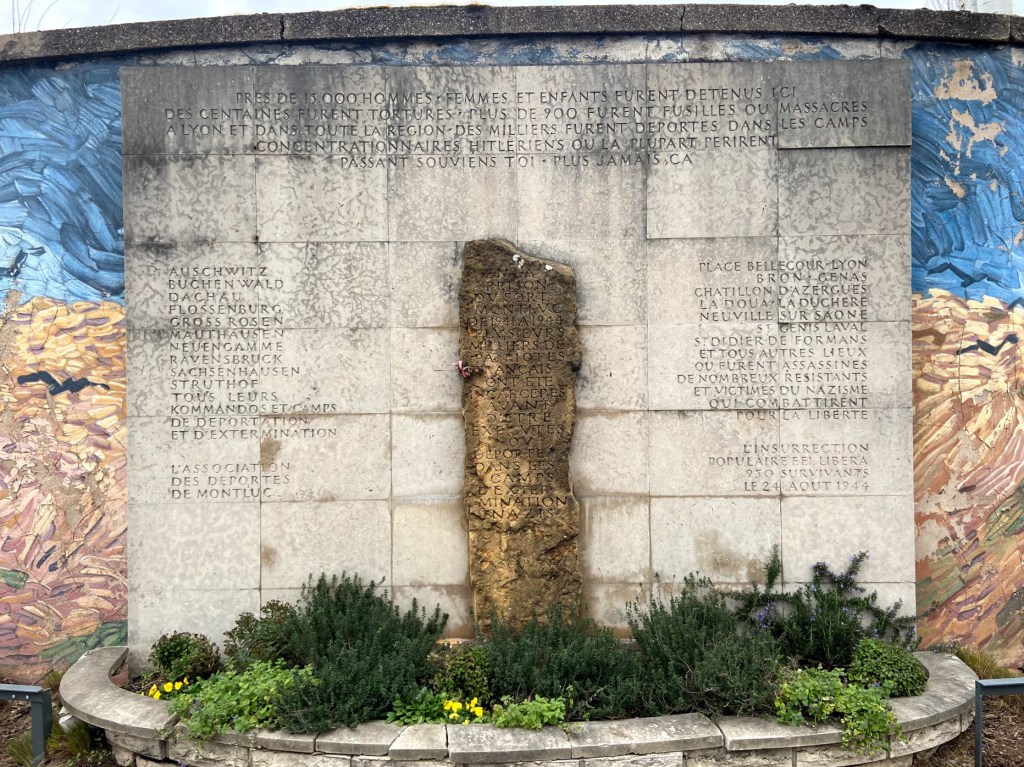
I checked the time and started to head back towards the station. I realized that I was in a familiar area when I found a memorial to the victims of WWII and the collaborationist regime. I realized that I visited this neighborhood with my study abroad group in 2019!
A memorial to the “15,000 men, women, and children detained and tortured here” as well as “the thousands deported to concentration camps.”
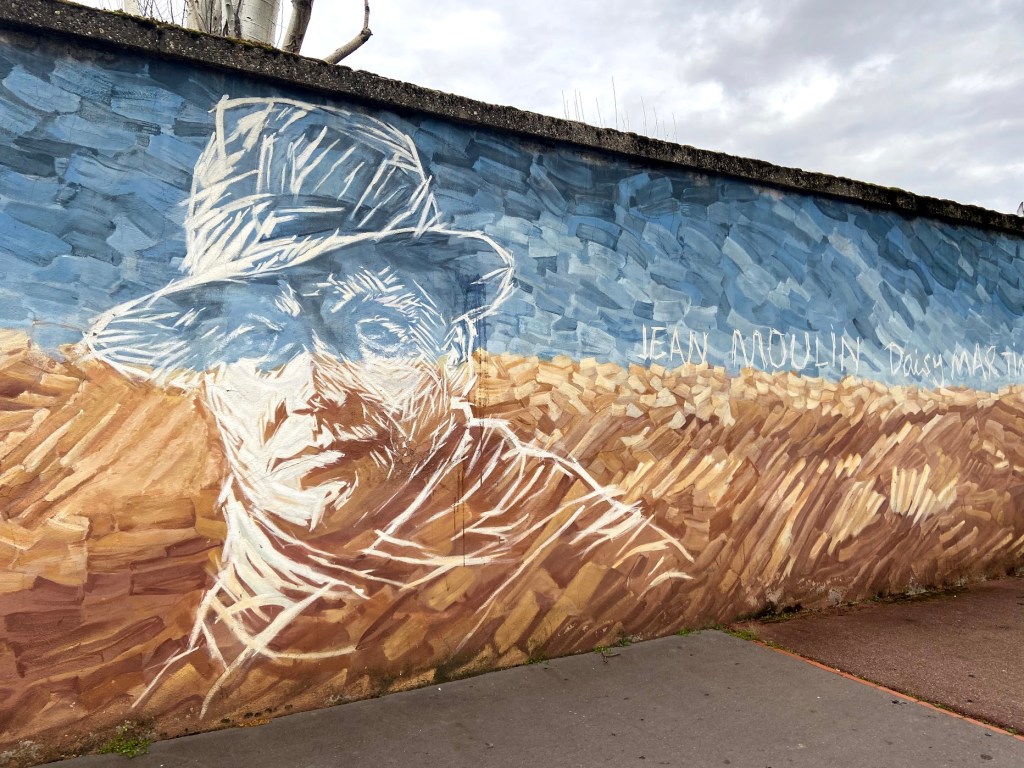
A beautiful mural dedicated to Jean Moulin.
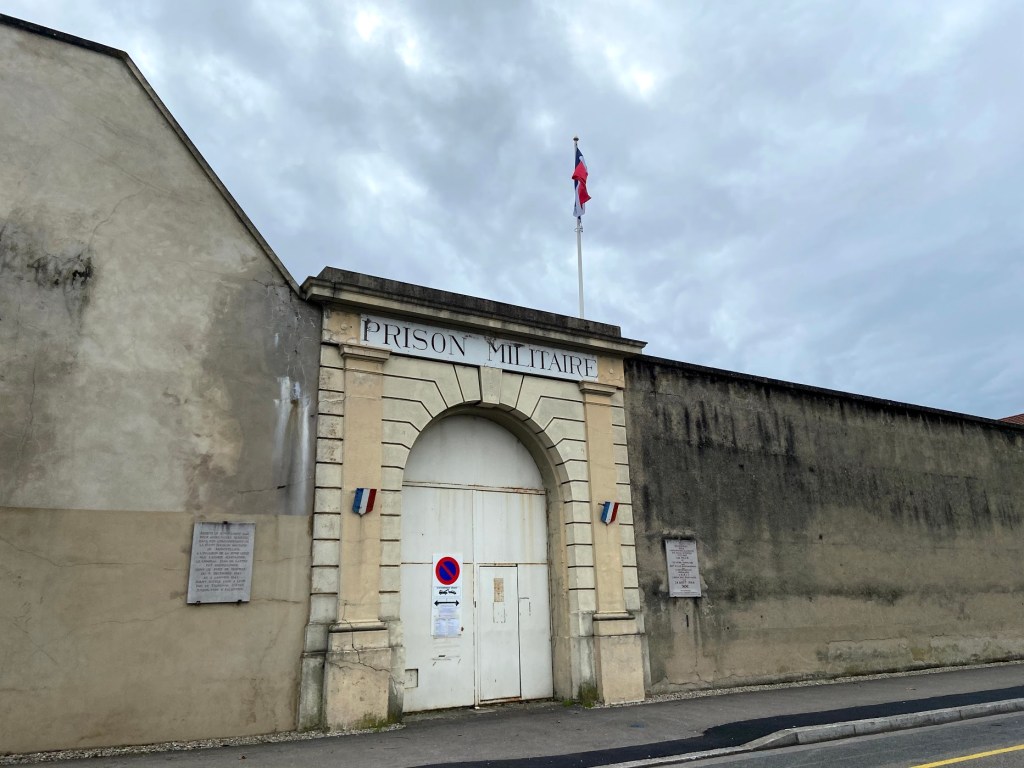
The former military prison Montluc. The prison first opened in 1918 and was considered innovative for its “good” treatment of prisoners. For most of its history, the institution house military prisoners. During WWII, the Gestapo used it as a prison, interrogation center, and an internment camp for individuals being transferred to concentration camps. Over 15,000 were imprisoned and 900 died here. The prison was used in a civil capacity after the war and in its later years housed women and children. There is an eery nursery in one corner of the prison yard. It ceased operation as a prison in 2009 when conditions were finally deemed inhumane.
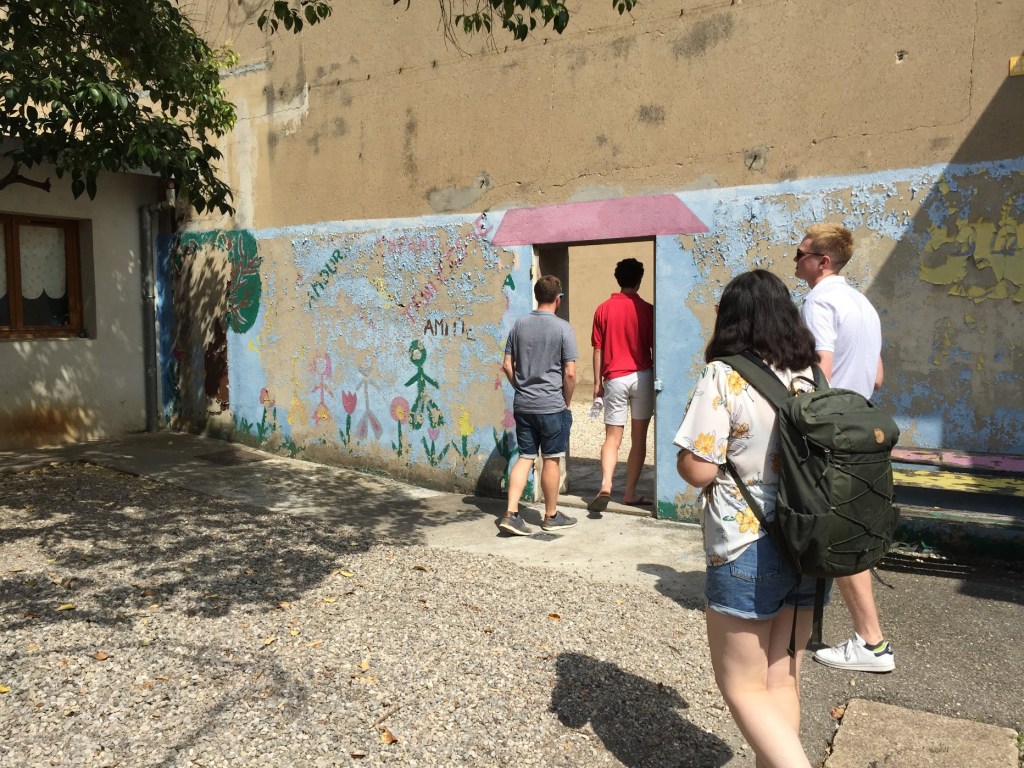
In 2019, I was able to tour the interior with my study abroad class. It was an incredibly informative visit. I’ll share some of those photos below.
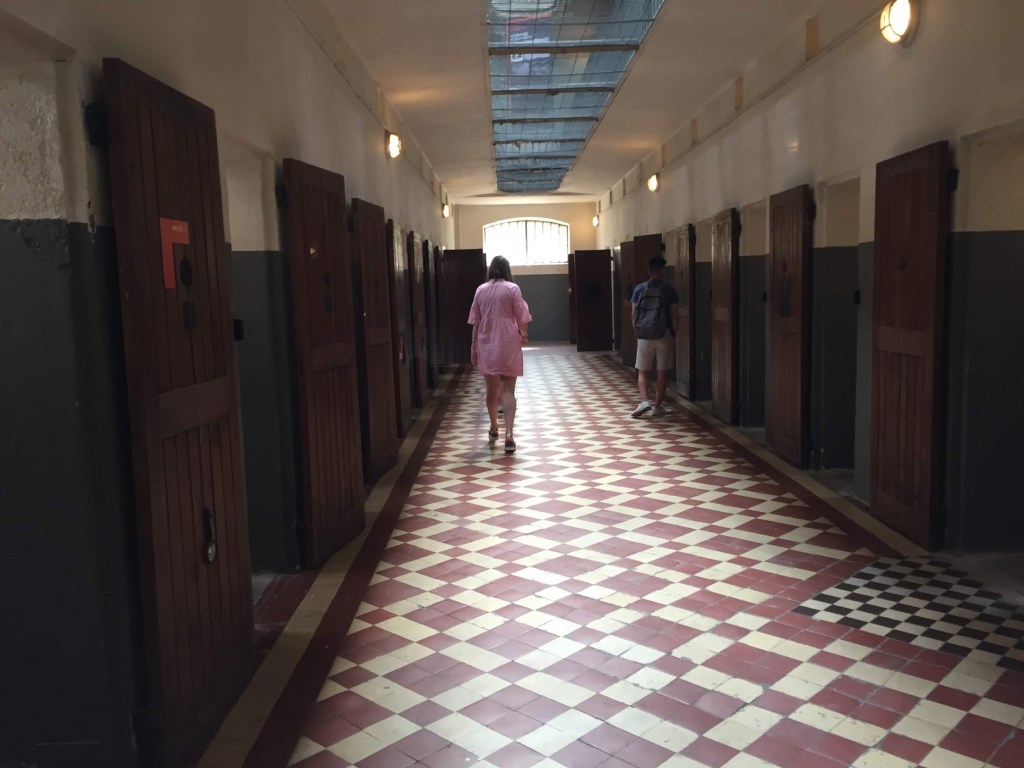
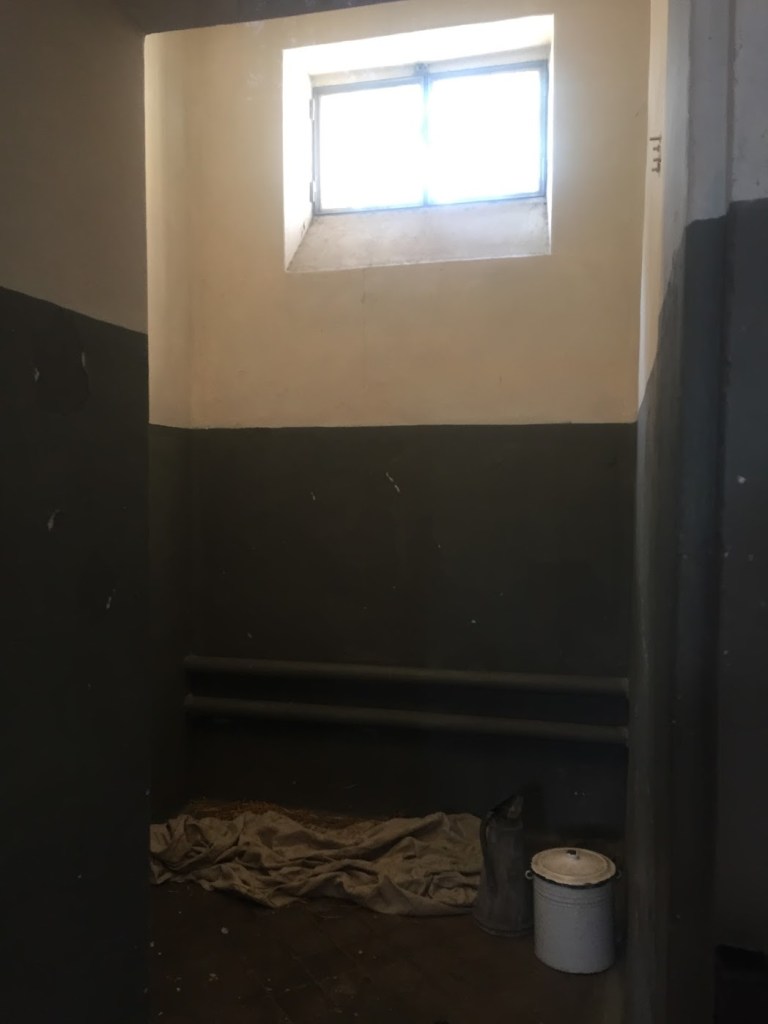
The main floor of the prison. Each door is a cell. There is a tiny window and a bucket in each cell. If you venture inside there are signs indicating some of the residents of the cell and their stories. Many of those featured were women and children.
An example of a cell on the first floor.
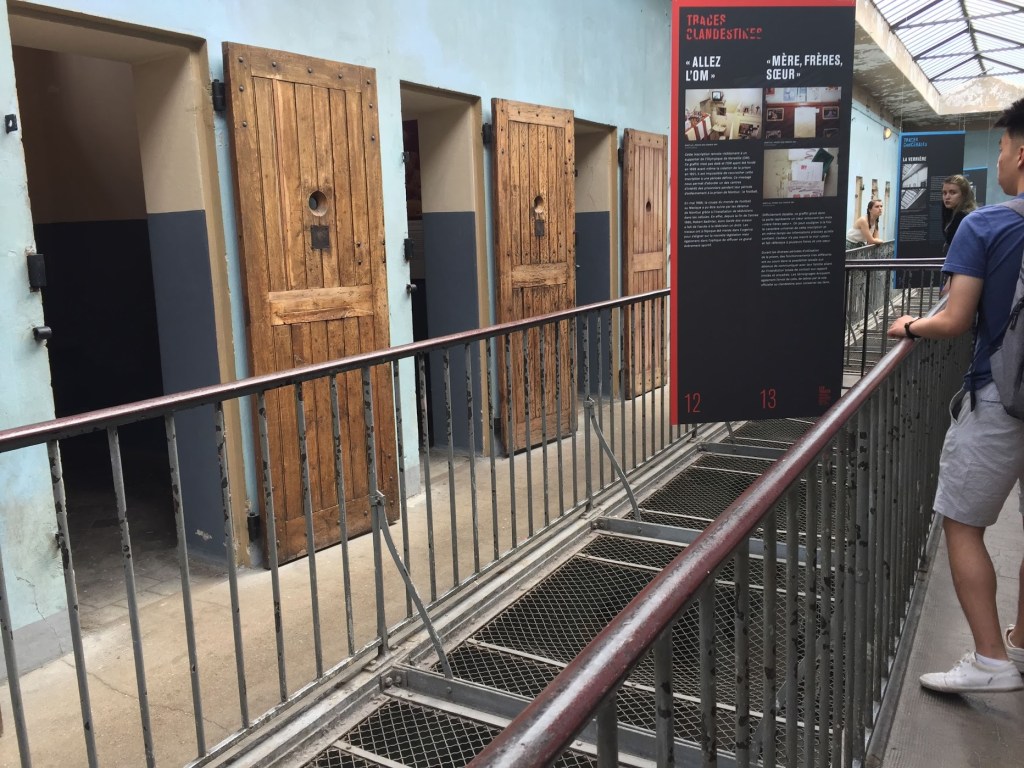
There is no air conditioning available in the prison. On the upper floors, the heat and smell is unbearable even when unoccupied. You can gaze down at the floors below through this open avenue.
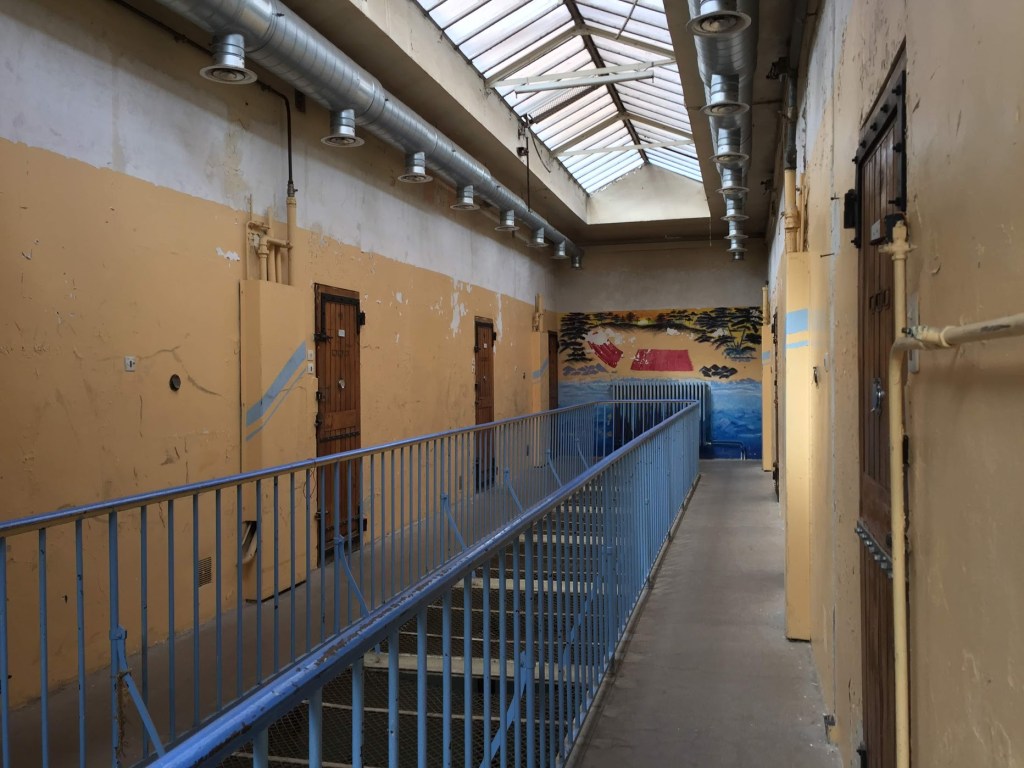
The women’s quarters in the prisons, decorated in the 1990s.
One of the decorated walls of the nursery.
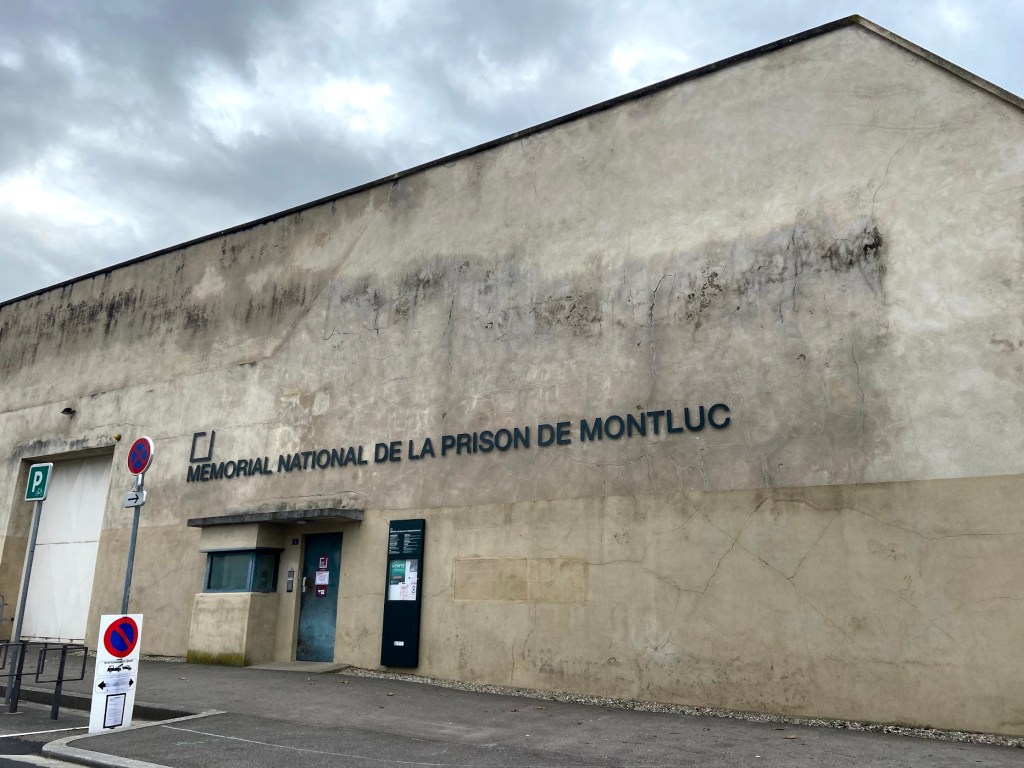
Memorial National de la Prison de Montluc in 2021.
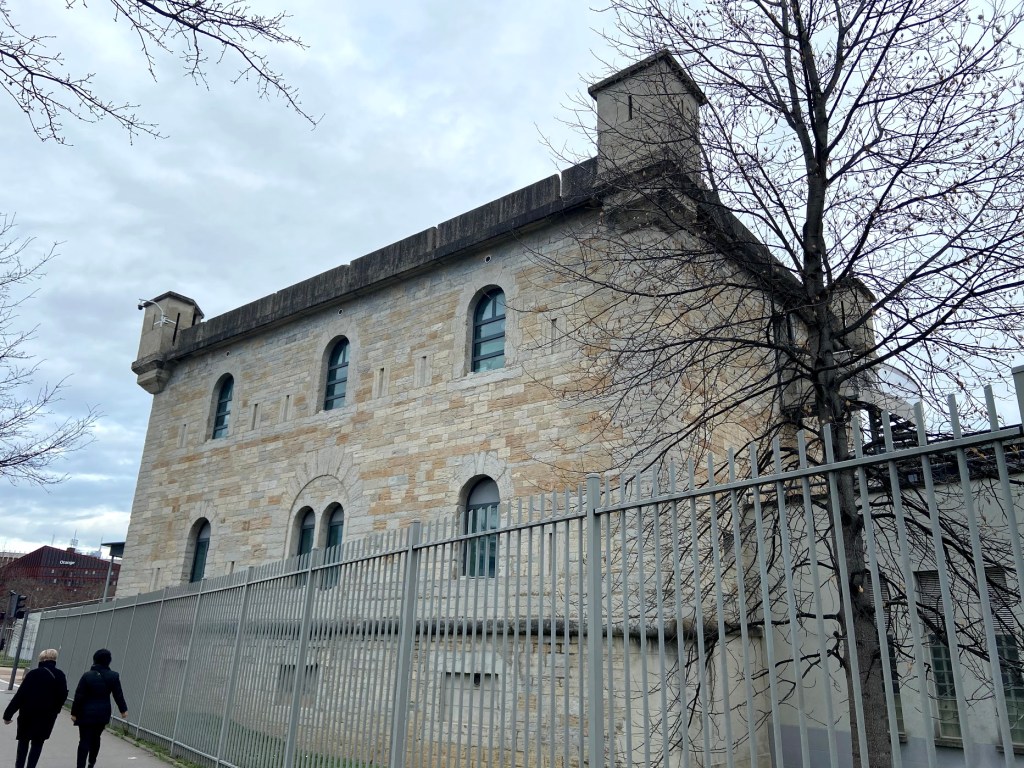
Part of the Hôtel de Police, a former part of the Montluc prison.
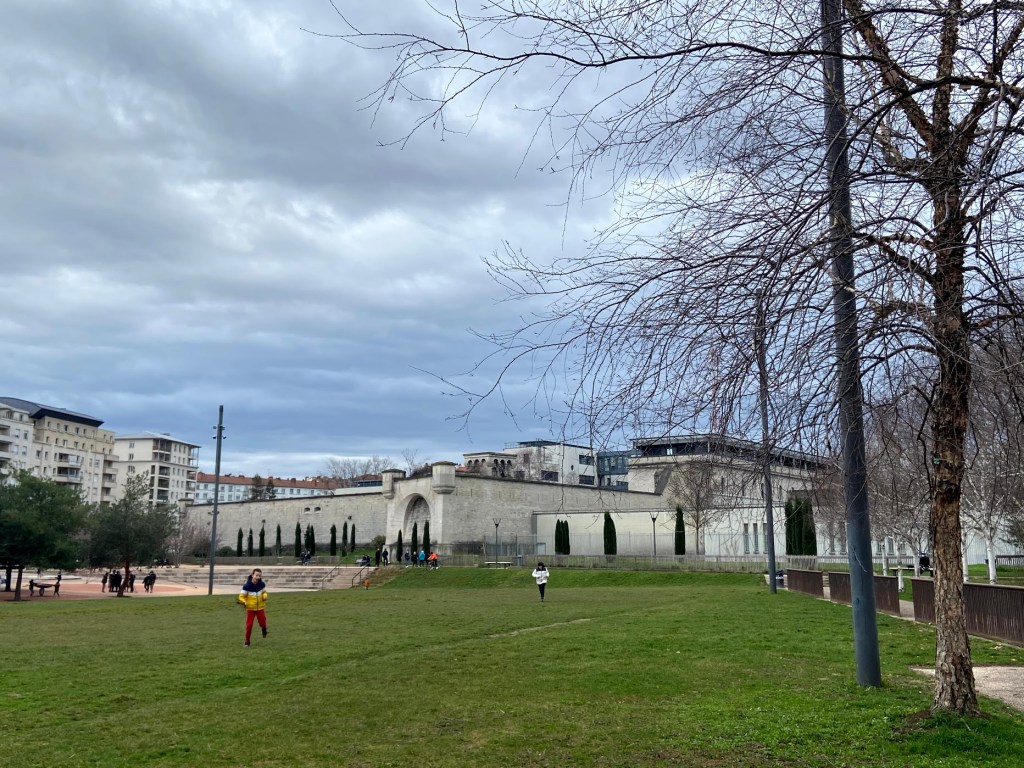
A city park overshadowed by the Hôtel de Police, housed in the former Montluc prison.
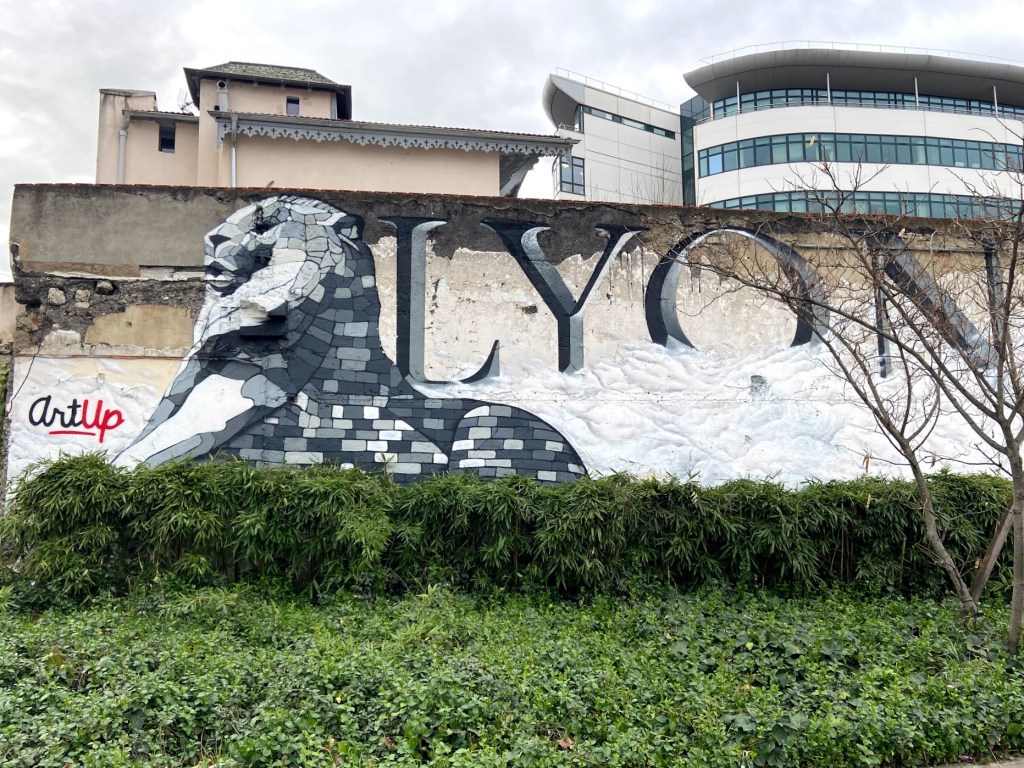
Street art near the Lyon Part Dieu station.
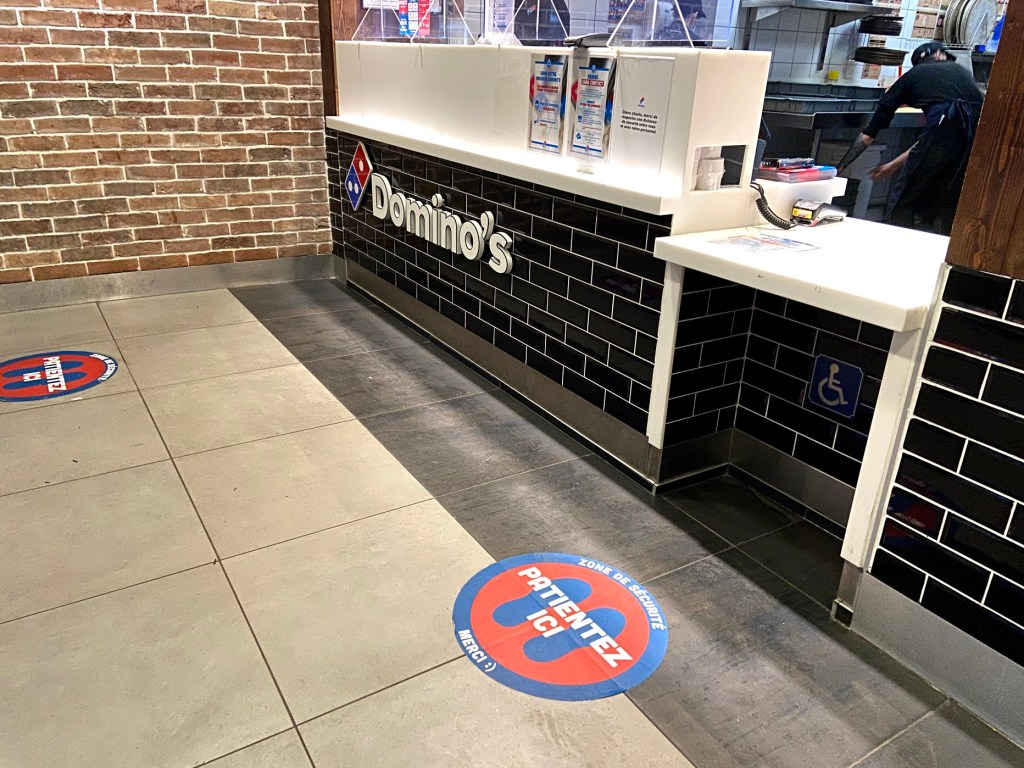
I made it back to the station and found my seat on the train. It ran a little long due to construction on the line, but Alli met me at the station in Valence and we found each other without a problem. We landed on Domino’s for dinner. Ugh I was so excited to eat food I didn’t make myself. The convenience of living in a city is something I will never question again. I miss it so much! Pizzas in hand, we headed back to her place for the night.
I found Domino’s in France! I marveled at the convenience of picking up dinner and not having to cook it myself.
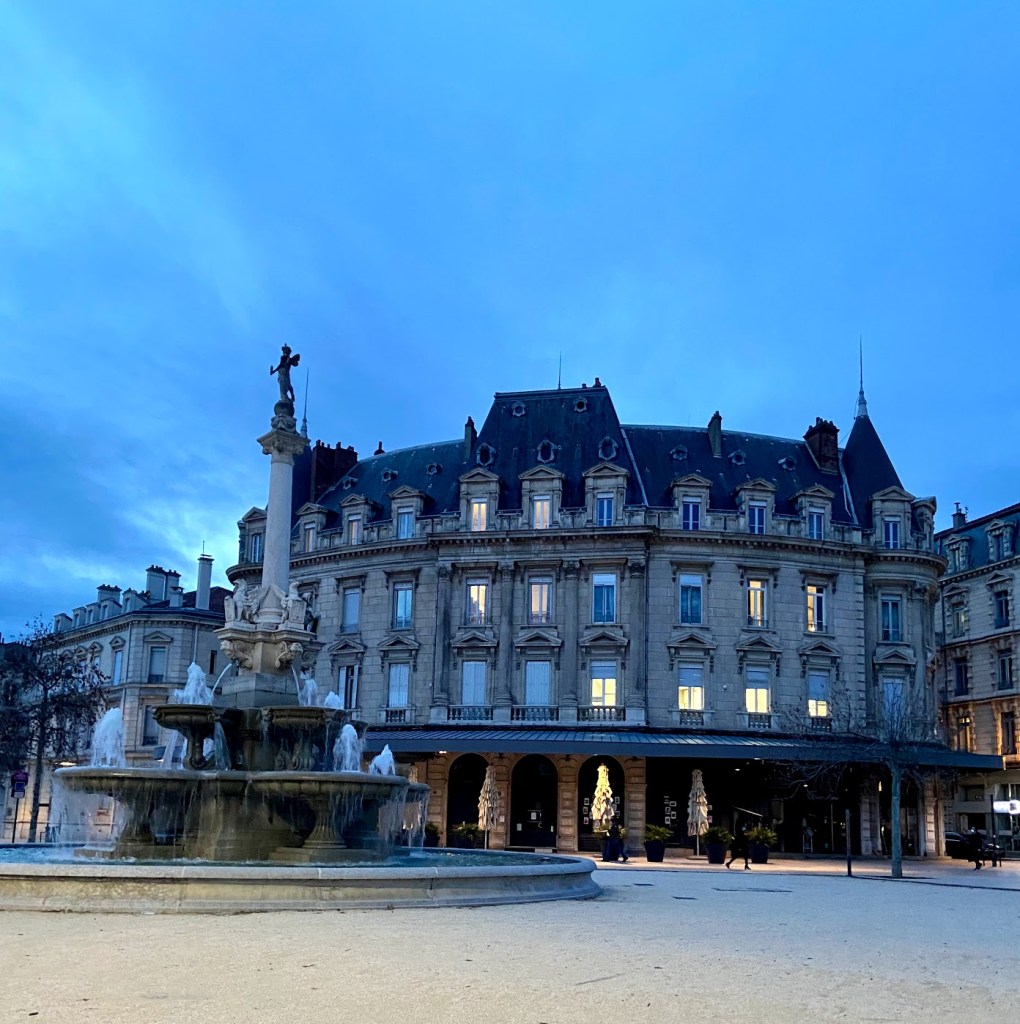
A fountain in the the center of Valence.
We ate our dinner, chatted, and then got ready for bed so we could be up early to travel the next day.
 Mary-Est-En-France